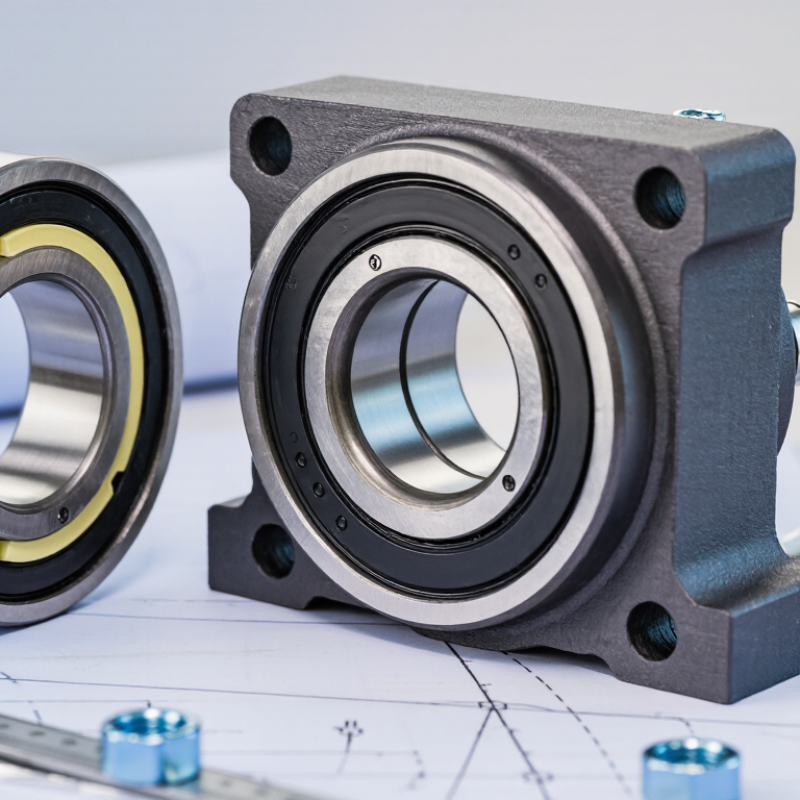
| 1. Confirm the exact bearing configuration | Shaft diameter, insert bearing, housing style, mounting dimensions, and locking method. | Check the product drawing and dimensional specifications before ordering. Part designations can vary between suppliers, so do not rely on the code alone to confirm fit. | Verify the shaft size and mounting-hole spacing against the equipment drawing. |
| 2. Check how the bearing is lubricated | Whether the insert is factory greased, has a grease fitting, and includes a path for excess grease to escape. | Many mounted insert bearings are supplied with grease, but relubrication provisions differ. Follow the specific product instructions; avoid adding grease to a sealed, non-relubricatable unit. | Confirm fitting location, relubrication method, and any relief or drain arrangement. |
| 3. Match the grease to operating conditions | Operating temperature, speed, load, moisture exposure, and compatibility with existing grease. | Use the lubricant grade and relubrication guidance specified for the bearing. Do not mix greases unless their compatibility is confirmed; incompatible thickeners can affect grease performance. | Record the current grease type and compare it with the bearing’s lubrication instructions. |
| 4. Assess water and washdown exposure | Rain, spray, condensation, frequent cleaning, and exposure to cleaning chemicals. | Water can contaminate lubricant and promote corrosion. Consider suitable seals, corrosion-resistant materials, and a housing arrangement appropriate for the actual washdown conditions. | Check the stated sealing and material details; a seal should not be assumed to make a unit suitable for every washdown environment. |
| 5. Consider dust and abrasive contaminants | Fine dust, fibers, grit, metal particles, or other airborne debris near the shaft and housing. | Contaminants can wear rolling surfaces and degrade grease. Choose appropriate sealing and keep the bearing area clean during installation and maintenance. | Compare the seal design with the type and concentration of contaminants at the installation site. |
| 6. Review temperature and operating speed | Ambient and bearing operating temperatures, shaft speed, duty cycle, and heat from nearby equipment. | High temperature can shorten grease life, while low temperature can increase starting resistance. Confirm the bearing and lubricant limits for the expected operating range. | Compare actual operating conditions with the product’s published temperature and speed limits. |
| 7. Set a condition-based maintenance plan | Vibration, noise, temperature changes, lubricant condition, and the consequences of an unexpected stop. | Use the bearing supplier’s relubrication guidance as a starting point, then adjust maintenance intervals based on operating severity and inspection findings. Avoid overgreasing, which can increase heat and pressure. | Document inspections and investigate sudden changes in temperature, noise, or vibration. |



 Close