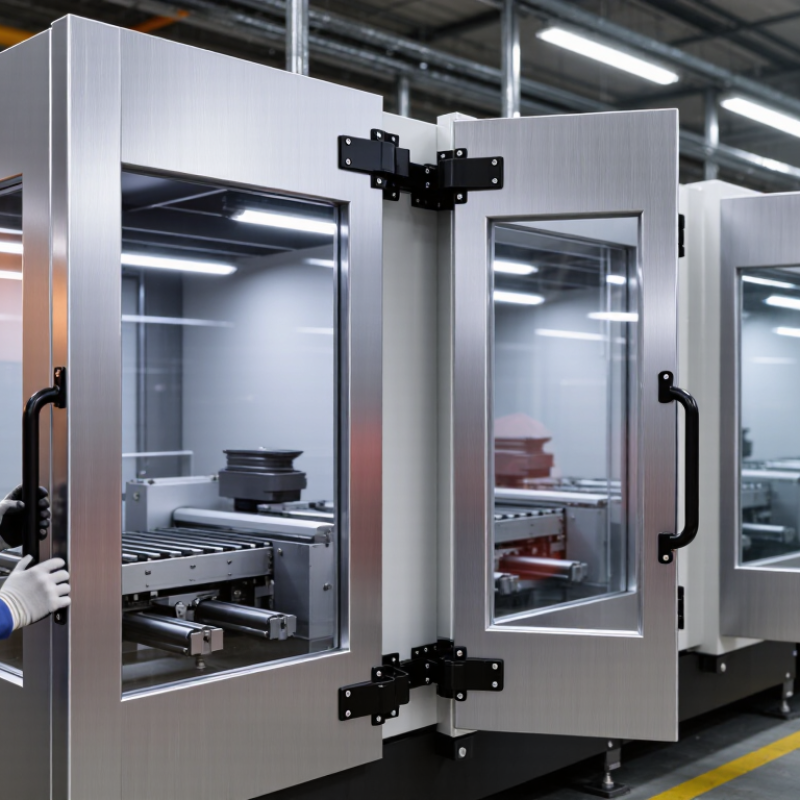
| 1 | Match the door to the hazard assessment | Consider the machine’s hazardous motions, access points, work tasks, and the possibility of reaching around, over, or through the guard. | Review the risk assessment and confirm that the door and surrounding guard prevent access to hazards during operation. |
| 2 | Check the safety interlock | Opening the door should initiate the safety function specified for the machine. The interlock should be suitable for the risk and resistant to foreseeable tampering or misalignment. | Test the safety function under controlled conditions. Confirm that the machine cannot run with the door open and that closing the door alone does not cause an unexpected restart. |
| 3 | Assess stopping time and guard locking | If a person could reach a hazard before it stops, a suitable guard-locking function may be needed. Selection depends on measured stopping time, access time, and the machine’s risk assessment. | Have a qualified person assess stopping time and verify that the door cannot be opened while hazardous motion remains accessible, where guard locking is required. |
| 4 | Choose visibility suited to the task | A viewing panel or mesh may help operators observe the process, but it must retain adequate strength and provide the required protection from impact, ejected material, heat, or other identified hazards. | Check sightlines, lighting, cleaning needs, and the panel’s suitability for the hazard. Do not replace protective material with a viewing panel unless the guard’s protective function is maintained. |
| 5 | Plan for emergency access and egress | Where someone could be inside an enclosure, consider the possibility of entrapment and the need for an accessible means of escape or release that does not create a new hazard. | Review enclosure layout and applicable requirements. Confirm any emergency release is identifiable, reachable from the inside where needed, and included in safe operating procedures. |
| 6 | Check door movement and durability | Door size, swing or sliding direction, hinges, latches, handles, and clearances should suit the work area and withstand expected use and environmental conditions. | Confirm the door opens without obstructing walkways or controls, closes reliably, and remains aligned. Include inspection and maintenance in the machine’s safety program. |
| 7 | Keep maintenance and restart controls in view | An interlocked door is not a substitute for energy isolation during servicing. The design should also support safe reset and prevent unexpected startup after access. | Verify that operators can identify the reset procedure and that hazardous energy can be isolated and controlled according to applicable procedures and regulations. |



 Close