Essential Tips for Choosing Plastic Injection Molds?
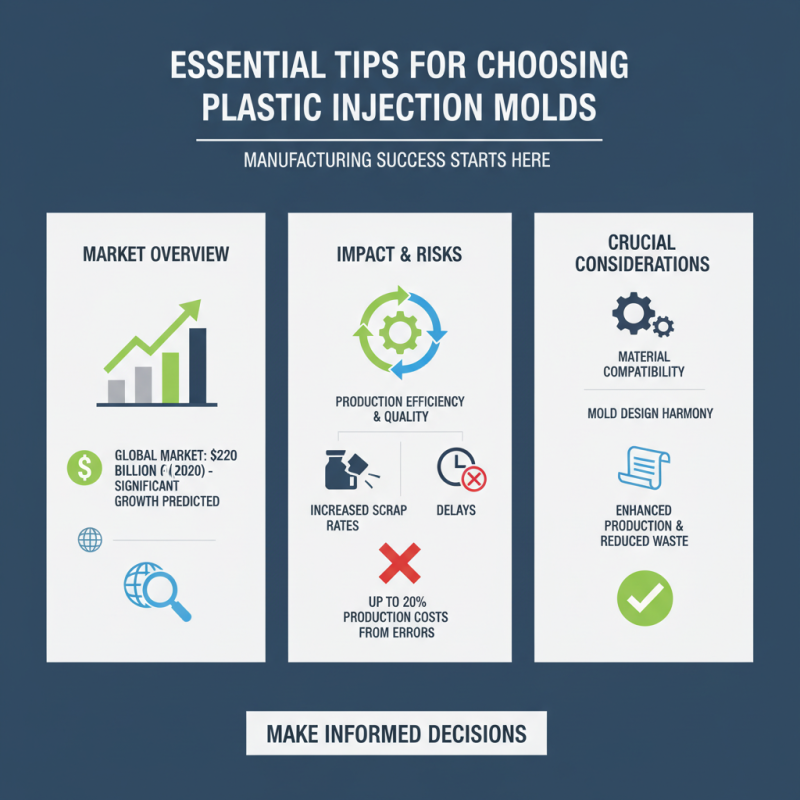
Choosing the right Plastic Injection Mold is crucial for manufacturing success. The global plastic injection molding market was valued at approximately $220 billion in 2020. Experts predict it will grow significantly. Understanding this market helps in making informed decisions.
Molds directly impact production efficiency and product quality. Poorly designed molds can lead to increased scrap rates and delays. Reports indicate that up to 20% of production costs are linked to molding errors. This highlights the need for careful selection.
One must consider material compatibility and mold design. Many overlook these factors, leading to costly mistakes. A well-chosen Plastic Injection Mold can enhance production and reduce waste. It's vital to reflect on all choices made during the selection process.
Understanding Plastic Injection Molding and Its Applications
Plastic injection molding is a versatile manufacturing process widely used in various industries. This technique produces complex shapes efficiently, making it ideal for items ranging from household gadgets to automotive components. According to recent industry reports, the global plastic injection molding market is projected to reach $320 billion by 2025, showcasing its growing relevance.
When choosing plastic injection molds, it’s vital to consider the material. Different plastics, like ABS and polycarbonate, have unique properties that affect durability and cost. Mold design should also reflect the end-use application. Some molds may not fully exploit the material capabilities, leading to costly mistakes.
Tip: Always assess sample parts before finalizing mold designs. Understanding the part's requirements can prevent miscalculations. Another consideration is cycle time; longer cycles can delay production and impact profitability. Reviewing these elements can reveal areas needing improvement. Developing a strong mold strategy ensures better integration with production processes.
Factors to Consider When Selecting Injection Mold Materials
When selecting injection mold materials, several factors come into play. The type of plastic being processed is critical. Different plastics require different mold materials. For instance, ABS and polycarbonate may need specific molds for optimal results. These considerations impact durability and final product quality.
Another important factor is the production volume. High-volume production requires materials that can withstand significant wear and tear. Steel molds are common for these volumes due to their longevity, but they come with higher upfront costs. In contrast, aluminum molds may suffice for lower volumes but might wear out quickly, leading to potential quality issues over time.
Temperature resistance is also essential. Some plastics require higher processing temperatures. This need can influence the choice of mold material. Choosing a mold that can't handle high temperatures could lead to failures during production. Engineers often overlook this and face setbacks when molds warp or fail. Balancing cost, durability, and temperature tolerance ensures a successful mold selection.
Essential Tips for Choosing Plastic Injection Molds
This chart illustrates the importance of different factors to consider when selecting injection mold materials based on a survey of industry professionals.
Evaluating Mold Design for Efficiency and Cost-Effectiveness
Choosing the right design for plastic injection molds is crucial. Efficiency can make or break production. A well-designed mold reduces cycle times and improves output. Consider the complexity of the part being produced. Intricate designs may need more time to produce and can inflate costs. Choose a design that balances detail and efficiency.
Here are some tips: Focus on simplicity. Complex shapes often lead to higher costs and longer production times. Evaluate the cooling system within the mold. Efficient cooling reduces cycle time significantly. Use simulations to test mold performance before production. This helps identify issues early and can save money.
Efficiency isn’t just about speed. Think about the overall cost-effectiveness. Sometimes, investing in a more efficient design pays off long-term. Keep in mind that your mold may need revisions. Don’t hesitate to gather feedback from operators. This can highlight areas for improvement. Stay flexible and ready to adapt.
Essential Tips for Choosing Plastic Injection Molds
| Evaluation Criteria | Description | Importance Level | Cost Implication |
| Design Complexity | How intricate the mold design is, affecting both manufacturing difficulty and part final shape. | High | Medium to High |
| Material Selection | Choosing the right material for durability and part requirements. | High | Variable |
| Cycle Time | Time taken to produce each part, affecting productivity and costs. | Medium | High |
| Maintenance Requirements | Ease of maintenance and repair for the molds. | Medium | Medium |
| Production Volume | Estimate of how many parts will be produced, influencing mold choice. | High | High |
Assessing Supplier Capabilities and Industry Experience
When assessing supplier capabilities, focus on their experience. An experienced supplier often leads to better outcomes. Review their past projects. Look for diversity in their portfolio. This can indicate adaptability and innovation. Experience matters in understanding complex requirements.
Communication is essential. A reliable supplier should make the process smooth. Inquire about their approach to problem-solving. Are they responsive to changes? Their willingness to collaborate reflects their commitment. Assessing these traits can save time and resources.
Finally, consider their technology and resources. Cutting-edge equipment leads to high-quality molds. Can they deliver consistently? Check references or case studies. Sometimes, insight from others can highlight strengths and weaknesses. Selecting the right supplier is crucial. It shapes the success of your projects.
Importance of Maintenance and Support for Long-Term Success
Maintaining plastic injection molds is crucial for long-term success. A comprehensive maintenance plan enhances mold longevity. According to industry reports, effective mold maintenance can reduce repair costs by up to 40%. Regular inspections and cleaning can address small issues before they escalate. Mold owners often overlook these vital upkeep routines.
Support is another key factor. Proper training for operators leads to better handling of molds. A study by the Society of Plastics Engineers shows that well-trained staff can improve production efficiency by 35%. However, many companies underestimate the importance of continuous training. They may focus too much on production numbers, neglecting the human element. This can lead to mistakes and increased wear on molds.
Investing in support ensures molds function optimally over time. Additionally, companies should document maintenance procedures. Reports indicate that 25% of companies do not keep a thorough record of mold maintenance. This can result in repeated problems and unplanned downtime. Inconsistent maintenance and lack of documentation often reflect deeper organizational issues. These distractions can ultimately impact overall production quality and output.



 Close
Close