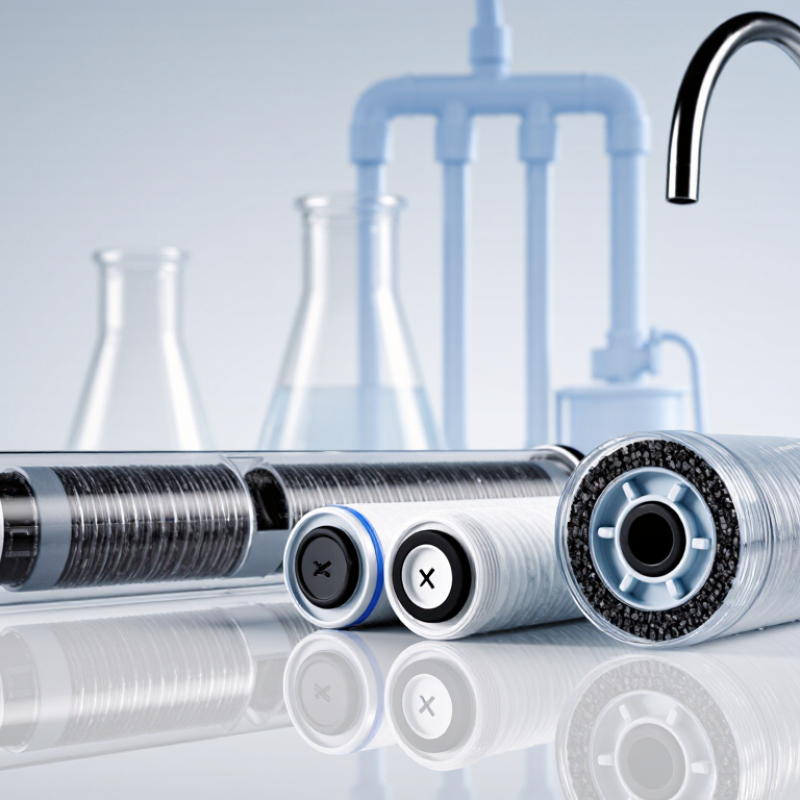
Choosing between granular activated carbon and carbon block starts with the flow your system must deliver. Granular carbon usually offers less resistance, making it useful where water demand is higher. Carbon block packs carbon more tightly, which can improve contact with the media but may reduce flow and increase pressure drop. Neither format is automatically better.
Check the filter’s rated flow and pressure range, then compare them with your actual use. A kitchen tap may need a steady stream; a whole-house system faces several fixtures running at once.
Watch what happens when the cartridge is partly loaded, too. Real conditions are rarely ideal. If flow falls sharply, a tighter block may be frustrating; if water moves too quickly through granular media, treatment performance can suffer. A sediment prefilter can help protect either type from particles, though it adds another component to maintain.
Ask for test data tied to the contaminants you need to reduce, not just a broad claim about “better filtration.” Small details matter.
I would also leave a margin rather than sizing the filter exactly to peak demand. That judgment is imperfect, but it can prevent a system that looks fine on paper from feeling slow at the faucet.



 Close