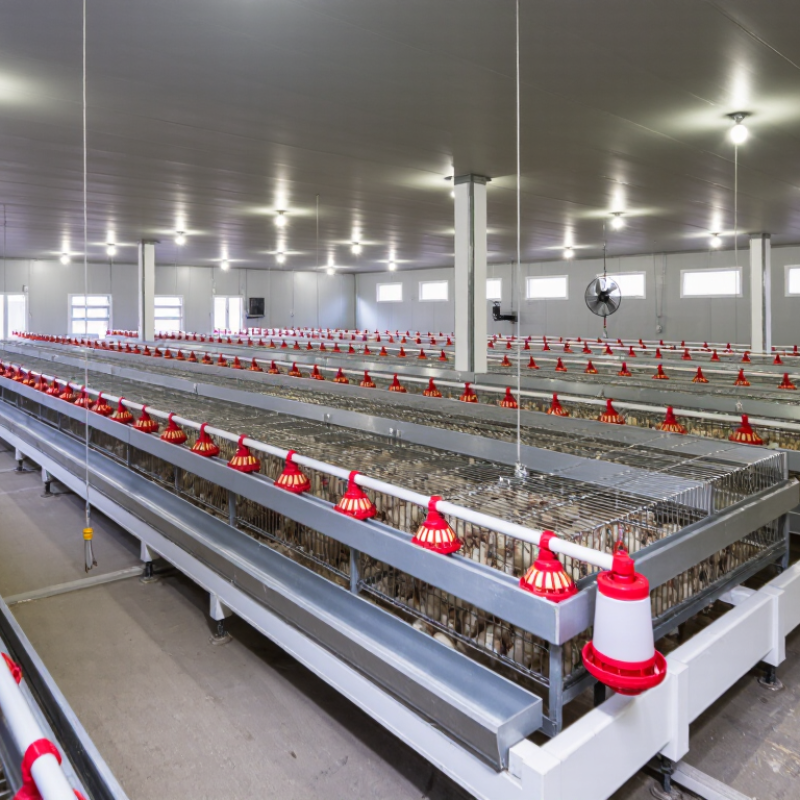
| 1. Cage-system type | Conventional, enriched, or other housing configuration | System designs differ in layout, bird access, equipment, and applicable welfare requirements. Suitability depends on the destination market and operating model. | Product drawings, system description, and written confirmation of the intended housing standard. |
| 2. Tier and row layout | Number of tiers, rows, and aisle arrangement | More tiers can increase bird places per building footprint, but the final layout must account for building dimensions, access, ventilation, and local rules. | Dimensioned house layout showing clearances, service aisles, and equipment positions. |
| 3. Cage materials and finish | Wire, frame, joints, corrosion protection, and finish | Material and coating choices affect durability and maintenance needs. Suitability depends on the environment, cleaning practices, and the manufacturer’s specifications. | Material specifications, coating details, warranty terms, and sample inspection options. |
| 4. Feeding system | Feed distribution method and drive arrangement | Automated feeding equipment can distribute feed along the rows. Performance depends on the installed layout, adjustment, maintenance, and feed characteristics. | Equipment schedule, drive and control details, installation requirements, and maintenance instructions. |
| 5. Drinking system | Nipple drinkers, regulators, filtration, and water-line design | Water systems need appropriate pressure and regular inspection. Water quality, line design, and management practices affect operation. | Water-system drawings, recommended operating parameters, and cleaning and servicing procedures. |
| 6. Egg collection | Egg belts, transfer points, and collection equipment | Mechanized collection can move eggs from cage rows toward collection areas. The actual setup and handling steps vary by house design. | Egg-flow diagram, equipment list, and a demonstration of the proposed system configuration. |
| 7. Manure removal | Manure belts, scrapers, or other specified arrangements | Removal frequency and system design affect manure handling and house management. A belt system’s configuration should be assessed for access and maintenance. | Manure-system layout, belt and drive specifications, and maintenance schedule. |
| 8. Ventilation and climate control | Fans, inlets, cooling equipment, and controller integration | Ventilation capacity must be designed for the building, bird load, climate, and applicable engineering requirements; a generic fan count is not a reliable capacity measure. | Project-specific ventilation calculations, equipment schedule, and control-system documentation. |
| 9. Automation and monitoring | Controls for feeding, watering, eggs, manure, and environmental conditions | Automation scope varies. Confirm which functions are included, which require separate equipment, and what alarms or monitoring features are available. | Control-system scope, operating sequence, alarm list, and details of service and spare-parts support. |
| 10. Production capacity and delivery | Bird places per project, manufacturing output, and lead time | Installed bird capacity is project-specific and should be calculated from the approved layout and applicable stocking requirements. Factory output and delivery lead time should not be inferred from marketing descriptions. | Signed project capacity calculation, recent production references, factory audit evidence, and a project-specific delivery schedule. |



 Close