| 1 | Material infeed | An operator or upstream conveyor loads sheets, panels, blanks, or components into the feed area. | Preparing workpieces for a continuous or batch production run. | Confirm the allowable material dimensions, thickness, weight, and loading method. |
| 2 | Automatic singulation | Feed mechanisms separate and release workpieces one at a time; the design may use belts, rollers, suction, or mechanical separators. | Reducing manual handling and controlling spacing between parts. | Test for double-feeds, surface marks, and reliable handling of the actual material. |
| 3 | Registration and alignment | Guides, stops, sensors, or vision systems position the workpiece relative to the feed path and application head. | Keeping glue lines or bonding areas in the intended location. | Check alignment repeatability with the production part and required tolerances. |
| 4 | Conveying and speed control | A conveyor or driven rollers move parts past the glue applicator at a controlled speed. | Maintaining a consistent relationship between part movement and adhesive application. | Confirm speed range, adjustment method, and synchronization with the applicator. |
| 5 | Adhesive supply and conditioning | A reservoir or supply unit delivers adhesive to the application head; some systems control temperature or pressure as required by the adhesive. | Supplying liquid, hot-melt, or other compatible adhesive systems. | Follow the adhesive technical data sheet for compatibility, handling, temperature, and operating conditions. |
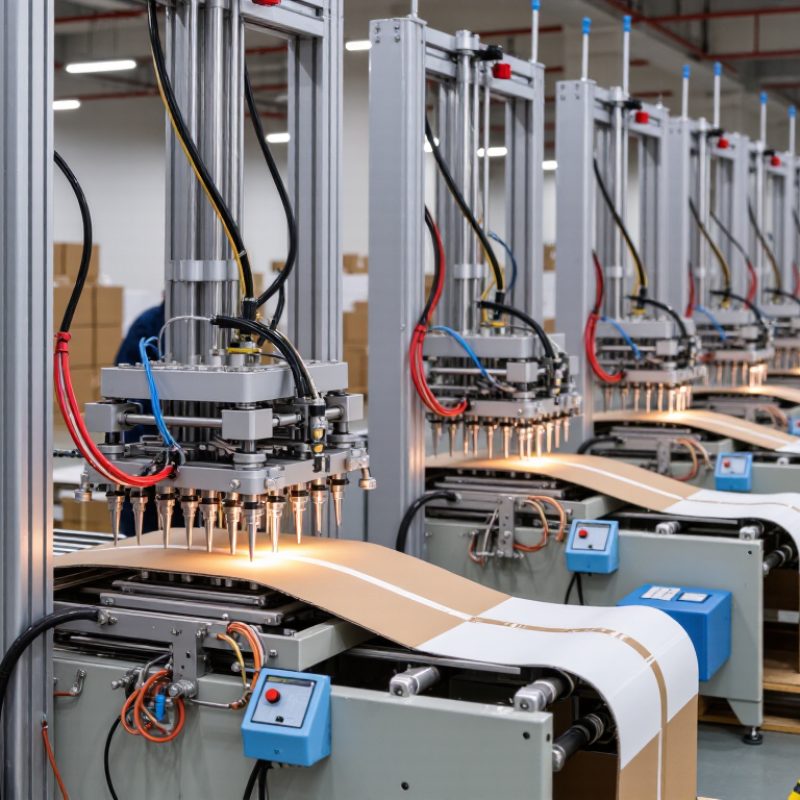
| 6 | Adhesive metering and application | Rollers, nozzles, valves, or other applicators deposit adhesive in a selected pattern or coverage area. | Applying a controlled film, bead, line, or series of dots. | Evaluate coat weight or bead consistency, pattern width, edge control, and ease of cleaning. |
| 7 | Application control | Machine controls coordinate feed motion and adhesive delivery; sensors may trigger, stop, or monitor selected operations. | Repeating application settings across workpieces or production batches. | Ask which settings are adjustable and whether recipes or alarms are available. |
| 8 | Joining and pressing | Where the process requires it, parts are brought together and pressure is applied during the adhesive’s specified bonding stage. | Lamination, assembly, and other bonding operations. | Validate pressure, contact time, open time, and cure conditions for the chosen adhesive and materials. |
| 9 | Inspection and process checks | Operators or suitable sensors check part presence, alignment, adhesive coverage, and finished bond quality. | Detecting process variation before parts move to the next operation. | Define acceptance criteria and confirm what the machine can inspect automatically. |
| 10 | Discharge and maintenance access | Finished parts exit by conveyor or collection area; accessible components support inspection and cleaning. | Moving bonded workpieces to curing, stacking, or downstream processing. | Check discharge layout, guarding, cleaning access, and routine maintenance requirements. |



 Close