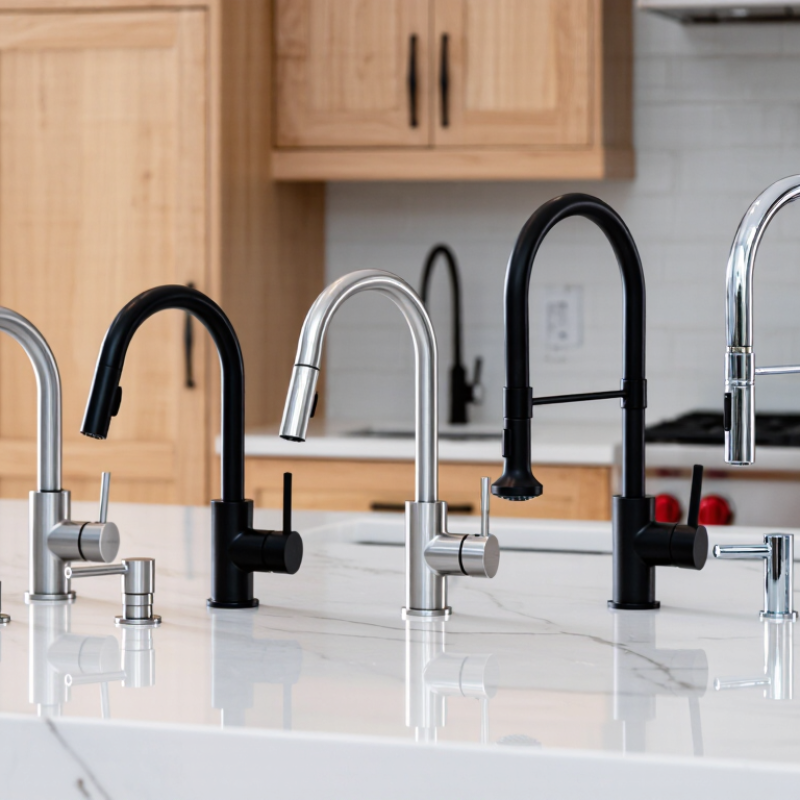
When comparing ten Chinese kitchen faucet manufacturers, look beyond model counts. A useful range includes pull-down and pull-out spouts, bridge designs, multiple spray modes, and replacement cartridges. Ask whether finishes, hoses, and valves are made in-house or purchased. This matters when matching samples to repeat orders. Small detail, big impact.
Standards offer a firmer comparison. Check documented testing against ASME A112.18.1/CSA B125.1 for plumbing supply fittings, and NSF/ANSI/CAN 61 and 372 for drinking-water contact and lead-content requirements. Request current certificates, model coverage, and test reports—not just a logo on a brochure. A certificate may cover only selected configurations. That can be easy to miss.
Manufacturing capability is equally specific: verify casting, CNC machining, polishing, surface treatment, assembly, and pressure or leak testing. The World Bank’s World Development Indicators put China’s manufacturing value added at roughly 26% of GDP in 2023. That scale is useful context, not proof of faucet quality. During supplier reviews, compare defect records, traceability, and production lead times. I would still inspect a production sample; polished showroom pieces can hide uneven spray patterns or stiff handles.



 Close