Natural gas remains a practical fuel for factories that need steady steam, controllable heat, and reliable production schedules. The International Energy Agency’s Energy Efficiency 2023 report puts industry’s share at about 37% of global energy use. That scale makes boiler performance more than a purchasing detail. It affects fuel bills, operating routines, and the heat available at the production line.
This guide introduces ten Natural Gas Steam Boiler manufacturers serving markets worldwide. It considers practical comparison points: rated steam output, operating pressure, combustion controls, efficiency claims, service coverage, and the availability of replacement parts. A boiler room offers clear evidence. Operators can inspect burner response, condensate return, and the condition of insulation, not just a brochure’s headline rating. The U.S. Department of Energy’s Improving Process Heating System Performance sourcebook also emphasizes system-level assessment. A boiler’s real performance depends on how the complete heating system is operated and maintained.
There is no single best choice for every facility. A compact food plant and a large chemical site face different steam loads, water conditions, and downtime costs. Rankings can simplify a complex market, but they cannot replace engineering checks or a site-specific quotation. That matters. Manufacturer specifications should be verified against applicable test methods and actual operating conditions. Readers should also ask about commissioning, maintenance support, and emissions data before comparing suppliers. A short list is useful; careful questions make it more useful.
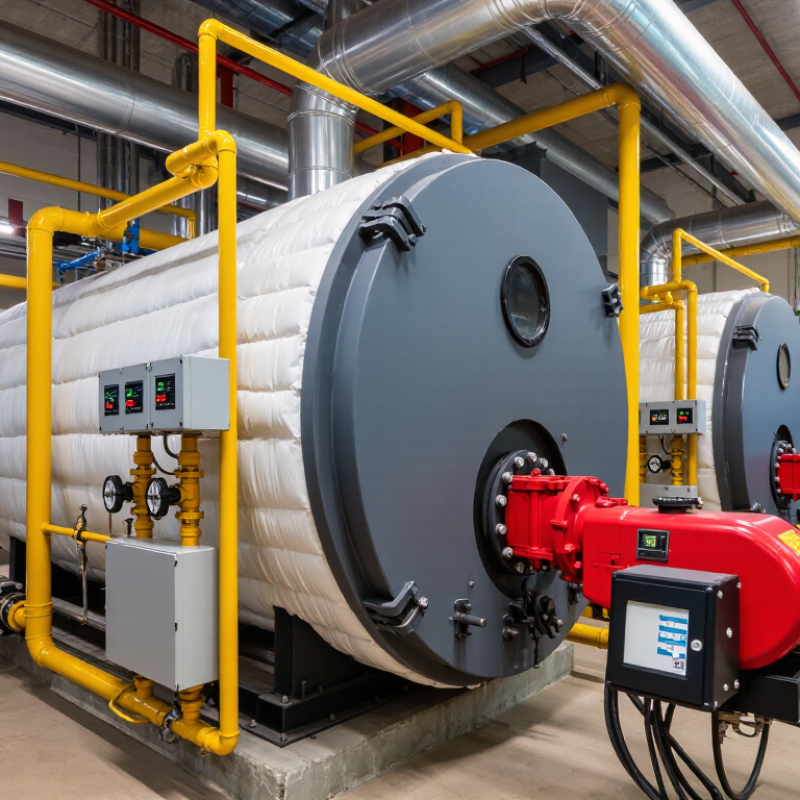
Natural gas steam boilers convert combustion heat into pressurized steam for industrial processes and building services. Fire-tube models pass hot gases through tubes surrounded by water, making them suitable for steady, moderate-capacity loads. Water-tube designs carry water inside heated tubes and are often chosen for higher pressures or rapid response. Once-through units can supply steam without a large drum, but require precise feedwater control. The right type depends on pressure, load variation, water quality, available space, and maintenance expertise—not capacity alone.
A burner mixes gas and air; a furnace transfers heat to boiler surfaces. Where fitted, a steam drum separates vapor from water. Feed pumps, level controls, gauges, safety valves, blowdown lines, and economizers support operation. Small details matter. Deposits on heat-transfer surfaces or a poorly adjusted burner can waste fuel and disrupt steam delivery.
The International Energy Agency reports that industry accounts for about 37% of global energy use (IEA, Industry), underscoring the value of efficient process heat.
Food plants use steam for cooking and cleaning; paper mills, chemical facilities, and hospitals use it for drying, processing, and sterilization.
Sizing can be messy: demand shifts by hour, and an oversized boiler may cycle too often.



 Close