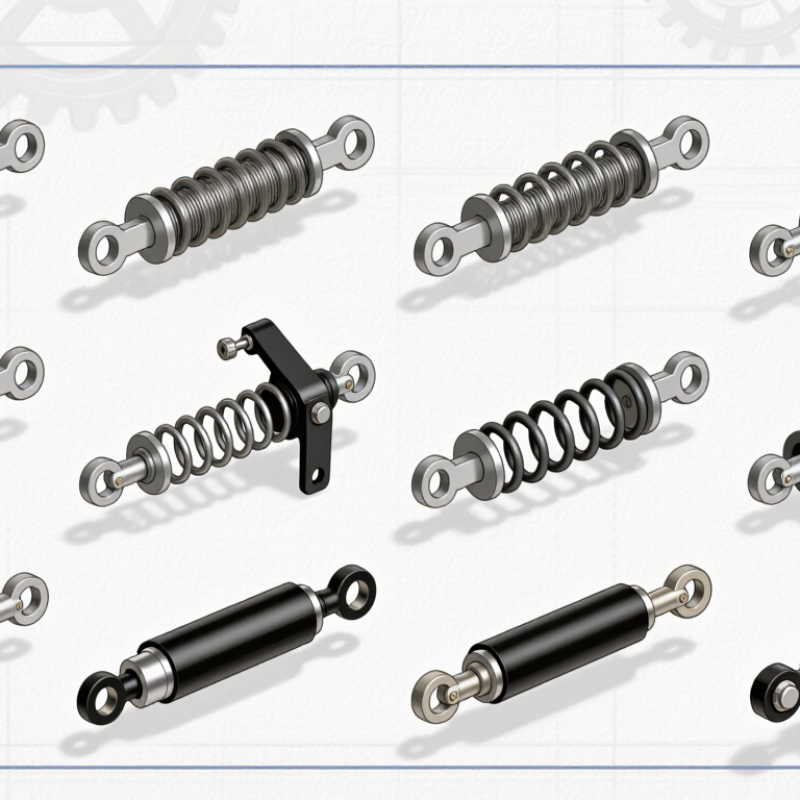
| Compression-Spring Idler | A compression spring pushes an idler pulley or sprocket against the slack side of a belt or chain. | Compact chain drives, conveyor take-ups, and auxiliary belt drives. | Choose an idler that matches the chain pitch, roller diameter, and inner width. The tensioner should normally act on the slack span and avoid forcing the chain beyond its allowable articulation. | Measure the belt span force at a specified deflection. Accept the installation only when the measured force falls within the calculated or equipment-specified range. | Simple and compact. Spring force can rise as compression increases, so travel and preload must be controlled. |
| Extension-Spring Tensioner | An extension spring pulls a pivoting arm, pulley, or sprocket into the slack span. | Long-center-distance belt drives, light conveyors, and mechanisms requiring external adjustment. | Use a sprocket with tooth geometry and pitch compatible with the selected ISO 606 chain. Verify that the spring stroke can absorb expected chain elongation. | Check static belt tension with a force-versus-deflection method or a calibrated tension gauge. Recheck after initial running because belts may settle during installation. | Provides useful travel and easy visual inspection. Repeated cycling can cause fatigue if the spring is overextended. |
| Torsion-Spring Pivot Arm | A torsion spring applies torque to a pivot arm carrying an idler pulley or chain sprocket. | Timing belts, roller chains, compact automotive-style drives, and guarded machinery. | Position the sprocket so the chain engages correctly without side loading. The arm range should accommodate pitch-line changes caused by wear and elongation. | Measure belt force at the specified span deflection while the arm is in its operating position. The torque-angle relationship should be checked if the tension varies significantly through the travel. | Good packaging and controlled motion. Pivot friction and arm geometry can make actual tension differ from nominal spring torque. |
| Constant-Force Spring Tensioner | A pre-stressed strip spring supplies an approximately constant pulling force over much of its extension range. | Long-travel belt tensioning, compact take-up systems, and applications with substantial center-distance variation. | Use a chain sprocket sized for the ISO 606 pitch and roller dimensions. Confirm that the available force remains sufficient for the chain load at the full take-up position. | Use a frequency meter or calibrated force gauge and compare the reading with the specified operating tension. A constant-force spring does not eliminate the need to verify belt pretension. | Maintains relatively uniform tension over long travel. Limited force capacity and sensitivity to incorrect winding or mounting. |
| Leaf-Spring Tensioner | A curved or flat spring element deflects to press an idler or guide against the slack span. | Low-profile conveyors, light chain drives, and machinery with restricted radial space. | The guide or sprocket must suit the chain width and roller diameter. Avoid contact with chain plates unless the component is specifically designed as a wear guide. | Measure belt tension using a defined deflection distance and force. Inspect for permanent set if the measured force decreases after repeated cycling. | Very low profile and few moving parts. Deflection, fatigue life, and alignment are strongly dependent on material and mounting geometry. |
| Disc-Spring Tensioner | Stacked conical disc springs generate axial force that moves an idler assembly or take-up screw. | High-load chain drives, industrial belt tensioners, and applications requiring high force in limited space. | Match the chain sprocket to the ISO 606 pitch and roller dimensions. Use a positive stop to prevent excessive chain tension and bearing overload. | Measure the resulting belt tension after the disc stack reaches its intended working position. Force-displacement calibration is recommended because stack arrangements alter spring rate. | High force density and adjustable spring rate. Friction, stack tolerances, and incorrect washer orientation can affect repeatability. |
| Wave-Spring Tensioner | A wave-shaped spring provides axial compression in a short axial package. | Small belt drives, compact chain mechanisms, and bearing-mounted idler assemblies. | Ensure that the sprocket width and chain side clearances correspond to the ISO 606 chain size. Axial spring force must not introduce harmful side loading into the chain or sprocket. | Verify tension with a calibrated force gauge or frequency measurement. The measured value should be taken at the specified temperature and belt span condition. | Efficient use of axial space and suitable for moderate loads. Limited travel and lower energy capacity than many helical springs. |
| Helical Compression-Spring Plunger | A guided compression spring pushes a sliding plunger, shoe, roller, or idler toward the belt or chain. | Modular conveyors, printed machinery, packaging equipment, and adjustable guide systems. | Use a roller or sprocket compatible with the selected ISO 606 chain dimensions. The plunger should remain guided to prevent skewed chain engagement or belt tracking errors. | Set the plunger preload, then measure belt tension at the working deflection. Confirm that friction in the guide does not prevent the tensioner from responding to belt length changes. | Easy to manufacture and service. Guide friction, contamination, and spring buckling can reduce tension consistency. |
| Nested or Dual-Rate Spring Tensioner | Two or more springs are arranged in parallel or in series to create a progressive or staged force curve. | Drives exposed to variable loads, shock loading, or a wide range of belt and chain length changes. | Size the ISO 606 chain sprocket for the correct pitch, roller diameter, and inner width. The total spring force must control slack without exceeding the chain's permissible working load. | Measure belt tension at more than one arm or plunger position because the force curve is intentionally non-linear. Use the operating range rather than a single nominal value. | Can combine compliance with high end-of-stroke force. More components increase calibration and maintenance requirements. |
| Spring-Loaded Eccentric Tensioner | A spring biases an eccentric hub or cam so that rotation changes the center distance and maintains tension. | Timing belts, compact power-transmission assemblies, and adjustable chain-drive frames. | When used with a chain, the eccentric-mounted sprocket must maintain correct pitch-line alignment and sufficient tooth engagement for the applicable ISO 606 chain. | Lock the eccentric at the prescribed setting, then verify belt tension using frequency, force-deflection, or a calibrated tension gauge. Recheck after tightening because fastener torque can change the setting. | Offers adjustment and spring compliance in one assembly. Clamping security, eccentric runout, and alignment must be carefully controlled. |



 Close