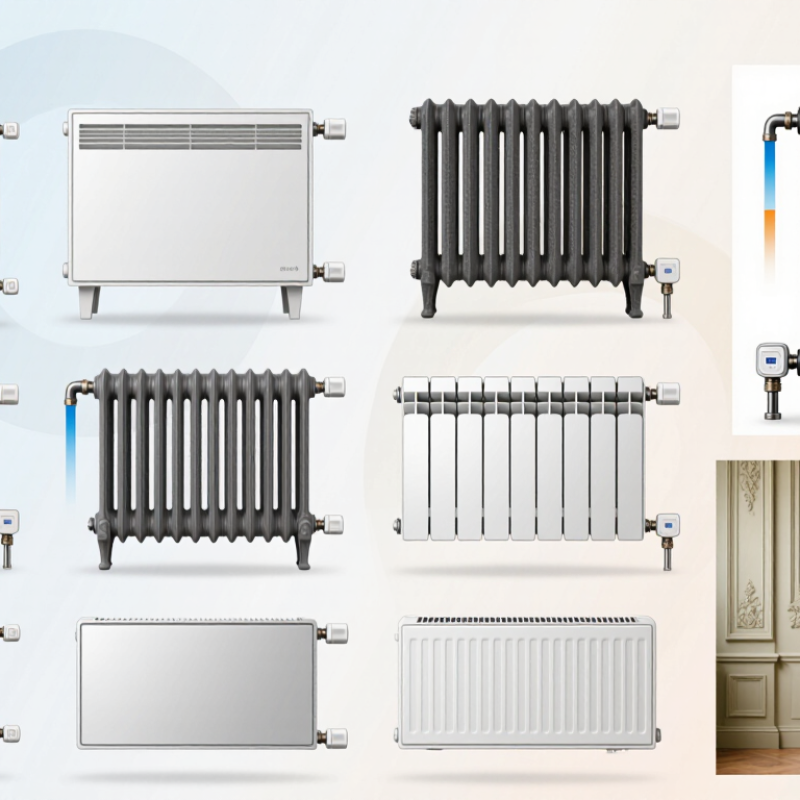
| 1 | Steel Panel Radiator | Pressed steel panels, often with internal water channels and convector fins. | Combines radiant heat from the panel with convection from the fins. | Homes, apartments, offices, and other buildings with wet central-heating systems. | Widely available in different sizes and panel configurations; generally quick to warm up. | Check system pressure, water temperature, connection layout, dimensions, and corrosion protection. |
| 2 | Cast-Iron Sectional Radiator | Individual cast-iron sections joined together to form a radiator. | High thermal mass provides gradual heat-up and slow cooling. | Older buildings, traditional interiors, and systems designed for substantial water content. | Durable construction and steady heat release after the heat source switches off. | Heavy weight may require suitable floor and wall support; confirm condition and system compatibility. |
| 3 | Aluminum Sectional Radiator | Lightweight aluminum sections assembled into a chosen radiator length. | Typically responds relatively quickly to changes in water temperature. | Residential heating and installations where low weight or flexible sizing is useful. | Low mass and modular construction can simplify handling and sizing. | Check manufacturer limits for water chemistry, operating pressure, and compatibility with other system metals. |
| 4 | Steel Column Radiator | Welded steel tubes or columns arranged in rows and joined into sections. | Transfers heat through both exposed surfaces and natural air movement between columns. | Homes, public buildings, and projects seeking a traditional column-style appearance. | Available in varied heights, depths, and section counts; can suit both classic and modern interiors. | Output depends on dimensions and water temperatures; allow for cleaning access between columns. |
| 5 | Steel Tubular Radiator | Welded steel tubes formed into horizontal or vertical arrangements. | Provides radiant and convective heating from its tube surfaces. | Residential and commercial spaces where shape or visual design is important. | Flexible forms and sizes can fit narrow walls or distinctive room layouts. | Compare rated output, connection positions, pressure rating, and ease of cleaning. |
| 6 | Hydronic Towel-Rail Radiator | Water-carrying horizontal bars connected to vertical headers, usually in a ladder-like form. | Heats the room while warming towels placed on or near the bars. | Bathrooms, en-suites, and utility rooms connected to a hot-water heating circuit. | Combines room heating with towel warming and uses relatively little wall area. | Check bathroom electrical-zone requirements if using a combined electric option; towel coverage can affect heat output. |
| 7 | Hydronic Baseboard Convector | A low-profile enclosure containing a hot-water pipe and metal fins. | Primarily heats by natural convection as room air moves through the enclosure. | Residential rooms with clear perimeter wall space, including homes in North America. | Low height can fit beneath windows and distribute heat along a wall. | Keep the air inlet and outlet clear; furniture, curtains, and dust can reduce performance. |
| 8 | Fan-Assisted Hydronic Radiator | A water-heated heat exchanger paired with one or more small fans. | Fans move room air across the heat exchanger to increase air circulation. | Rooms needing a compact emitter or faster heat delivery from lower-temperature water. | Can provide substantial output from a smaller unit than a comparable natural-convection design. | Requires electrical power and may produce fan noise; check controls, maintenance access, and system flow requirements. |
| 9 | Low-Surface-Temperature Radiator | A hot-water radiator enclosed or guarded to limit access to its hot surfaces. | Transfers heat through the enclosure and designed air openings. | Schools, care settings, healthcare facilities, and other spaces where surface contact is a concern. | Protective design can reduce direct access to the hot heating element. | Compare certified surface-temperature details, output, cleaning access, and applicable local safety requirements. |
| 10 | Trench Hydronic Convector | A hot-water coil installed in a floor trench beneath a grille; some models include fans. | Warm air rises from the floor-level grille, creating a convective heat curtain. | Spaces with large windows or glazed façades where wall-mounted radiators are impractical. | Can preserve unobstructed walls and fit discreetly into the floor near glazing. | Requires planned floor space, drainage or condensate provisions where applicable, and access for cleaning and servicing. |



 Close