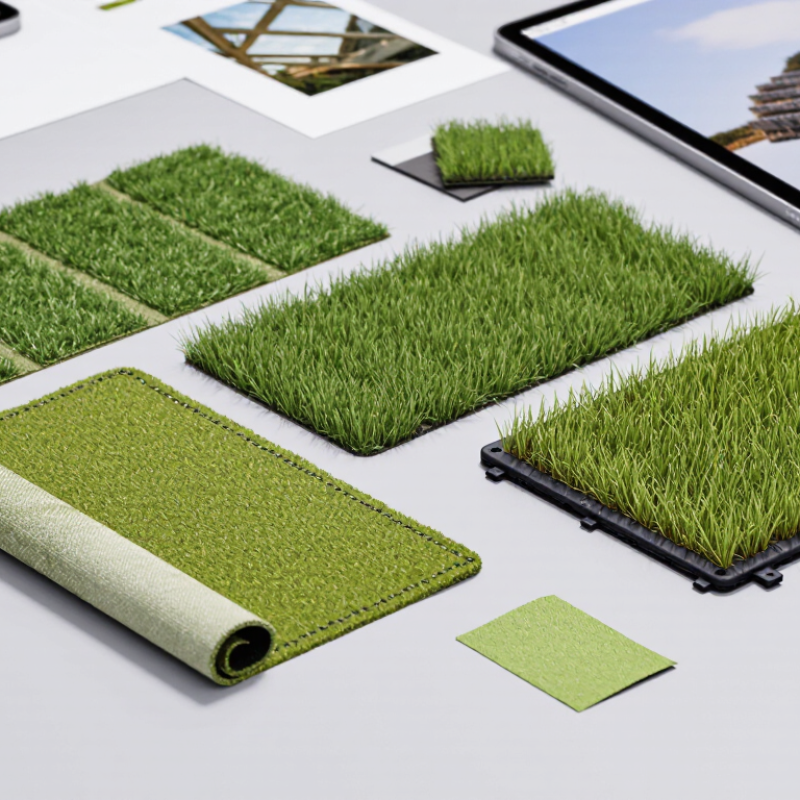
| Mat construction | A golf mat commonly combines an artificial-turf playing surface with a resilient support layer and a base intended to limit movement. A 3D design may use different turf zones, layered materials, or shaped contours. | Request a layer diagram identifying each material, layer thickness, bonding method, and intended use. |
| Turf face | Artificial-turf yarns may use materials such as polyethylene, polypropylene, or nylon. Tufted, woven, and needle-punched constructions are possible; the chosen structure affects feel, durability, and surface appearance. | Compare yarn material, pile height, stitch or tuft density, backing construction, and turf sample consistency. |
| 3D playing surface | Fairway, rough, and teeing areas can be combined to provide different surface textures. Raised or sloped sections may be formed by shaping the base or assembling layers of different thicknesses. | Check a dimensioned drawing or physical sample for zone layout, contour height, slope, and transitions between surfaces. |
| Shock-absorbing layer | Foam or rubber-based layers can be incorporated beneath the turf to provide cushioning and help manage impact. The actual material and construction depend on the product design. | Ask for the material type, thickness, density where specified, and the result of any agreed impact or compression test. |
| Backing and bonding | Turf backing may be coated or laminated to help secure the yarns and join the playing surface to lower layers. Coating and adhesive choices should suit the intended indoor or outdoor application. | Review backing details and request checks for delamination, edge separation, and yarn pull-out using agreed test methods. |
| Cutting and finishing | After the turf and backing are prepared, panels may be cut to the approved outline and finished with bound or stitched edges. Openings or inserts can be added when required by the design. | Confirm finished length, width, thickness, opening positions, edge finish, and dimensional tolerances on the order drawing. |
| Grip and stability | A textured or rubberized underside can help reduce movement on a suitable floor. Performance depends on the base material and the surface on which the mat is placed. | Check underside construction and evaluate slippage on the intended floor type under the agreed use conditions. |
| Production quality control | Inspections can cover incoming materials, surface assembly, bonding, cutting, and finished-product appearance. Sampling frequency and acceptance limits should be agreed between buyer and supplier. | Use a written inspection plan covering dimensions, weight if relevant, color, surface defects, bond integrity, and batch identification. |
| Outdoor-use suitability | Outdoor exposure can involve sunlight, moisture, temperature changes, and dirt. Suitability depends on the turf, backing, adhesives, and base working together. | Request test reports relevant to the intended market and use; confirm cleaning, drainage, storage, and maintenance instructions. |
| Supplier comparison | Manufacturers can be compared by design support, material traceability, process control, customization capability, sample quality, and documented quality procedures. | Compare the same drawing, material requirements, inspection criteria, and sample conditions across suppliers before making a purchasing decision. |



 Close