| 1 | Ball Valve | A drilled ball rotates 90 degrees to open or close the flow path. | Very low pressure loss when fully open Fast shutoff Excellent isolation | Manual lever, electric actuator, or pneumatic actuator; commonly used for on/off service. | Compressed-air distribution, natural gas, process air, water, vacuum, and general industrial isolation. | Compact design, reliable bubble-tight shutoff when properly selected, and simple quarter-turn operation. | Standard full-port designs are not ideal for continuous throttling; soft seats may be affected by high temperature or abrasive media. |
| 2 | Butterfly Valve | A circular disc rotates around a stem positioned across the pipe. | Low to moderate pressure loss Fast operation Lightweight | Manual handle or gearbox, electric actuator, or pneumatic actuator; suitable for isolation and moderate throttling. | Large-diameter air ducts, ventilation systems, cooling water, water treatment, low-pressure gas, and industrial utilities. | Low weight, short face-to-face length, economical installation, and efficient automation. | The disc remains in the flow path; pressure drop and control accuracy can be less favorable than with a full-port ball valve. |
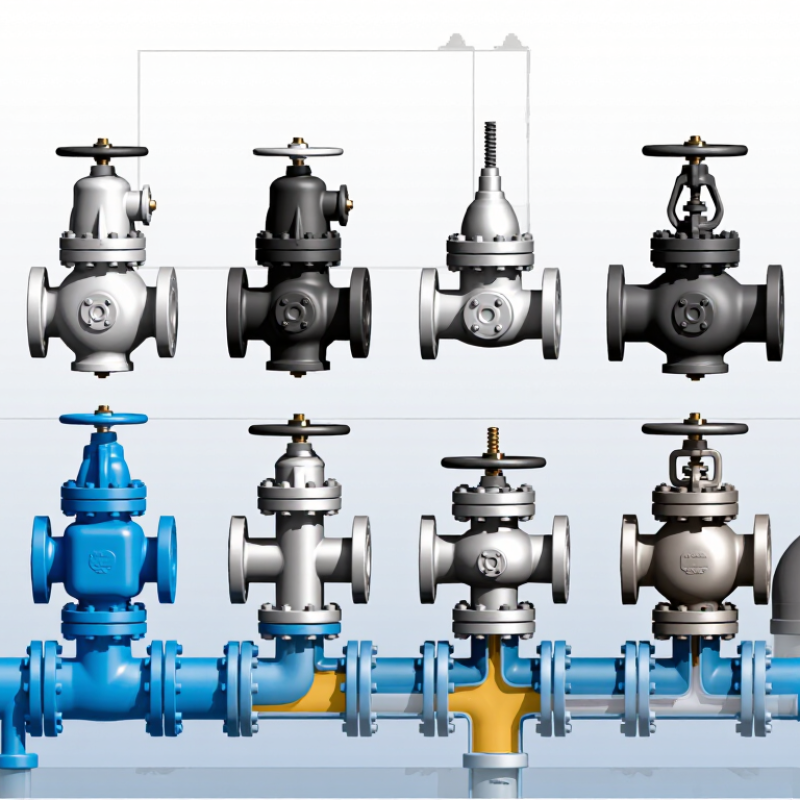
| 3 | Globe Valve | A movable plug or disc travels toward or away from a stationary seat. | Strong throttling capability Moderate to high pressure loss Good regulation | Handwheel, electric actuator, or pneumatic actuator; well suited to modulating control. | Pressure control, flow regulation, steam, compressed air, cooling systems, and process lines requiring frequent adjustment. | Good control precision, predictable flow characteristics, and robust shutoff performance. | Higher pressure drop, larger size, and more energy loss than low-resistance quarter-turn valves. |
| 4 | Gate Valve | A gate or wedge moves vertically away from the flow path to create a nearly unobstructed opening. | Very low pressure loss when open Slow operation Isolation focused | Handwheel, electric actuator, or hydraulic actuator; normally operated fully open or fully closed. | Large pipelines, air and gas headers, water utilities, process plants, and systems requiring infrequent isolation. | Low resistance in the fully open position and suitability for large line sizes. | Poor choice for throttling; slow travel, heavier construction, and possible seat or gate damage from vibration or partial opening. |
| 5 | Check Valve | A disc, ball, piston, or dual plate opens with forward flow and closes when flow reverses. | Automatic operation Low to moderate pressure loss Backflow protection | No external actuator is normally required; selection should consider cracking pressure and closing speed. | Compressor discharge lines, air receivers, pump systems, gas pipelines, pneumatic equipment, and parallel-flow systems. | Protects equipment from reverse flow and prevents pressure loss between connected sections. | Can chatter or cause water hammer if incorrectly sized; cannot be used for positive manual isolation. |
| 6 | Needle Valve | A tapered needle moves into a small seat opening to provide fine flow adjustment. | Excellent fine control High pressure loss Low flow capacity | Usually manual; can be integrated with actuators for precise low-flow regulation. | Instrument air, calibration systems, pneumatic controls, sampling lines, laboratory equipment, and pressure-gauge isolation. | Accurate low-flow adjustment and good repeatability for instrument service. | Not suitable for large flow rates, rapid isolation, or dirty media that can damage the fine seat and stem. |
| 7 | Plug Valve | A cylindrical or conical plug rotates inside the valve body to align or block the flow passage. | Low pressure loss when open Fast quarter-turn action Good isolation | Manual lever or gearbox, electric actuator, or pneumatic actuator; mainly used for on/off service. | Gas distribution, fuel systems, abrasive or dirty process service, chemical lines, and industrial air isolation. | Simple flow path, compact operation, and availability of lubricated or sleeved designs for demanding service. | Operating torque can be high; lubrication, seat compatibility, and maintenance requirements vary by design. |
| 8 | Diaphragm Valve | A flexible diaphragm moves against a weir or seat and separates the actuator mechanism from the medium. | Good contamination resistance Moderate pressure loss Good shutoff | Manual handwheel, pneumatic actuator, or electric actuator; available for on/off and control duties. | Corrosive gases, clean air, chemical processing, pharmaceutical utilities, water treatment, and slurry-related services. | Minimal leakage around the stem, isolated internal mechanism, and suitability for corrosive or hygienic media. | Diaphragm life is affected by temperature, pressure, cycling, and chemical compatibility; flow capacity may be limited. |
| 9 | Solenoid Valve | An electromagnetic coil moves a plunger or pilot mechanism to open or close the valve. | Fast response Repeatable switching Low to moderate flow capacity | Electrical signal, commonly configured as normally closed or normally open; direct-acting and pilot-operated versions are available. | Pneumatic cylinders, automated machinery, air preparation units, safety interlocks, irrigation controls, and process automation. | Compact automation, rapid response, remote control, and easy integration with control systems. | Requires suitable electrical power and coil protection; pilot-operated models need adequate differential pressure and clean medium. |
| 10 | Air Release and Vacuum Valve | A float or rolling mechanism automatically releases trapped air and admits air when a liquid pipeline develops negative pressure. | Air management function Protects pipeline integrity Low normal-flow resistance | Normally automatic; isolation valves are often installed below the unit for maintenance. | Water transmission mains, irrigation systems, pumping stations, wastewater pipelines, and liquid systems with air-pocket or vacuum risks. | Reduces air locking, helps limit vacuum damage, and supports stable hydraulic performance. | Primarily intended for liquid pipelines rather than general compressed-air distribution; sizing and installation position are critical. |



 Close
Close