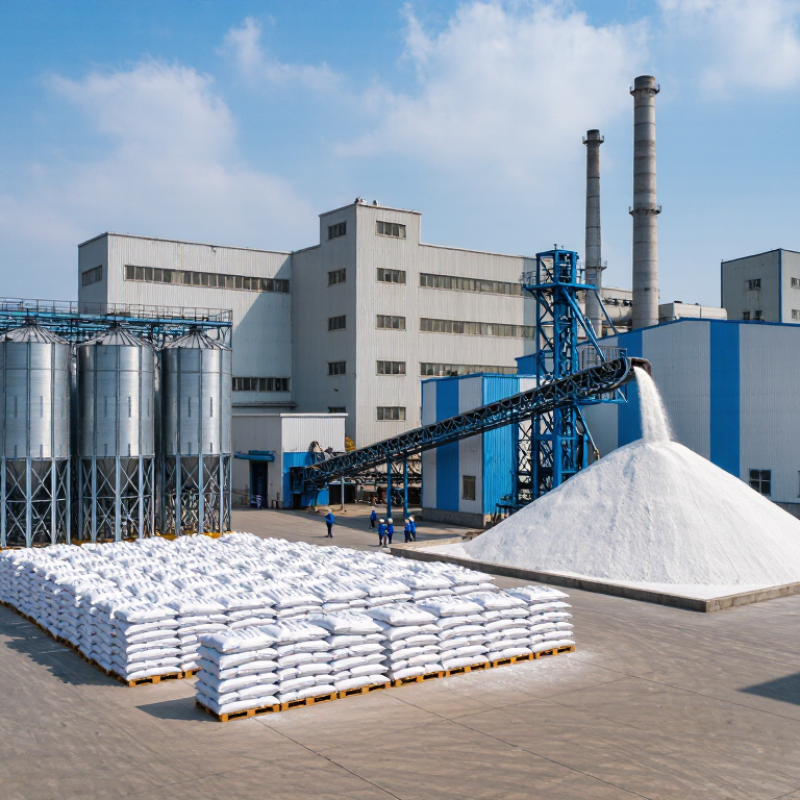
China’s ammonium sulfate supply chain begins largely at industrial sites, not dedicated fertilizer mines. Steelmakers recover ammonia from coke-oven gas, while chemical plants generate ammonium sulfate as a by-product. Producers then crystallize or granulate it, test moisture and nitrogen content, and arrange bulk or bagged transport. The material may travel by truck to nearby blending plants or by rail and port for export. Small handling details matter: damp granules can cake during storage.
Trade data show the scale. China Customs records, available through UN Comtrade under HS code 310221, place China’s 2023 ammonium sulfate exports above eight million tonnes. That volume connects domestic by-product plants with overseas importers through exporters, inspection services, warehouses, and port terminals. The trade figure does not reveal every supplier’s capacity or product consistency. It is a useful map, not a quality guarantee.
Buyers usually assess nitrogen and sulfur content, particle size, moisture, and shipment timing. Fertilizer-grade material commonly contains about 21% nitrogen and 24% sulfur, though specifications vary by product and contract. A producer near a chemical complex may offer steady output, while a trader can consolidate cargo from several plants. Convenient, but traceability may be less direct. Ask for recent analysis certificates and confirm whether the quoted grade matches the delivered material. I would not assume two white, free-flowing samples perform identically.



 Close