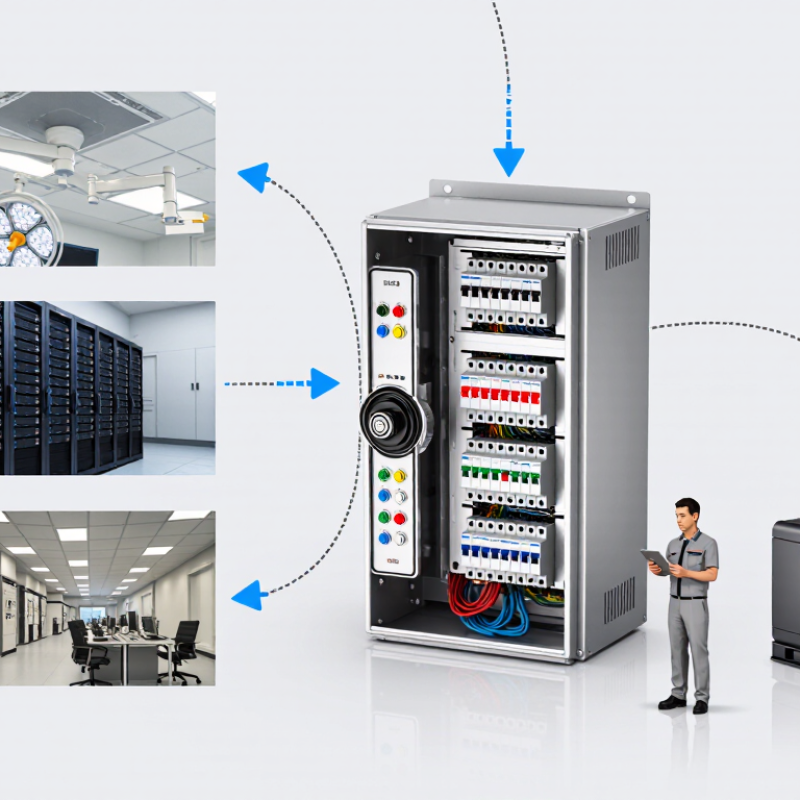
Open-transition ATS units are common in commercial buildings. They disconnect one source before connecting the other, creating a brief interruption. For lighting, pumps, or general loads, that pause may be acceptable.
Delayed-transition switches add a neutral position, giving motors time to shed residual voltage before reconnection. Useful for motor-heavy sites. Neither type has a universal transfer time; settings and equipment affect performance.
Closed-transition ATS units briefly overlap sources, so they can transfer without a noticeable break when both sources are synchronized. That suits sensitive processes, but requires careful controls and compatible sources.
Static transfer switches use power electronics and can switch in milliseconds, making them useful for critical electronic loads. Fast is not always better. The load’s tolerance matters.
NFPA 110 (2022) classifies emergency power systems by restoration time: Type 10 requires power within 10 seconds, while Type 60 allows up to 60 seconds. These are system-level requirements, not guaranteed switch speeds.
Capacity is separate from transfer type: engineers size equipment by continuous current, fault withstand, and load characteristics. Uptime Institute’s 2024 Global Data Center Survey found that 54% of respondents’ most serious recent outages cost more than $100,000, underscoring why selection and testing matter.
A small detail can still be missed: actual performance depends on wiring, protection settings, and maintenance.



 Close