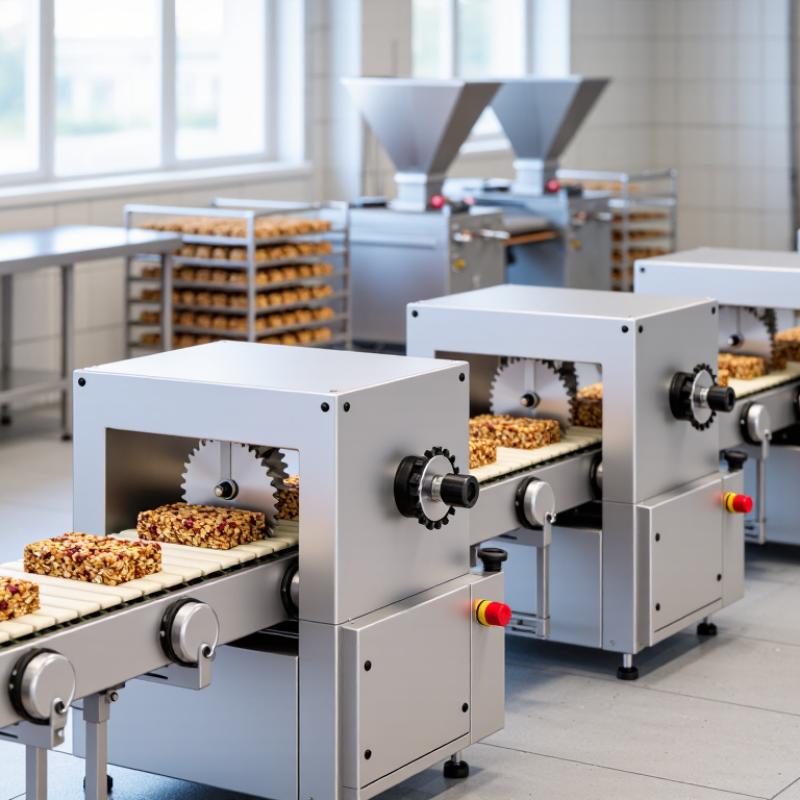
Cereal bar cutting machines vary according to product texture, output needs, and line layout. Guillotine cutters use a descending blade to divide a continuous slab into bars. They suit firm, even mixtures and can produce clean, repeatable portions. Blade sharpness matters: a dull edge may compress soft cereal or drag fruit pieces through the cut. Operators should also check bar thickness and slab temperature before adjusting cutting speed.
Rotary cutters use rotating blades for continuous production, while wire cutters can handle delicate mixtures with less crushing. Ultrasonic cutters vibrate a blade at high frequency, helping it pass through sticky ingredients such as syrup, chocolate, or dried fruit. They often leave smoother edges, but require careful setup and maintenance. Small trial cuts help reveal whether a machine suits a particular recipe. The messiest test can be the most useful.
When comparing machines for sale, consider adjustable cut sizes, cleaning access, guarding, and how quickly operators can change settings. A fast cutter is not always the best fit. If bars vary in density, even a well-calibrated machine may produce uneven edges, so regular checks remain important.



 Close