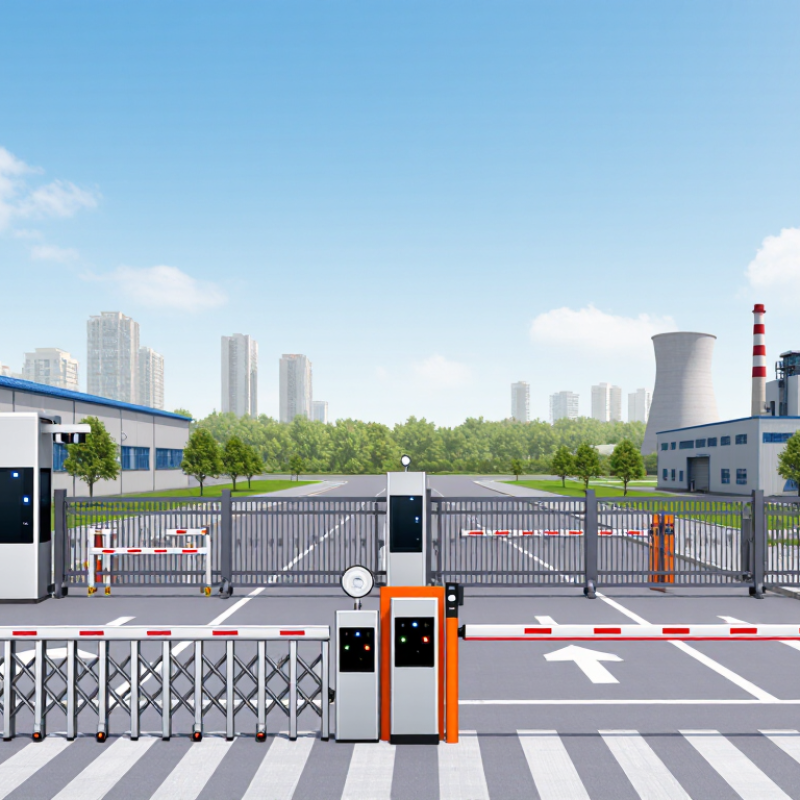
| Residential Sliding Gate | Approximately 300–800 kg gate leaves; generally used for private driveways and small compounds | 200–600 W | 10–20 m/min | Intermittent duty; commonly around 20%–30% depending on traffic frequency | IP44–IP55 | Rack-and-pinion transmission, obstacle detection, soft start and stop, manual release, and optional battery backup. Confirm the actual gate weight, travel length, slope, and wind exposure before selecting the motor. |
| Commercial Sliding Gate | Approximately 600–2,000 kg gate leaves; suitable for warehouses, offices, schools, and residential developments | 400–1,500 W | 10–25 m/min | Medium duty; commonly around 30%–50% with suitable thermal protection | IP54–IP65 | Higher-torque gear motors, reinforced drive components, adjustable limit switches, photocells, emergency release, and access-control integration are commonly specified. |
| Heavy-Duty Industrial Sliding Gate | Approximately 1,500–5,000 kg gate leaves; used at factories, logistics centers, ports, and high-security sites | 1,000–3,000 W | 8–18 m/min | High duty; commonly around 50%–100% when designed for frequent or continuous operation | IP55–IP67 | Industrial gearboxes, high-starting torque, forced cooling or thermal protection, encoder feedback, braking control, and redundant safety devices may be required. Foundation quality and gate alignment are critical. |
| Residential Swing Gate | Typically 2–4 m per leaf and approximately 100–400 kg per leaf | 150–400 W per operator | 12–25 seconds for a 90° opening | Intermittent duty; commonly around 20%–30% | IP44–IP55 | Linear actuators and articulated-arm operators are common. Selection depends on leaf length, weight, hinge geometry, wind pressure, and the required opening angle. |
| Commercial Swing Gate | Typically 3–6 m per leaf and approximately 300–800 kg per leaf | 300–1,000 W per operator | 15–30 seconds for a 90° opening | Medium duty; commonly around 30%–50% | IP54–IP65 | Heavy-duty arms or underground operators, adjustable force control, limit management, photocells, magnetic locks, and access-control interfaces are typical requirements. |
| Industrial Swing Gate | Typically 4–8 m per leaf and approximately 500–1,500 kg per leaf | 750–2,000 W per operator | 20–45 seconds for a 90° opening | High duty; commonly around 50%–100% with appropriate cooling and control systems | IP55–IP67 | High-load hinges, reinforced gearboxes, encoder-based positioning, mechanical stops, emergency operation, and a risk-assessed safety circuit are important for industrial installations. |
| Automatic Barrier Gate | Barrier arms commonly 3–8 m long; designed for vehicles rather than solid gate leaves | 100–500 W | 1.5–6 seconds for a 90° movement | Medium to continuous duty; often specified by cycles per hour rather than only by percentage | IP44–IP65 | Brushless or geared motors, counterbalance springs, loop detectors, vehicle presence sensors, LED boom lighting, and anti-crush protection are common. Wind load must be assessed for long arms. |
| High-Speed Industrial Gate | Usually designed for large openings in factories, warehouses, clean areas, and logistics facilities | 750–3,000 W | 0.5–2.5 m/s | High-frequency operation; commonly designed for hundreds of cycles per day or more | IP54–IP65 | High-speed drives, frequency control, safety light curtains, radar or induction-loop activation, wind-lock systems, and automatic reset functions are typically required. |
| Cold-Climate Automatic Gate System | Load and size vary by gate type; selection must account for snow, ice, and low-temperature lubrication | Usually 10%–30% above the standard calculated requirement | May be reduced in low temperatures | Depends on motor thermal rating, heating provisions, and site maintenance conditions | IP55–IP67 | Specify low-temperature-rated lubricants, sealed enclosures, heated control cabinets where necessary, frost-resistant sensors, and a manual release that remains usable during power failure. |
| Coastal or High-Humidity Gate System | Load and size vary by gate type; corrosion exposure is often the main design factor | Based on calculated gate load and friction | Selected according to gate type and safety requirements | Depends on traffic level and motor thermal class | IP65–IP67 recommended for exposed equipment | Use corrosion-resistant fasteners, suitable powder coating or stainless-steel components, sealed cable glands, drainage provisions, and regular inspection of hinges, racks, control boxes, and safety devices. |



 Close
Close