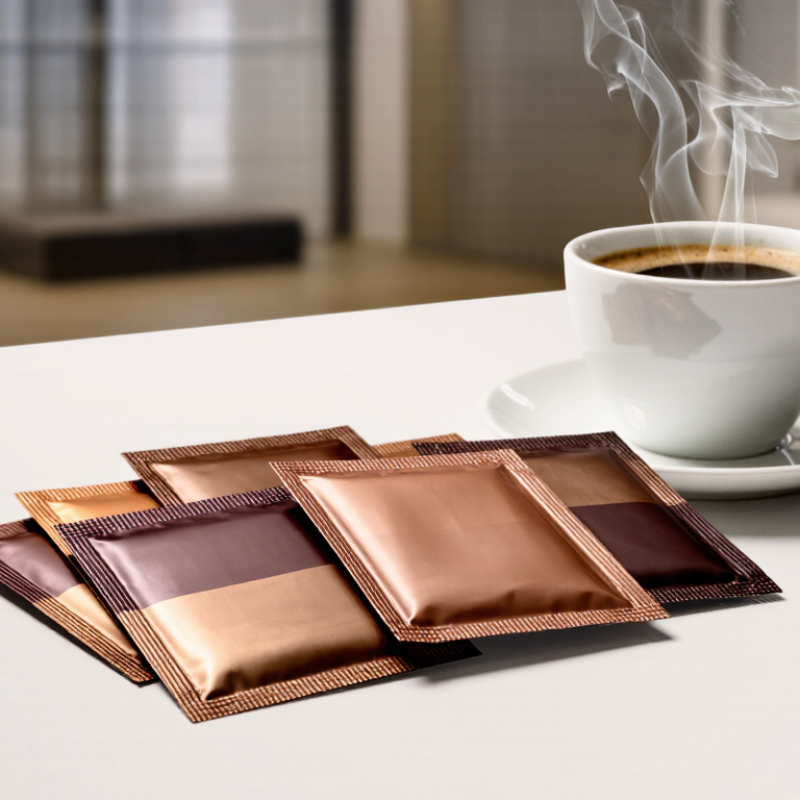
Reliable suppliers of bru coffee sachets begin with controlled production, not attractive catalogs. Green coffee is checked for moisture, defects, and origin records before roasting. Roasting profiles are documented by time and temperature. Operators then grind the beans to a defined particle range. This supports consistent extraction in hot water.
Quality teams inspect sachet weight, aroma, color, and seal strength. They also test moisture and oxygen exposure during storage. Each batch should carry a traceable code. Samples may be reviewed by an independent laboratory for microbiological and chemical safety. Documented HACCP, GMP, or ISO-based systems can strengthen buyer confidence, but certificates alone prove little. Factory discipline matters more.
Packaging must protect coffee from humidity, light, and oxygen. Multi-layer laminate is commonly selected for this purpose. Heat seals require regular checks because tiny channels can damage freshness. Cartons should withstand stacking, transport vibration, and changing climates. Outer labels need clear ingredients, net weight, batch details, shelf life, and storage instructions. Requirements differ across markets, so suppliers should verify destination rules before printing.
In practice, no factory is flawless. A strong supplier records defects instead of hiding them. Corrective actions should identify the cause, not only replace rejected cartons. Buyers can request production samples, seal-test results, packaging specifications, and recent quality records. These details reveal operational maturity better than polished sales language. Consistent communication also helps adjust sachet size, roast profile, and carton configuration without weakening quality control.



 Close