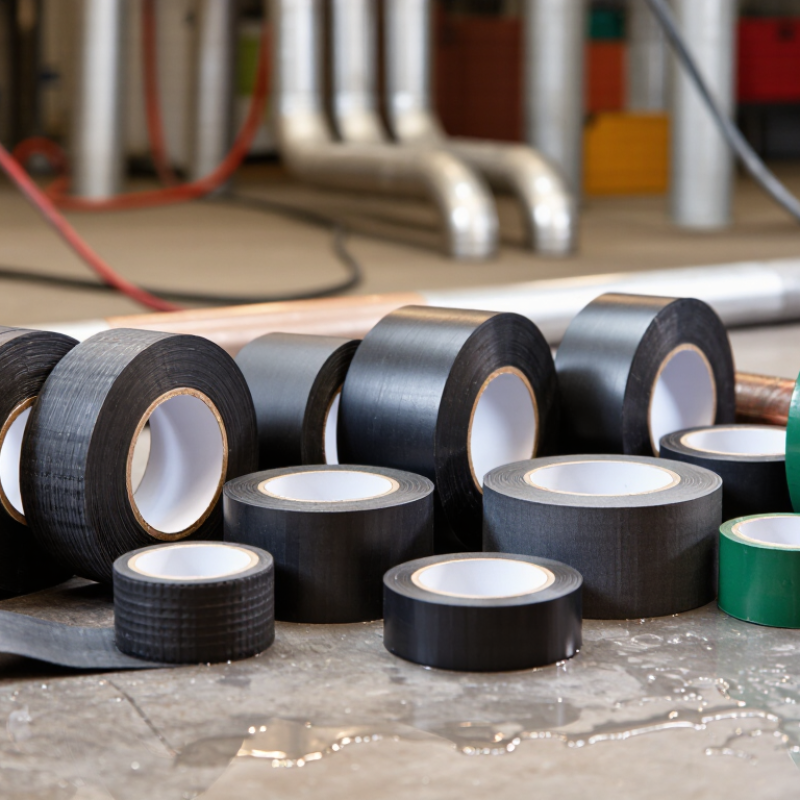
When comparing China’s heat resisting waterproof rubber tape suppliers, material choice should lead the review. Silicone tape remains flexible across roughly -50°C to 200°C, with some grades reaching 260°C. It suits cable joints, engine compartments, and outdoor repairs. EPDM tape often handles about -40°C to 150°C. It provides strong weather, ozone, and moisture resistance. Fluorosilicone grades offer better chemical resistance, but usually cost more. Temperature ratings vary by formulation and testing method.
Self-fusing silicone tape Self-fusing silicone tape needs no adhesive layer. It bonds through stretching and pressure. Butyl rubber tape uses a tacky adhesive and seals seams, pipes, and roof penetrations effectively. It may soften under continuous high heat. A supplier should provide thickness tolerance, elongation, dielectric strength, and waterproof test data. Ask for batch traceability. A catalog number is not proof.
During practical checks, I would wrap samples around a warm metal pipe, then inspect shrinkage, edge lifting, and surface cracking. Small details matter. The tape should remain elastic after heating and cooling cycles. Suppliers with clear test reports, controlled packaging, and responsive technical support appear more reliable. Still, one weakness deserves attention: stated ratings may describe short exposure, not permanent service. Buyers should confirm application temperature, pressure, chemicals, and installation tension before selecting a product.



 Close