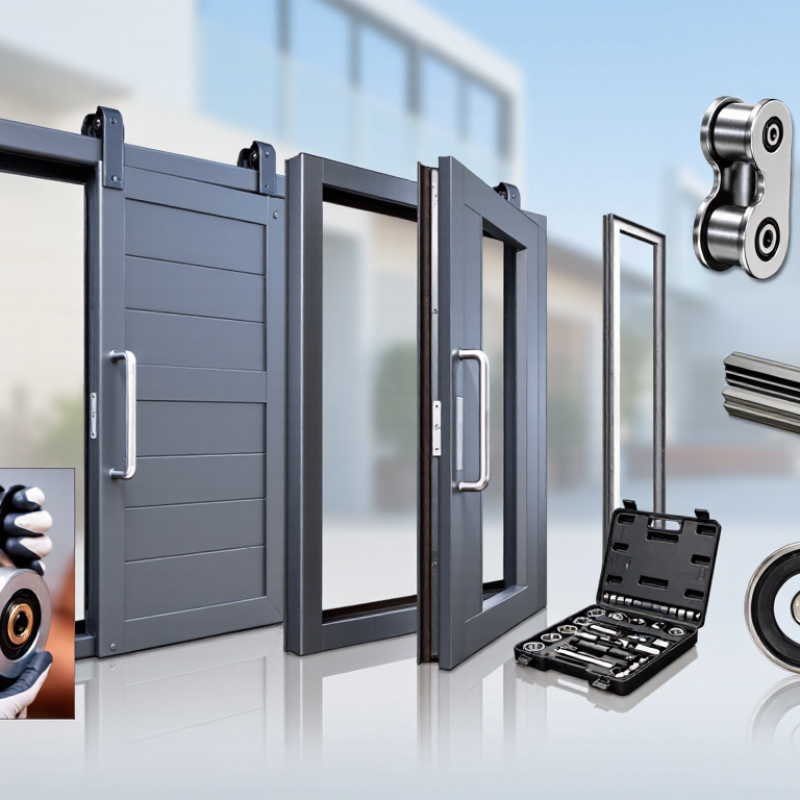
| Quote Scope | Door panels, tracks, frames, hardware, seals, finish, packing, installation accessories, and any motor or controls. | A comparable quotation identifies included and excluded items, quantities, dimensions, currency, Incoterm, payment terms, and quotation validity. | Compare offers against one shared specification and drawings. Check whether installation, taxes, freight, and commissioning are excluded. |
| Door Configuration | Sliding or folding arrangement, number of leaves, opening direction, stacking space, and manual or powered operation. | Shop drawings should show the opening, clear passage, panel layout, track arrangement, and operating clearances. | Confirm site dimensions, structural support, floor level, wind exposure, and whether the proposed layout preserves the required clear opening. |
| Load and Duty | Panel weight, track and trolley capacity, operating frequency, and expected service conditions. | Request rated capacities and supporting calculations or test documentation for the complete door system—not just individual hardware components. | Match the stated duty to the project’s panel weight, operating cycle, exposure, and maintenance plan. |
| Materials and Finish | Frame and panel materials, corrosion protection, coating system, seals, fasteners, and hardware grade. | Material specifications should state the material type, thickness, finish or coating, and any relevant test or inspection method. | Confirm suitability for indoor, coastal, humid, washdown, or other site conditions. Request finish samples where appearance matters. |
| Certifications and Standards | Quality-management certificates, product documentation, and market-specific safety or conformity requirements. | ISO 9001 relates to a quality-management system; it is not a product-performance certificate. EN 13241 covers industrial, commercial, and garage doors and gates in relevant European applications. Powered-door requirements depend on the product and market. | Check certificate validity, issuing body, scope, manufacturing site, and whether the offered door configuration is covered. Confirm applicable local requirements with the project’s compliance professional. |
| Safety Features | Stops, guards, handles, anti-drop measures, pinch-point protection, and operator safety devices where powered. | Request the risk assessment, operating instructions, safety-device details, and test records applicable to the supplied configuration. | Verify that safety provisions suit the door’s operation, installation environment, and applicable destination-market rules. |
| Lead Time | Drawing approval, production, inspection, packing, and transport are often separate schedule stages. | For planning, custom orders may require several weeks of production after approved drawings and agreed order release; shipping and customs add time. No single lead time applies to every project. | Ask for a dated schedule with approval deadlines, production milestones, shipment terms, and the consequences of late design changes. |
| Quality Control | Incoming-material checks, dimensional inspection, trial assembly, operation checks, and packing inspection. | Request an inspection and test plan, inspection records, approved drawings, and dated pre-shipment photographs or video. | Agree in writing on acceptance criteria, inspection timing, nonconformance handling, and responsibility for any third-party inspection. |
| After-Sales Support | Warranty terms, spare-parts availability, technical response, installation guidance, and replacement-part identification. | A useful support package states warranty duration and exclusions, response channel, parts lead time, and the documents supplied with the door. | Confirm how claims are handled, who pays for replacement parts and freight, and whether remote or on-site technical support is available. |
| Shipping and Packing | Export packing, loading method, shipment volume, delivery term, and damage-prevention measures. | Request packing dimensions and weight, packing photos, stated Incoterm, and a clear division of responsibility for transport and insurance. | Check container or freight assumptions and confirm how transit damage must be documented and reported. |
| Quote Evaluation | Total delivered cost, specification compliance, schedule risk, documentation, and support—not unit price alone. | Use a common comparison sheet and record deviations, exclusions, assumptions, and unanswered questions for each offer. | Shortlist only offers that meet the required opening, duty, safety, compliance, delivery, and service criteria. |



 Close