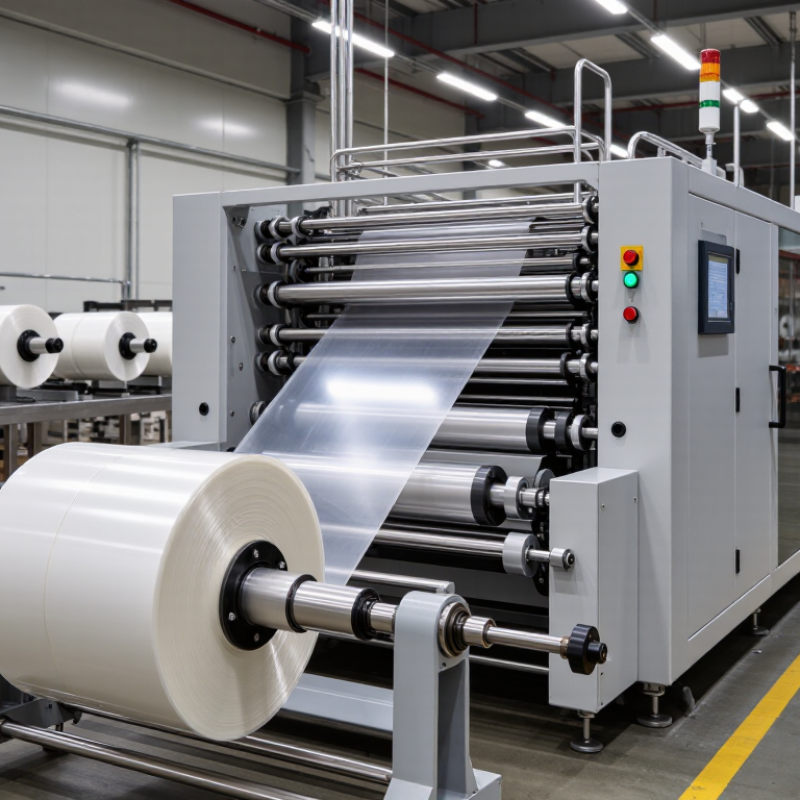
| Machine definition | A diaphragm slitting machine converts a wide roll of thin separator film into narrower rolls by making continuous longitudinal cuts. | It is used in battery-material processing, where slit width, edge quality, and contamination control are important. |
| Typical materials | Microporous polymer separator films, commonly made from polyethylene (PE), polypropylene (PP), or multilayer PE/PP structures. | Material thickness, porosity, coating, and mechanical properties affect blade selection, tension settings, and handling. |
| Slitting methods | Common methods include shear slitting with a rotary knife pair and razor slitting with a sharp blade. Crush-cutting may be used for some materials. | The best method depends on film properties and required edge quality; trials with the actual material are advisable. |
| Core machine sections | A typical line includes an unwind stand, web-guiding system, tension-control equipment, slitting station, rewind station, and safety enclosures. | Integrated control of web alignment and tension helps reduce wrinkles, wandering, and uneven winding. |
| Slit-width capability | Available slit widths vary by machine configuration, tooling, and product specification; there is no single universal range for all lines. | Confirm minimum and maximum slit widths, number of lanes, changeover method, and achievable width tolerance with the supplier. |
| Speed and output | Operating speed is determined by the machine design, material, slit pattern, winding requirements, and quality limits. | Compare demonstrated production speed on a similar separator film rather than relying only on a maximum speed specification. |
| Tension control | Unwind, slitting, and rewind tension are managed to keep the thin web stable throughout the process. | Suitable tension control helps prevent stretching, slack edges, telescoping rolls, and other winding defects. |
| Web guiding and alignment | Edge sensors and guiding equipment can correct lateral movement of the incoming web or control its position during processing. | Sensor placement and response should suit the web width, line speed, and required slit-position accuracy. |
| Blade and tooling setup | Blade type, overlap or clearance, mounting accuracy, and maintenance condition influence the cut. | Ask about tool-change time, blade life, setup repeatability, and procedures for inspecting cut edges. |
| Quality checks | Common checks include slit-width measurement, edge inspection, roll hardness and alignment, and verification of material traceability. | Inspection criteria should be matched to the separator specification and downstream battery-production requirements. |
| Cleanliness and safety | Separator processing may require controlled cleanliness, enclosed cutting areas, dust management, and guarding around moving parts. | Confirm applicable site requirements, operator safeguards, cleaning procedures, and the machine’s provisions for handling debris. |
| Manufacturer evaluation | Compare suppliers by material-processing experience, machine configuration, technical support, spare parts, and documented quality procedures. | Request a material trial, sample rolls, a detailed specification, and references for comparable applications before purchase. |



 Close