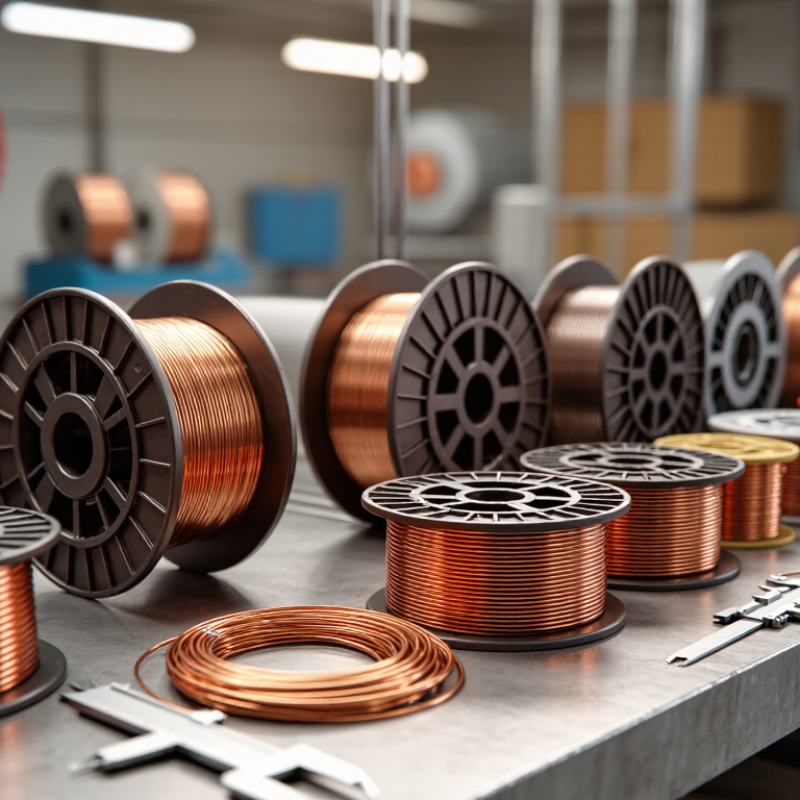
| Round copper magnet wire | Annealed copper | Enamel insulation, such as polyurethane, polyester, or polyesterimide systems | Varies by insulation system; common ratings include 130°C, 155°C, and 180°C | Motors, transformers, relays, solenoids, generators, and ignition coils | Compare conductor size, insulation build, voltage requirements, winding space, and thermal rating. |
| Rectangular copper magnet wire | Annealed copper with a rectangular or square cross-section | Enamel insulation, often with an additional insulating wrap in some designs | Depends on the complete insulation system; ratings commonly range from 155°C to 220°C | Traction motors, industrial motors, large transformers, and high-density windings | Offers efficient slot or coil-pack use; bend radius and insulation protection are important during winding. |
| Aluminum magnet wire | Annealed electrical-grade aluminum | Enamel insulation selected for the application and operating environment | Set by the insulation system; may include commonly used classes such as 155°C or 180°C | Distribution transformers, some motors, and equipment where reduced conductor mass is useful | Aluminum has lower electrical conductivity than copper, so conductor dimensions and connection methods need appropriate design. |
| High-temperature magnet wire | Usually copper; aluminum is available for selected designs | Higher-temperature systems may use polyesterimide with a polyamide-imide overcoat or polyimide film | System-dependent; common insulation classes include 200°C, 220°C, and 240°C | High-temperature motors, aerospace and transport equipment, and specialized electrical machinery | Confirm the rating of the complete insulation system and its compatibility with heat, chemicals, and processing conditions. |
| Self-bonding magnet wire | Usually round copper; other conductor formats may be available | Base enamel with an outer bonding layer activated by heat or an approved solvent process | Depends on the base insulation and bonding layer; specified by the particular wire grade | Compact coils, miniature motors, sensors, and components where a self-supporting winding is useful | Bonding activation conditions and finished-coil strength must suit the winding process and end-use environment. |
| Litz wire | Many individually insulated, fine copper strands, usually twisted or bundled | Individual strand enamel; an outer serving or jacket may also be used | Depends on the strand insulation and any outer covering | High-frequency transformers, inductors, wireless power systems, and radio-frequency components | Strand count, strand diameter, construction, and operating frequency affect AC losses and flexibility. |
| Heavy-build enamelled wire | Usually copper | Enamel insulation applied in a thicker build than a comparable standard-build wire | Depends on the selected enamel system and wire specification | Windings requiring enhanced abrasion resistance or additional insulation build, including some motor and coil designs | Increased insulation thickness can affect winding space and finished-coil dimensions. |



 Close