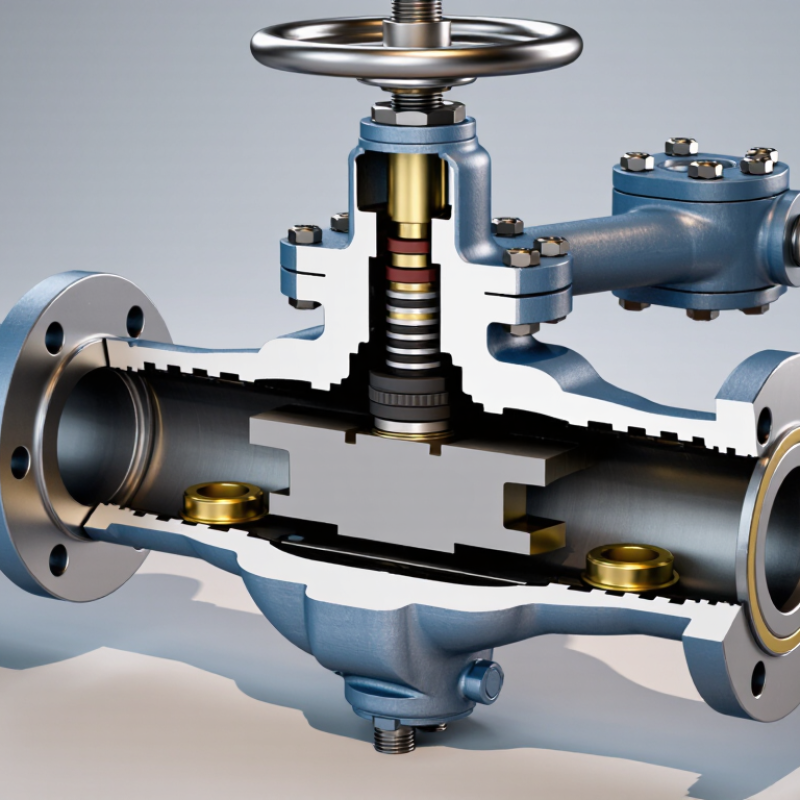
| Valve component | Body | Contains the pressure and provides the main flow passage and interfaces for internal parts. | Material, pressure rating, dimensions, and pressure-containing integrity are verified against the specified design and applicable API 6A edition. |
| Valve component | Bonnet | Closes the valve body and supports or encloses the stem and upper sealing arrangement. | Connection and sealing surfaces are inspected; the assembled pressure boundary is included in applicable pressure tests. |
| Valve component | Gate or slab | Moves across the flow path to open or close the valve. | Dimensions, surface condition, and interaction with the seats are checked to support reliable movement and sealing. |
| Valve component | Seat assemblies | Provide sealing surfaces against the gate and help isolate pressure when the valve is closed. | Seat leakage is evaluated during applicable closure tests at the specified test conditions. |
| Valve component | Stem | Transfers force from the operating mechanism to move the gate. | Material, dimensions, finish, and operation are checked as required by the design and inspection plan. |
| Valve component | Stem packing and bonnet seals | Limit leakage along the stem and at the bonnet-to-body joint. | Sealing performance is checked as part of the applicable assembled-valve pressure or leakage tests. |
| Valve component | Operating mechanism | Provides manual or powered movement of the stem and gate. | Operational checks confirm that the valve can travel between its specified positions without abnormal binding. |
| End connection | Flanged connection | Joins the valve to compatible piping or wellhead equipment using bolted flange interfaces. | Verify the specified flange size, pressure rating, facing, dimensions, and compatibility with the mating connection. |
| End connection | Threaded connection | Connects the valve to compatible equipment through specified threaded ends. | Confirm thread form, size, make-up requirements, and pressure rating; do not assume different thread systems are interchangeable. |
| End connection | Hub or clamp-type connection | Uses a hub, clamp, and sealing ring to connect equipment where that end style is specified. | Check hub dimensions, clamp and seal compatibility, rating, and the applicable assembly procedure. |
| API 6A quality level | PSL (Product Specification Level) | Defines specified quality, documentation, inspection, and testing requirements for the product. | PSL 1 through PSL 4 represent progressively more stringent specification requirements overall; the applicable level depends on the order and product service. |
| API 6A performance level | PR (Performance Requirement) | Describes performance-validation requirements for applicable equipment designs. | Where specified and applicable, PR1 and PR2 indicate different validation requirements; PR2 generally involves more extensive performance validation. Confirm the exact scope in the applicable standard edition. |
| Testing | Pressure-containing body test | Checks the integrity of the assembled pressure-containing parts. | Test medium, pressure, duration, and acceptance criteria must follow the applicable API 6A edition, product rating, and purchase requirements. |
| Testing | Seat or closure test | Evaluates the valve’s ability to restrict flow through the closed valve. | Pressure direction, test pressure, duration, and allowable leakage depend on the applicable requirements and valve configuration. |
| Testing | Functional and final inspection | Confirms correct assembly, operation, identification, and required records. | Inspection and documentation should match the ordered PSL, specified PR level where applicable, and applicable API 6A edition. |



 Close