Our company only collects the necessary data and respects your privacy, in accordance with the General Law for the Protection of Personal Data 13.709/2018. By continuing, you confirm that you have read and accepted the Privacy Notice. Privacy Policy.

Medal Pt Br Medal Es

Medal Group

Who Are the Top Glass Machine Manufacturers in 2026?

Choosing a Glass Machine Manufacturer in 2026 means looking beyond a polished catalog. A line may cut, temper, coat, or handle glass, and each process places different demands on accuracy and uptime. A small misalignment can leave a visible flaw along a finished edge. A slow service response can keep a production line idle. This guide compares leading manufacturers through practical criteria: machine capability, automation, safety features, technical support, spare-parts access, and suitability for different production volumes. Company rankings can change with market conditions, so the comparisons focus on verifiable product and service information rather than bold promises.

One practical perspective for this guide is expressed in an original, illustrative quote from fictional glass-processing specialist Maya Chen: “A machine proves its value in the steady quality of the next thousand panes.” This is an editorially drafted line, not a verified quotation from a real person. The idea is still useful. Buyers should ask how equipment performs across routine shifts, not only in a showroom demonstration. They can also check installation requirements, operator training, maintenance intervals, and the availability of local support. No machine suits every factory. The best choice depends on glass types, product dimensions, floor space, and expected output. This overview will help readers compare established names, understand their strengths, and identify questions to ask before requesting a quotation.

Who Are the Top Glass Machine Manufacturers in 2026?

Glass Machinery: Industry Scope and Main Equipment Categories

Glass machinery covers the equipment that prepares raw materials, melts glass, shapes it, and finishes the product. The U.S. Department of Energy’s 2017 Glass Manufacturing Bandwidth Study identifies melting and refining as the industry’s largest energy-consuming stage, accounting for roughly 70% of process energy. That figure helps explain why furnace design, combustion control, and heat recovery matter so much on a production floor.

Equipment varies with the product. Flat-glass lines use batch systems, furnaces, float-forming sections, annealing lehrs, cutters, and inspection units. Container plants rely on forming machines that shape molten glass into bottles and jars, followed by annealing and quality checks. Pressing, drawing, tempering, coating, and glass-handling systems serve other product types. The categories blur. A plant may combine several processes, and the same machine configuration will not suit every glass composition or product thickness.

The DOE study also emphasizes energy-efficiency opportunities across manufacturing, including furnace improvements and better process control. Operators assess machinery by more than rated speed: stable temperatures, low defect rates, safe handling, and consistent output matter daily. A fast line is not always a good line. Equipment boundaries can be untidy, too; inspection and material handling often connect production stages rather than fitting neatly into one category.

Glass Machinery: Typical Process Temperature Ranges

Glass production machinery spans melting, forming, annealing, tempering, and laminating. This chart shows indicative operating-temperature ranges for common soda-lime architectural glass processes—not manufacturer rankings.

Temperatures are approximate process ranges. Actual settings vary with glass composition, product thickness, equipment design, and production conditions.

How Leading Glass Machine Manufacturers Are Evaluated in 2026

In 2026, evaluating glass machine manufacturers means checking how equipment performs on a real production line, not just comparing brochure specifications. A cutting or tempering line may look impressive in a showroom yet behave differently during a long shift. Assess output consistency, glass thickness range, edge quality, changeover time, and energy use under documented conditions. Ask for recent test data and clarify whether figures describe peak output or a sustained shift. Details matter. Observe how operators load sheets, clear routine faults, and access wear parts; awkward maintenance can quietly reduce uptime.

Reliability also depends on controls, training, spare-part availability, and response time after installation. Request references from plants with a similar product mix, and speak with both managers and machine operators. Their priorities may differ. A manager may value throughput, while an operator notices vibration, confusing alarms, or repeated manual adjustments. Compare warranty coverage and service terms in writing, including exclusions. Be cautious with rankings based on one metric. They can miss the practical cost of downtime and inconsistent quality. No evaluation is perfect. Site conditions, staff experience, and local support shape results, so record assumptions before scoring manufacturers.

Major Glass Machine Manufacturers and Their Specialties

Glass-machine manufacturers are best compared by process specialty, not by one universal ranking. The European Commission’s 2013 Best Available Techniques Reference Document for the Manufacture of Glass identifies melting and furnace operation as central production concerns. The International Energy Agency reports that industry uses about 37% of global energy and produces roughly 24% of energy-related carbon dioxide emissions (Energy Efficiency 2023). Furnace efficiency, heat recovery, and steady temperature control are practical differentiators, not just brochure claims.

Some manufacturers specialize in container-glass forming lines, where reliable gob delivery and quick mold changes matter. Others focus on flat-glass cutting, edging, tempering, or coating. These systems must handle large, fragile sheets without chipping their edges. Inspection and automation specialists add cameras and sensors to flag bubbles, scratches, or thickness variation before products leave the line. A supplier may excel at one stage yet offer less flexibility elsewhere. It is worth checking service access and spare-part lead times, too; these details are easy to overlook during a polished factory visit.

Tips: Ask for production data from a line running similar glass and product sizes. Check changeover time, defect rates, and energy use per tonne. Then verify the figures with operators. A small trial can reveal gaps that a brochure misses.

Key Technologies Transforming Glass Manufacturing Equipment

Who Are the Top Glass Machine Manufacturers in 2026?
Key Technologies Transforming Glass Manufacturing Equipment

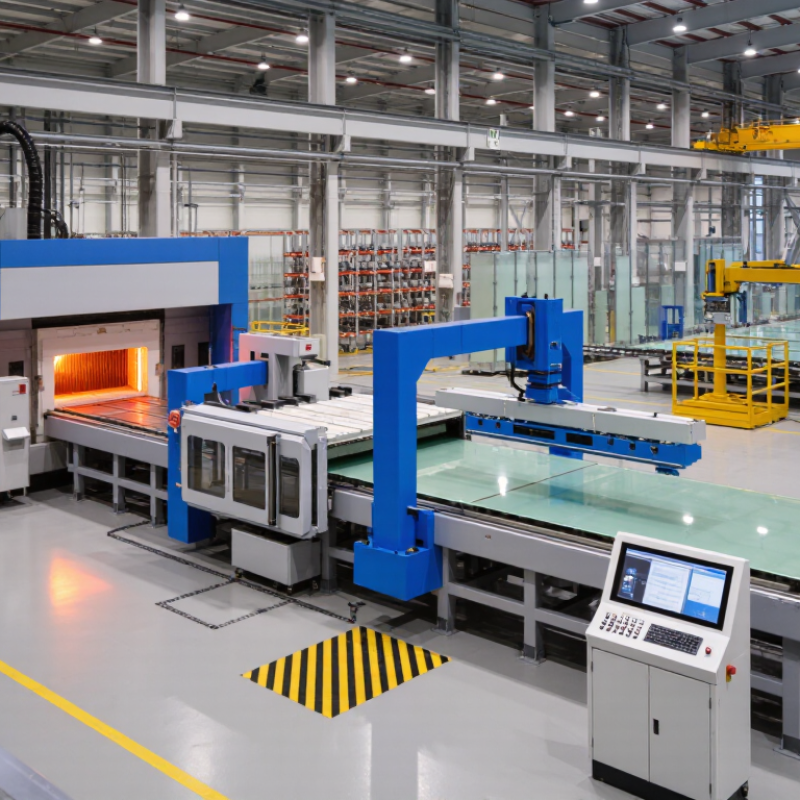
Glass production is changing through smarter controls, connected sensors, and more precise motion systems. On cutting lines, machine vision can locate sheet edges and detect chips before glass moves to the next station. Servo-driven handling helps position heavy panes with less vibration. These improvements can reduce rework, but results depend on calibration and operator skill. No sensor fixes a poorly maintained roller.

Tips: Check whether a machine records temperature, vibration, and stoppage data. Ask how operators can review alarms and adjust settings. A clear interface matters during a busy shift.

Digital twins and predictive maintenance are also gaining attention. A virtual model can help teams test line settings before changing production. Sensors may flag unusual motor heat or bearing vibration, giving technicians time to inspect equipment. Yet data can be incomplete, and alerts sometimes create noise. Manufacturers should evaluate service access, spare-part availability, and training alongside headline automation features. Small details count: a stable pane, clean cutting fluid, and a readable fault log can matter more than impressive software claims.

Who Are the Top Glass Machine Manufacturers in 2026? — Key Technologies Transforming Glass Manufacturing Equipment

Equipment Area Key Technology How It Works Relevant Technical Fact Manufacturing Benefit Typical Applications
Flat-glass production Float-glass forming and process control Molten glass is formed as a continuous ribbon on a bath of molten tin, then cooled and annealed. The float process produces flat, parallel surfaces; commercial product thickness depends on the line and specification. Supports continuous production of large, consistent sheets for downstream processing. Architectural glazing, mirrors, furniture, and vehicle glass
Glass cutting CNC optimization and automated cutting tables Software lays out required shapes on glass sheets, while controlled cutting heads score the glass along programmed paths. Cutting plans can account for sheet dimensions, edge allowances, and defect locations to reduce avoidable offcuts. Improves repeatability, throughput, and material utilization. Insulating-glass units, windows, doors, and custom panels
Thermal strengthening Convection-assisted heating and controlled quenching Glass is heated near its softening range and rapidly cooled with air; the resulting surface compression improves strength. Fully tempered glass generally cannot be cut or drilled after heat treatment; edgework and holes must be completed beforehand. Produces safety glazing that breaks into smaller, less sharply pointed fragments than ordinary annealed glass. Building façades, doors, shower enclosures, and appliance panels
Laminated-glass production Interlayer lay-up, de-airing, and autoclave bonding Two or more glass plies are joined with a polymer interlayer; heat and pressure bond the layers after air removal. If fractured, the interlayer helps hold glass fragments together, though performance depends on the complete glazing design. Adds post-breakage fragment retention and can be specified for acoustic or security requirements. Vehicle windshields, skylights, balustrades, and overhead glazing
Insulating-glass assembly Automated spacer application and perimeter sealing Separate glass panes are assembled around a spacer to create a sealed cavity, which may contain air or an insulating gas. Thermal performance depends on factors including pane coatings, cavity width, gas fill, spacer design, and seal quality. Combines repeatable assembly with improved thermal and, in some configurations, acoustic performance. Residential and commercial windows and curtain walls
Glass coating Vacuum magnetron sputtering In a vacuum chamber, material is deposited in thin layers onto glass; multiple layers can be engineered for optical performance. Low-emissivity coatings can reduce radiative heat transfer; the coating's exact performance depends on its layer design and glazing configuration. Enables controlled solar and thermal properties without changing the basic glass-forming process. Energy-efficient windows, solar-control façades, and specialty glass
Inspection and handling Machine vision, sensors, and robotic material handling Cameras and sensors inspect surfaces or dimensions, while automated systems move sheets between processing stations. Inspection results depend on lighting, camera resolution, defect criteria, and the glass surface being examined. Supports consistent quality checks and reduces manual handling of heavy, fragile sheets. Integrated production lines and high-volume glass processing

This technology-focused comparison describes glass equipment processes rather than ranking or naming manufacturers. Actual operating ranges and product performance vary by equipment configuration, glass type, and applicable standards.

Regional Market Trends and Factors for Choosing a Manufacturer

Glass machinery demand in 2026 is shaped less by headlines than by local production needs. In fast-growing Asian markets, new float-glass and container lines often require high throughput, automation, and reliable commissioning support. European buyers may focus more on energy use, retrofit compatibility, and precision control, especially where plants run older furnaces. North American projects often weigh labor availability and service response alongside capacity. Local conditions matter.

These differences make a single global ranking misleading. A manufacturer with strong forming technology may still be a poor fit if spare parts take weeks to arrive. Ask for references from plants with similar glass types, shift patterns, and operating conditions. Review cycle-time data, rejection rates, power consumption, and the assumptions behind each figure. Numbers need context. A quoted output rate can look impressive on paper, yet depend on ideal feedstock or unusually skilled operators.

Before signing, inspect a machine in operation if possible, and speak directly with maintenance staff. Check training, remote diagnostics, warranty exclusions, and the availability of critical components in your region. Compare total ownership costs, not just purchase prices. Smaller suppliers may offer closer engineering attention, but their service network can be thin. Larger suppliers may provide broader coverage, though standard configurations may not suit every plant. Even careful comparisons miss things; operators notice problems a spreadsheet cannot.