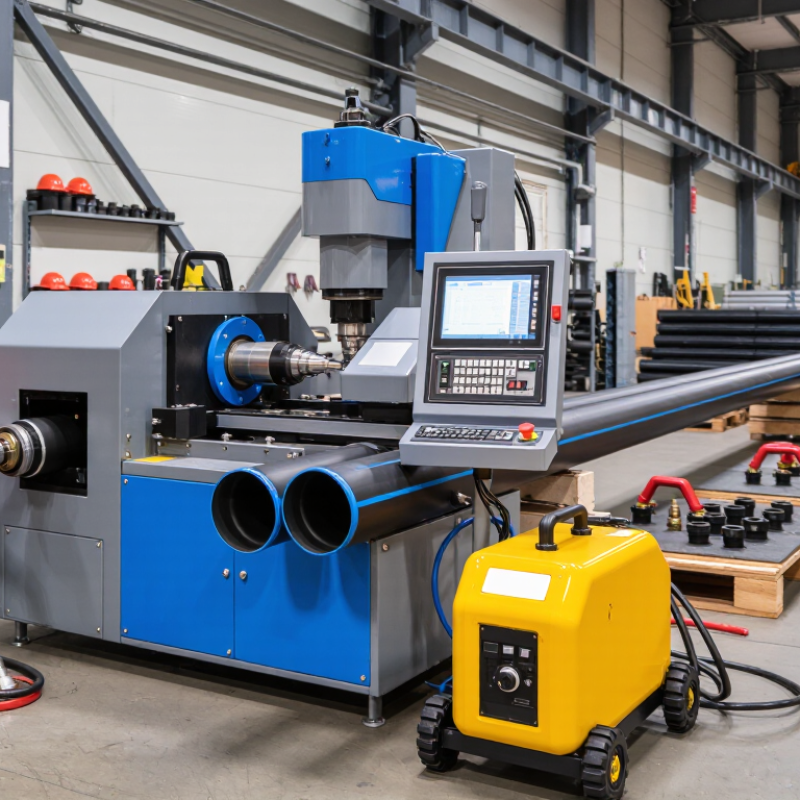
| Butt Fusion Machine | Heats prepared pipe or fitting ends with a heating plate, then presses the softened ends together under controlled alignment and joining force. | Joining compatible polyethylene pipe sections and butt-fusion fittings in water, gas, drainage, and industrial piping systems. | Typically includes pipe clamps, an alignment and facing tool, a removable heater, and a mechanism for applying joining force. Available in manual, hydraulic, and automated configurations. | Joint quality depends on clean, properly faced ends, alignment, suitable heating and joining parameters, and adequate cooling time. Equipment capacity varies by model and pipe size. |
| Electrofusion Control Unit | Supplies a controlled electrical current to a compatible fitting’s embedded resistance wire. Heat softens the fitting and pipe surfaces so they fuse together. | Joining polyethylene pipes to electrofusion couplers, tees, elbows, and service saddles, including repair and tie-in work. | Usually provides controlled power and may read fitting information from a barcode or other input method. Some setups include a pipe scraper, clamps, and alignment tools. | Pipe surfaces must be prepared as specified, kept clean and dry, and held still during fusion and cooling. The control unit must be compatible with the fitting’s requirements. |
| Socket Fusion Tool | Heats the outside of a pipe end and the inside of a matching socket fitting with heated male and female dies, then joins the softened parts by insertion. | Smaller-diameter polyethylene pipework and compatible socket fittings, where the pipe and fitting system is designed for socket fusion. | Commonly consists of a temperature-controlled heater, interchangeable socket and spigot dies, and a stand or hand-held arrangement. | Correct die size, insertion depth, heating time, and alignment are important. Socket fusion is not a universal method for all HDPE pipe sizes or systems. |
| Saddle Fusion Machine | Heats the prepared surface of a main pipe and the base of a compatible saddle fitting, then presses the fitting onto the main to form a fused branch connection. | Installing branch outlets or service connections on compatible polyethylene mains. | Often uses a fixture to hold the saddle in position and apply repeatable pressure; some machines also support specialized tapping operations. | The main and fitting must be compatible with the specified saddle-fusion procedure. Secure positioning and the required heating and cooling cycles are essential. |
| Extrusion Welder | Feeds softened thermoplastic weld material through a heated shoe onto prepared surfaces, building a weld along the joint. | Fabricating or repairing polyethylene sheets, tanks, liners, and certain large or nonstandard components. | Typically includes a material feed system, heating elements, and a welding shoe. Hand-held units are common for fabrication and repair work. | Requires compatible weld material and suitable joint preparation. It is generally used for component fabrication rather than routine end-to-end pipe joining. |
| Hot-Air (Hot-Gas) Welder | Directs heated gas at prepared thermoplastic surfaces or filler material to soften them for a weld, often using a hand-fed welding rod. | Light fabrication, detail work, and repairs on compatible polyethylene sheets and components. | Usually a hand-held tool with adjustable heat and airflow; nozzle selection depends on the application. | Suitable settings and technique depend on material, thickness, and joint design. It is not a substitute for a qualified pipe-joining method where that method is specified. |



 Close
Close