Top 10 Lifting Bolts for Heavy Duty Applications
Choosing the right lifting hardware can determine whether a heavy load moves smoothly or becomes a serious safety concern. This guide examines the Top 10 Lifting Bolts for Heavy Duty Applications, focusing on practical performance rather than attractive specifications alone.
Lifting Bolts vary in thread design, material strength, eye configuration, working load limit, and corrosion resistance. These differences matter when handling steel frames, industrial machinery, molds, pumps, or fabricated assemblies. A bolt rated for vertical lifting may not suit angular loading. Small details matter. Thread engagement, mounting surface condition, and load balance can change real-world behavior.
The selections in this guide are based on recognized engineering considerations, manufacturer data, inspection practices, and experience from demanding maintenance environments. Each product should be checked against its declared working load limit and intended lifting direction. Certification records also deserve attention, especially when equipment operates repeatedly or outdoors. Labels can fade. Records can be incomplete. That is why visual inspection and traceable documentation remain essential.
No ranking can fit every worksite. A compact lifting bolt may perform well in a confined machine room but fail to meet the reach requirements of a large fabrication line. This guide therefore compares strengths, limitations, and suitable applications instead of presenting one universal winner. Readers should verify dimensions, thread compatibility, lifting angles, and local safety requirements before purchase or use. Good hardware helps, but careful planning still carries the load.
Types and Grades of Lifting Bolts for Heavy-Duty Applications
Top 10 Lifting Bolts for Heavy Duty Applications
Types and Grades of Lifting Bolts for Heavy-Duty Applications
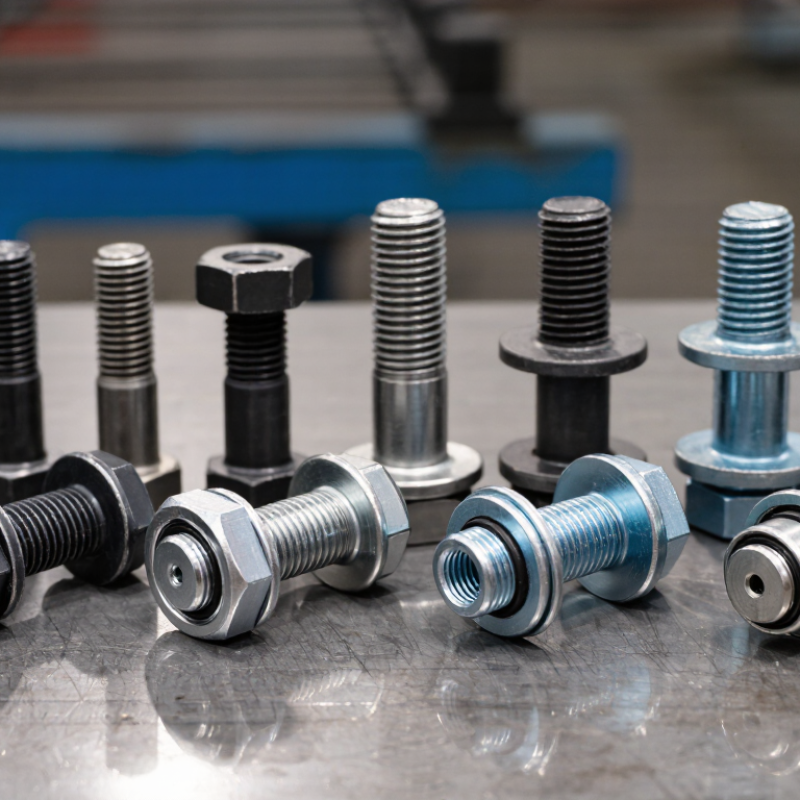
Heavy-duty lifting bolts are not interchangeable fasteners. Common types include shoulder eye bolts, machinery eye bolts, swivel hoist rings, and engineered lifting lugs. Shoulder eye bolts suit vertical loading when installed correctly. Machinery eye bolts require straight-line loading only. Swivel hoist rings handle changing load directions more effectively.
Material grade matters, but grade alone proves nothing. ISO 898-1 class 8.8, 10.9, and 12.9 bolts provide different tensile strengths. ASTM A193 and ASTM A354 alloy-steel grades serve demanding industrial environments. However, ordinary high-grade bolts are not automatically approved for overhead lifting. ASME B30.26 requires proper identification, inspection, and rated capacity for rigging hardware.
The U.S. Bureau of Labor Statistics recorded 865 fatal workplace falls, slips, and trips in 2022. That figure reinforces the cost of poor lifting control. A bolt may look flawless. Hidden thread damage can still reduce capacity. I have seen selection errors caused by confusing proof load with working load limit. That deserves more attention.
Tips:
- Check the stamped grade, working load limit, thread engagement, and loading angle.
- Use only lifting points with traceable documentation.
- Inspect threads, bends, corrosion, and deformation before every lift.
- Do not side-load a standard eye bolt.
- When the load path feels uncertain, stop and obtain a qualified engineer’s review.
Key Load Ratings and Safety Standards for Lifting Bolts
Top 10 Lifting Bolts for Heavy Duty Applications
Key Load Ratings and Safety Standards for Lifting Bolts
Selecting the top ten lifting bolts starts with the working load limit, not bolt diameter. A 20 mm bolt may look strong, yet its rating changes with thread type, loading angle, and installation quality. ASME B30.26 states that below-the-hook hardware must be marked, inspected, and used within its rated capacity. Check the WLL stamped on each bolt. Never estimate it from appearance.
ISO 3266 specifies requirements for forged lifting eyebolts, including proof testing and identification markings. EN 1677-1 also addresses lifting components and their rated capacities. These references support a practical rule: select hardware with a suitable safety factor, then reduce capacity for side loading. A vertical lift is not equal to a 45-degree pull. The difference can be severe.
Inspect threads for flattening, corrosion, and metal cracks before every lift. Keep the shoulder fully seated against a clean, flat surface. OSHA 29 CFR 1910.184 requires periodic inspection of alloy steel chain slings, and connected lifting bolts deserve similar discipline. That comparison is not a perfect substitute for bolt-specific guidance. It still exposes a common weakness: paperwork may pass while installation fails. Record the bolt grade, WLL, inspection date, and lifting angle. Retire damaged hardware immediately. Small shortcuts create large loads.
Top 10 Lifting Bolts for Heavy Duty Applications
Working load limits for selected metric lifting eye-bolt sizes under vertical loading, based on commonly published DIN 580 reference ratings.
Ratings are shown in metric tonnes and apply only when the bolt is correctly installed, fully engaged, inspected, and loaded vertically. Angular lifting, side loading, damaged threads, unsuitable base materials, or inadequate tightening can significantly reduce capacity. Always verify the product marking, installation requirements, and applicable requirements such as DIN 580, ISO 3266, or ASME B18.15 before use.
Top Ten Lifting Bolts and Their Industrial Uses
Top 10 Lifting Bolts for Heavy Duty Applications
Top Ten Lifting Bolts and Their Industrial Uses
Lifting bolts support controlled loads in factories, shipyards, construction sites, and maintenance plants. The right design depends on load direction, thread engagement, working load limit, and inspection history. Common types include standard eye bolts for vertical lifts, shoulder eye bolts for limited angular loading, and screw eye bolts for lighter fixtures. Long-shank eye bolts suit thicker plates, while ring bolts provide a compact attachment point. Swivel hoist rings follow changing load directions more effectively. Pad eyes connect lifting slings to frames, and lifting lugs handle welded structural assemblies. Machinery eye bolts secure motors, pumps, and gear housings during removal. Stainless lifting bolts resist corrosion in wet facilities. High-strength alloy lifting bolts serve demanding industrial equipment.
Each type has a different industrial role. A shoulder eye bolt may lift a motor straight upward, but side loading can reduce its capacity sharply. Swivel rings are useful on rotating machinery and transport frames. Pad eyes commonly appear on tanks, platforms, and fabricated skids. Screw eye bolts can hold temporary panels, though they are not automatically suitable for overhead lifting. Check the marked rating, thread condition, seating surface, and visible deformation before use. Never rely on appearance alone.
A practical mistake is treating every eye bolt as interchangeable. It is not. Load angles, bolt grade, base material, and torque all matter. Manufacturer data and recognized lifting standards should guide selection. Inspect after impact, overheating, corrosion, or overload. Some site procedures may still be unclear, and that deserves review before the lift begins. A short lift plan can prevent a long repair.



 Close

