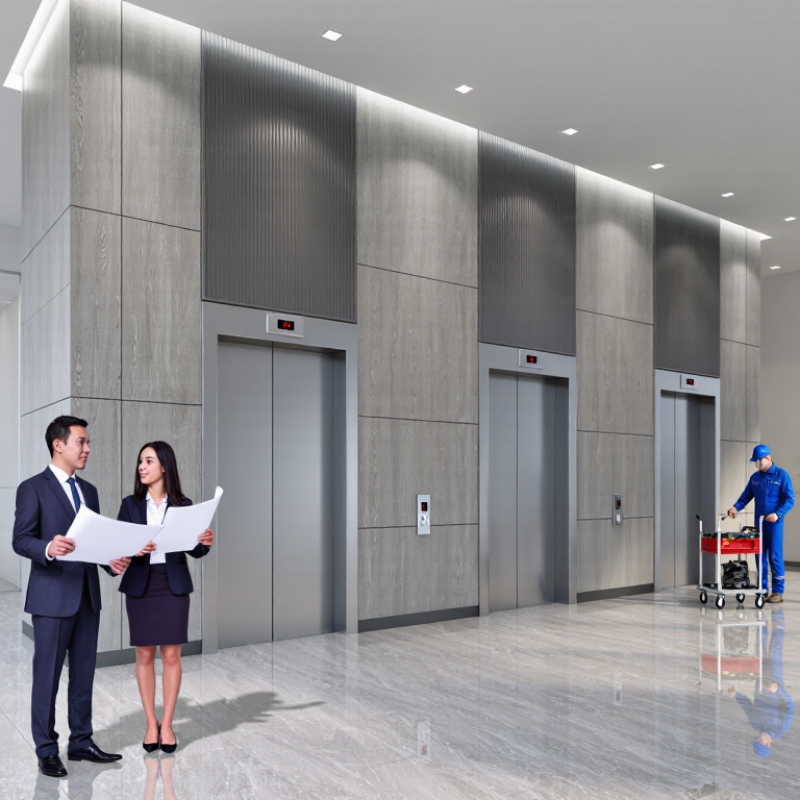
| Passenger elevator | About 450–1,600 kg, depending on car size and design | Offices, hotels, apartments, hospitals, and other buildings carrying people between floors | Low- to high-rise buildings; traction and hydraulic configurations are both used, depending on height and project requirements | Passenger flow, number of floors, car size, door arrangement, speed, accessibility, and applicable safety codes |
| Home elevator | Commonly about 250–400 kg | Private homes and multi-level residences; supports everyday access between floors | Low-rise residential buildings, often with limited space for a conventional elevator shaft | Available shaft or hoistway space, pit and overhead requirements, power supply, accessibility needs, and local residential regulations |
| Vertical platform lift | Often about 250–400 kg, subject to model and jurisdiction | Step-free access for wheelchair users and people with limited mobility in homes and public buildings | Short vertical rises, entrances, mezzanines, and other locations where a full passenger elevator may not be practical | Platform dimensions, travel height, weather exposure, guarding, operating controls, and accessibility requirements |
| Hydraulic passenger lift | Commonly about 450–1,600 kg | Passenger service in low- to mid-rise buildings, including some commercial and residential properties | Often selected for buildings with relatively modest travel heights; requires space for hydraulic equipment | Travel height, machine-room arrangement, energy use, maintenance access, and local restrictions on hydraulic systems |
| Traction passenger lift | Commonly about 450–1,600 kg; larger designs are available | Residential, commercial, hospitality, and institutional buildings with regular passenger traffic | Suitable for a wide range of building heights; machine-room-less designs are available for some projects | Traffic demand, rated speed, drive system, overhead and pit dimensions, energy performance, and service access |
| Service or goods lift | Varies widely; commonly hundreds of kilograms to several tonnes | Moving goods, equipment, laundry, supplies, or catering items within hotels, hospitals, warehouses, and commercial buildings | Locations requiring dedicated materials handling; car and door sizes are selected for the loads being transported | Load dimensions and weight, loading method, door type, duty cycle, floor loading, and whether people are permitted to travel in the lift |
| Dumbwaiter | Often about 50–300 kg | Small goods such as food, dishes, documents, and supplies in restaurants, homes, clinics, and libraries | Buildings needing compact, enclosed goods transport between a limited number of floors | Car size, rated load, serving locations, installation route, interlocks, and rules governing passenger use |



 Close