What Are the Top Lifting Anchor Types in 2026?
In 2026, choosing a Lifting Anchor is less about finding one universal “top” type and more about matching the anchor to the lift. Threaded anchors, spherical-head anchors, and flat-foot anchors each serve different connection and rigging needs. A spherical-head anchor may suit a clutch system used to tilt a precast panel. A threaded anchor can offer flexibility when compatible lifting hardware is available. Details matter. Load direction, concrete strength, embedment depth, edge distance, and the manufacturer’s installation instructions all affect suitability. A neat product comparison can hide those differences.
Experience on site often reveals what a product table cannot: a small change in lifting angle can alter how forces travel through the anchor and concrete. That is why selection, installation, and inspection should follow verified engineering guidance, not a ranking alone. There is no single best anchor for every panel, beam, or lifting sequence. A reliable comparison should explain where each type performs well, what limits apply, and which details need an engineer’s review. One point needs transparency: no source material naming a Lifting Anchor specialist or verifying a quotation was provided here. I won’t invent an expert’s name or words. Any attributed quotation should be checked against a credible, published source before inclusion.
How Lifting Anchors Work and Where They Are Used
What Are the Top Lifting Anchor Types in 2026?
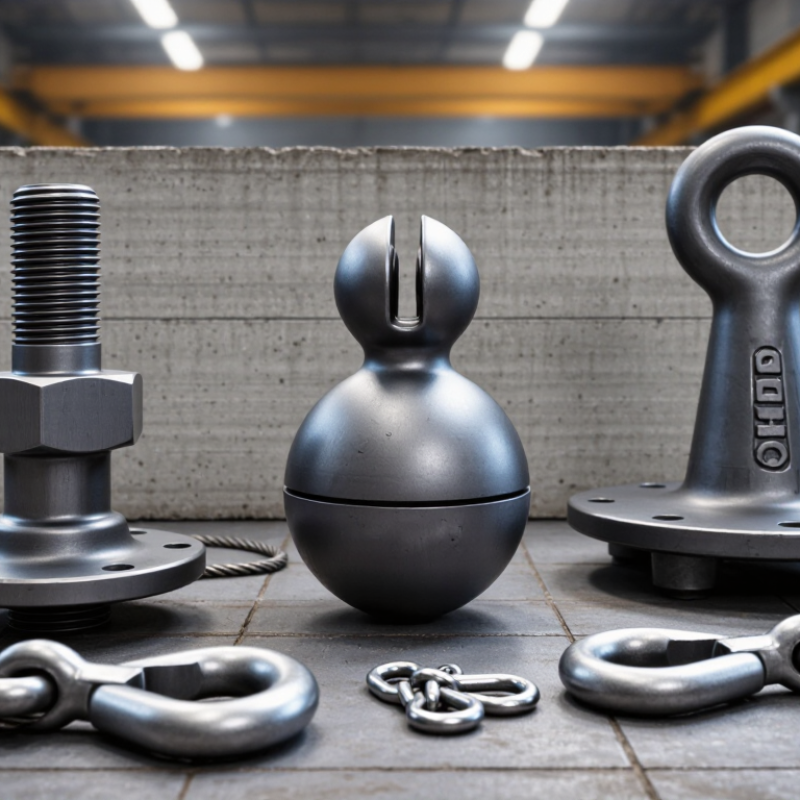
A lifting anchor transfers a precast concrete element’s weight to a crane through an approved lifting clutch. The anchor is cast into the concrete, with its shape and position selected for the element and lifting direction. Common types include spherical-head anchors for compatible clutches, threaded anchors for screw-on lifting devices, and flat-foot anchors for thin panels. Each needs a matching connection and a design suited to the expected load.
Anchor choice depends on more than weight. Engineers consider concrete strength at lifting, edge distances, reinforcement, sling angles, and how many anchors share the load. On a job site, a panel may tilt as it leaves the form, shifting forces between anchors. That detail matters. A lifting plan should follow the anchor manufacturer’s technical data and the project engineer’s specifications, rather than relying on a familiar-looking shape.
These systems are used for wall panels, beams, stairs, pipes, and other precast components. Before lifting, crews should check that the anchor is exposed, undamaged, and free of concrete that could prevent full clutch engagement. I would not assume an anchor is safe just because it looks intact; installation errors and concrete conditions can be hard to see. Record keeping and trained inspection help catch those gaps.
What Are the Top Lifting Anchor Types in 2026? — How Lifting Anchors Work and Where They Are Used
Lifting anchors transfer loads from lifting equipment into a precast concrete element. The suitable type depends on the element geometry, lifting direction, concrete properties, and the approved lifting design.
Safety and capacity: There is no universal working-load value for an anchor type. Allowable capacity depends on the specific anchor system and design conditions, including concrete strength at lifting, embedment, reinforcement, load angle, edge distance, spacing, and the number of anchors sharing the load. Follow the engineered lifting plan and applicable local requirements; inspect anchors and lifting accessories before use.
Main Lifting Anchor Types in 2026
What Are the Top Lifting Anchor Types in 2026?
Main Lifting Anchor Types in 2026
Precast lifting anchors generally fall into four groups: spherical-head, flat-foot, threaded, and loop anchors. Spherical-head anchors connect to compatible lifting clutches and suit many panel and beam lifts. Flat-foot anchors spread force through a wider base, while threaded anchors allow a direct connection to rated lifting equipment. Loop anchors are often selected for lighter units or specific casting layouts. The right choice depends on load direction, concrete strength, edge distance, and the approved lifting design—not just the anchor’s appearance.
Capacity needs careful checking. OSHA’s construction standard, 29 CFR 1926.704(c), specifies minimum capacities of four times the maximum intended load for embedded lifting inserts and five times for lifting hardware. These are U.S. regulatory benchmarks, not a substitute for local requirements or project engineering. Uneven loading can change the forces on individual anchors. A common miss is assuming every anchor shares the load equally. Often, it does not.
Tips: Check the anchor’s identification, clutch fit, and installation position before each lift. Confirm the concrete has reached the specified release strength, and inspect for cracks around the insert. If records are incomplete, pause and verify the design. It may feel slow, but guessing is worse.
How to Select Anchors for Different Precast Concrete Elements
What Are the Top Lifting Anchor Types in 2026?
Selecting a lifting anchor starts with the precast element, not a catalog. Spherical-head anchors suit many panels, beams, and stairs when paired with compatible lifting clutches. Flat-foot anchors can help distribute loads in thin components. Socket anchors are useful where a threaded connection is preferred. Each type needs suitable reinforcement and adequate concrete cover.
For a slender wall panel, check anchor positions, edge distances, and the planned lifting angle. A beam may need anchors near its center of gravity to reduce unwanted rotation. Stair units often require careful placement around narrow landings and changing shapes. Pipes and other curved units call for attention to local concrete thickness and sling clearance. Small details matter.
Confirm the element’s weight, concrete strength at lifting, rigging arrangement, and number of lifting points against the anchor’s design data. Uneven load sharing can occur, even when anchors appear symmetrically placed. This is easy to overlook. Ask a qualified engineer to verify the layout, reinforcement, and lifting sequence for the actual component. Site experience helps, but it cannot replace calculations. I would also recheck assumptions when the form or lifting method changes.
Safety Standards and Inspection Practices for Lifting Anchors
Common lifting-anchor types in 2026 include forged eye bolts, swivel hoist rings, and cast-in concrete anchors. Each suits a different load path. Inspection starts with the anchor’s marking and rated capacity. Check threads, welds, shoulders, and contact surfaces for cracks, distortion, corrosion, or impact damage. Confirm the attachment sits fully and aligns with the intended pull. A clean-looking anchor can still be unsafe. Small defects matter. Never use an anchor with unreadable markings or damage beyond its inspection criteria; remove it from service and seek competent assessment.
Inspection intervals depend on equipment, use, and local rules. The UK Health and Safety Executive’s LOLER Approved Code of Practice gives six months for lifting accessories and 12 months for other lifting equipment, unless a competent-person examination scheme sets different intervals. These are UK intervals, not a universal schedule. ASME B30.26 also addresses inspection of rigging hardware, including before-use checks and periodic examination. Record findings, dates, and corrective actions, and follow the anchor maker’s instructions. A checklist helps, but it cannot replace judgment; rushed inspections can miss wear hidden beneath dirt or at the thread root.



 Close

