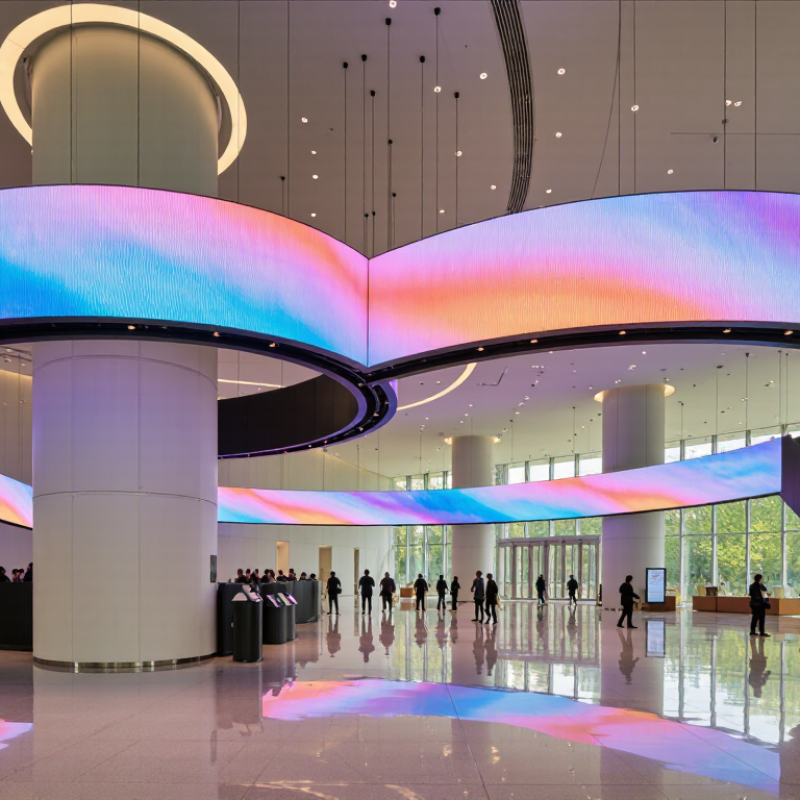
Curved, cylindrical, and wave-shaped LSX displays each need a different bending plan. A curved wall usually uses a steady arc; a cylindrical installation wraps modules around a central structure. Wave forms alternate convex and concave sections, so both bending direction and transition points matter. Shape changes everything. The permitted bend radius is not universal: it depends on module construction, cabling, frame design, and whether bending occurs during installation or operation. Treat the supplier’s tested minimum radius as a limit, not a target, and check whether the specification covers inward, outward, or both directions.
A small radius can stress solder joints, mask surfaces, and connectors. On site, dry-fit a short section first. Look closely at seams under operating brightness; a smooth curve on a drawing may still show uneven gaps in real light.
Grand View Research estimated the global flexible-display market at USD 17.17 billion in 2023 and forecast a 12.4% compound annual growth rate through 2030. This broad market figure is not an LSX performance specification, but it signals growing demand for shaped screens.
For cylindrical displays, verify the finished diameter and service access. For wave designs, map each crest and trough before fixing the frame. Small misalignments show. A little humility helps: mock-ups reveal problems that calculations can miss.



 Close