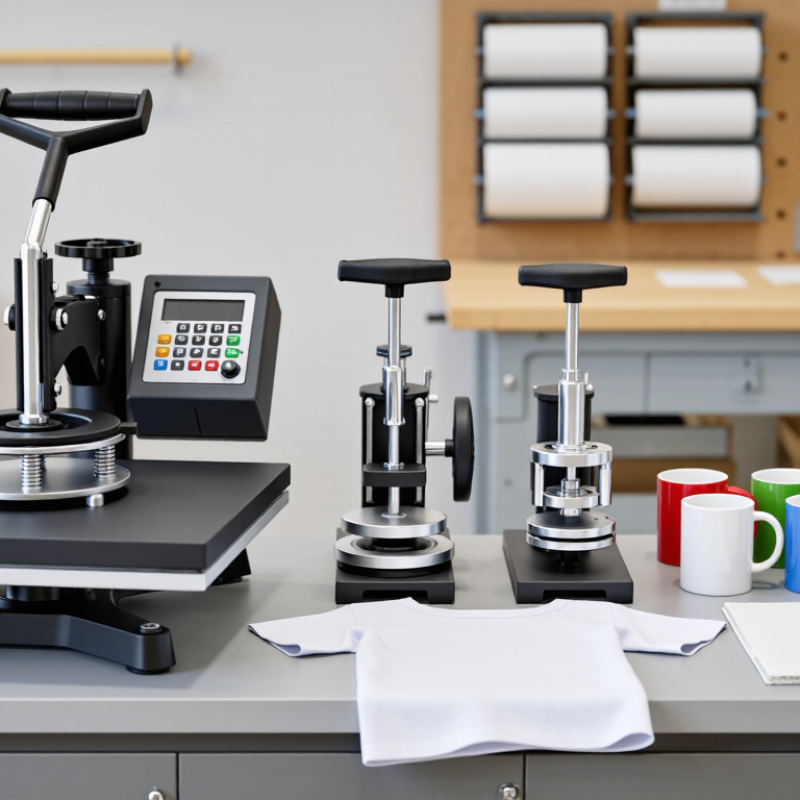
| 1. Manual Clamshell | The heated upper platen is hinged at the rear and lifts upward, opening like a clamshell. | The operator places the item on the lower platen, closes the press by hand, and adjusts pressure with a knob or lever. | Small workshops, occasional production, and buyers seeking a straightforward flat-press setup. | Compact footprint, simple operation, and generally lower equipment cost. | The open platen can limit access to the work area. Repeated manual closing may be tiring during long production runs. |
| 2. Automatic-Opening Clamshell | Uses the same hinged clamshell layout as a manual press, with a release mechanism that opens the platen at the end of a timed cycle. | The operator closes and sets the press; when the cycle ends, the upper platen releases automatically on models with this feature. | Small-to-medium runs where consistent cycle timing and reduced monitoring are useful. | Can reduce the chance of leaving a transfer under heat longer than intended and helps free the operator for other tasks. | Opening mechanisms vary by model. The operator still needs to load, position, and unload each item safely. |
| 3. Swing-Away | The upper platen moves sideways and clears the lower platen before loading or unloading. | The operator swings the heated platen away, positions the item, then returns and lowers the platen for pressing. | Work that benefits from unobstructed access, including thicker items or careful placement of transfers. | Provides open access to the lower platen and keeps the heated platen away from the work area during setup. | Needs clearance beside the machine for the platen’s swing path and usually occupies more bench space than a clamshell. |
| 4. Drawer or Pull-Out Platen | The lower platen slides outward on rails or a drawer mechanism while the upper platen remains in place. | The operator pulls the lower platen out to load and position an item, then slides it back into the pressing area. | Production environments where easy loading access and keeping hands away from the heated upper platen are priorities. | Offers clear access to the lower platen and can make alignment more convenient. | Requires space in front of the machine for the extended platen. Slides and locking mechanisms need regular inspection. |
| 5. Dual-Platen Press | Has two lower platens, commonly arranged side by side, that share one upper heating platen or pressing head. | One item can be prepared on one platen while the other is being pressed; the operator moves the press head or platens between stations, depending on the design. | Repeated production where preparation time can be overlapped with pressing time. | Can increase throughput by reducing idle time between press cycles. | Requires more floor or bench space. Confirm the movement design, usable platen dimensions, and whether both stations are heated. |
| 6. Interchangeable-Platen Press | Uses removable lower platens in different shapes or sizes; the upper platen and frame accept compatible attachments. | The operator installs the appropriate lower platen for the item being processed, then uses the press’s normal closing procedure. | Shops handling varied garment areas or items that need different working surfaces. | One press can serve multiple applications without requiring a separate complete machine for every platen size. | Attachments are not universally interchangeable. Check fit, attachment method, clearance, and pressure distribution for each platen. |
| 7. Pneumatic Clamshell | Uses a clamshell frame with an air cylinder to assist or provide the pressing force. | The operator positions the item and activates the press; compressed air drives the closing action and applies pressure. | Regular production where reduced manual closing effort and repeatable operation are valuable. | Can reduce operator effort and support consistent cycles when air pressure and settings are maintained. | Needs a suitable compressed-air supply. Pressure, safety controls, and maintenance requirements should be checked before purchase. |
| 8. Pneumatic Swing-Away | Combines a sideways-moving upper platen with pneumatic actuation for the pressing action. | The operator swings the platen into position, places the item, and activates the pneumatic pressing cycle. | Higher-volume work requiring open loading access and reduced manual pressing effort. | Combines clear access to the lower platen with assisted pressing force. | Requires compressed air and additional clearance for the swing path. Operators need training on the moving platen and pinch points. |
| 9. Hydraulic Press | Uses a hydraulic system to generate pressing force; frame and platen arrangements vary by machine. | The operator positions the work and activates the hydraulic mechanism, which raises or lowers the platen according to the machine design. | Applications that call for substantial, controlled force or a heavy-duty press configuration. | Hydraulic actuation can provide strong pressing force with less direct manual effort. | Consider machine size, hydraulic-system upkeep, safety features, and the pressure range required for the intended materials. |
| 10. Large-Format Flatbed | Uses a broad, flat platen to accommodate larger workpieces; opening and drive designs differ across models. | The operator positions the material across the platen and applies the set heat, time, and pressure using the machine’s controls. | Large graphics, oversized garments, or workpieces that exceed the usable area of standard platen sizes. | Provides a larger working surface and can reduce the need to reposition oversized items. | Requires more space and may need greater electrical capacity. Check that heat and pressure are even across the full working area. |



 Close