Our company only collects the necessary data and respects your privacy, in accordance with the General Law for the Protection of Personal Data 13.709/2018. By continuing, you confirm that you have read and accepted the Privacy Notice. Privacy Policy.

Medal Pt Br Medal Es

Medal Group

What Are the Top Profiled Aluminium Types in 2026?

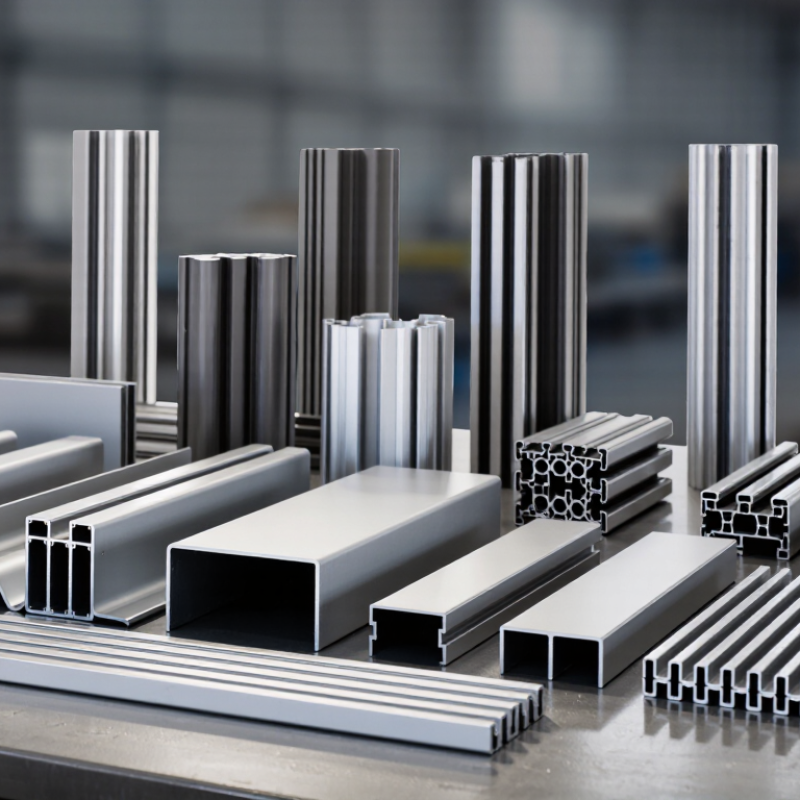
Profiled Aluminium is not one product category; it is a family of shapes designed for different loads, spaces, and finishes. A slim T-slot rail may hold a machine guard, while a deep rectangular section supports a frame. In 2026, buyers are comparing familiar forms—T-slots, channels, angles, tubes, window sections, and heat-sink profiles—against tighter demands for weight, fit, and thermal performance.

Grand View Research valued the global aluminum extrusion market at USD 87.9 billion in 2023 and forecast a 7.3% compound annual growth rate from 2024 to 2030. That broad market figure is useful context, not a direct ranking of profile types. The distinction matters: extrusion demand does not prove that one shape suits every project. Alloy, temper, wall thickness, tolerances, and finishing can change the result.

A practical materials-science perspective comes from Dr. John J. Banhart, whose research focuses on aluminium materials and structures. His work supports a useful design principle: geometry alone cannot guarantee performance; material and process matter too. This is a paraphrase, not a verbatim quotation. The sections ahead compare leading profile types by application, strengths, and trade-offs. A thin wall can reduce weight, but it may also complicate machining or assembly. Real projects are less tidy than catalogues suggest. I’ll examine where each profile earns its place—and where another section may be the better choice.

What Are the Top Profiled Aluminium Types in 2026?

What Is Profiled Aluminium and How Is It Made?

What Are the Top Profiled Aluminium Types in 2026?

What Is Profiled Aluminium and How Is It Made?

Profiled aluminium is metal shaped into a consistent cross-section, often by extrusion. Common forms include solid bars, hollow tubes, and custom profiles with grooves or channels. These shapes appear in window frames, machine guards, and shelving. A small channel can guide a cable; a hollow section can reduce weight while retaining useful stiffness.

Manufacturers heat an aluminium billet, then force it through a shaped steel die. The emerging profile is cooled, stretched to straighten it, and cut to length. Heat treatment can increase strength, depending on the alloy and intended use. Die design matters: sharp corners and thin walls may complicate production, and the cheapest shape is not always the easiest to make well. The International Aluminium Institute reports that recycling aluminium requires about 5% of the energy used for primary production. That makes recycled feedstock valuable, though its suitability depends on alloy quality and process control.

Tip: Share a drawing with wall thicknesses, corner radii, and tolerances before requesting a quote. Small design changes can improve flow through the die and reduce scrap. Check the finished profile for straightness and surface marks. Even a neat extrusion can need closer inspection.

Which Factors Define the Top Aluminium Profiles in 2026?

Which Factors Define the Top Aluminium Profiles in 2026?

The best aluminium profile depends on its job, not its catalogue name. A window frame needs stable geometry and reliable weather sealing; a machine rail needs consistent dimensions and a surface that resists wear. Fit matters. Designers compare alloy strength, wall thickness, load direction, and the space available for fasteners. A thin wall may reduce weight, but it can flex under a concentrated load. Check the actual operating conditions before choosing.

Manufacturing quality matters just as much as the drawing. Tight dimensional tolerances help parts slide together without shimming, while clear finish specifications reduce surprises between batches. For outdoor use, consider corrosion exposure, drainage paths, and coating durability. Test it. Ask for inspection records and sample measurements, then confirm that the profile can be cut and joined with available equipment. Recycled content may support material goals, but it should not replace checks on mechanical performance or consistency. A profile can look perfect on paper and still create waste at the saw. That detail is easy to overlook.

What Are the Top Profiled Aluminium Types in 2026? — Which Factors Define the Top Aluminium Profiles in 2026?

This practical comparison covers commonly used aluminium extrusion profile types. “Top” depends on the application: alloy, temper, dimensions, applicable standards, and required performance should be confirmed for each project.

Profile Type Common Alloy and Temper Typical Uses Key Performance Considerations Factors That Define Suitability Practical Selection Note
Architectural window and door profiles 6063-T5 or 6063-T6; 6060 tempers are also used in some markets Window frames, door frames, curtain-wall components, trim Surface finish, corrosion resistance, dimensional accuracy, and the ability to extrude detailed shapes Visible finish requirements, wall thickness, thermal-break design, exposure conditions, and building-system loads 6063 is widely used for architectural extrusions and is well suited to anodizing. Structural capacity still depends on the profile design and temper.
Modular framing and T-slot profiles Commonly 6063-T5 or 6063-T6; alloy and temper vary by system and duty Machine frames, workstations, guards, fixtures, and modular enclosures Slot geometry, straightness, connection strength, machinability, and repeatable assembly Frame span, applied loads, connector design, vibration, required adjustability, and compatibility with fittings Check the profile’s load data and connection details rather than judging strength from the alloy designation alone.
Heat-sink and thermal-management profiles Often 6063-T5/T6 or 6061-T6, depending on geometry and mechanical requirements Electronic enclosures, LED housings, power equipment, and cooling assemblies Thermal conductivity, fin spacing, surface area, airflow, and contact-surface flatness Heat load, available space, natural or forced airflow, machining needs, and attachment method Fin geometry and the complete thermal path are as important as alloy choice; verify performance in the intended operating conditions.
Structural and load-bearing profiles 6061-T6 or 6082-T6 are common options; selection depends on local standards and supply Frames, supports, platforms, brackets, and structural assemblies Yield strength, stiffness, buckling resistance, fatigue loading, and connection performance Design loads, span, wall thickness, fastening or welding method, safety factors, and applicable design codes 6061-T6 and 6082-T6 are heat-treatable structural alloys. A qualified design check is needed for load-bearing use.
Transport and rail profiles 6005A-T6 and 6082-T6 are used in suitable structural applications; other alloys may be specified Vehicle structures, rail components, flooring, frames, and equipment supports Strength-to-weight performance, fatigue resistance, weld-joint properties, and corrosion protection Service loads, impact and vibration, joining process, inspection requirements, and operating environment Properties can differ between the parent material and heat-affected zones after welding. Use design data applicable to the chosen joining process.
Solar mounting and support profiles Common choices include 6005A-T6 and 6063-T6; the required alloy varies with the design Module rails, brackets, support channels, and related mounting components Wind and snow loading, stiffness, corrosion resistance, drainage, and fastening strength Site-specific loads, rail span, roof or ground attachment, exposure, galvanic compatibility, and service life Choose from project-specific structural calculations and environmental conditions; a profile’s general use does not establish its capacity for a particular installation.
Custom thin-wall or complex-shape profiles Often 6063 or 6060 for intricate shapes; alloy choice depends on strength and finish requirements Enclosures, channels, decorative sections, equipment housings, and bespoke components Extrudability, wall-thickness consistency, dimensional tolerances, die feasibility, and finishing quality Cross-section complexity, minimum wall thickness, production volume, tolerance needs, and finishing process Very thin walls, narrow slots, and uneven material distribution can increase extrusion difficulty. Review the cross-section with an extrusion specialist before tooling.
Decorative and anodized profiles Commonly 6063-T5/T6 or 6060 tempers, with the finish specified for the application Interior trim, display systems, furniture components, and architectural details Surface uniformity, color consistency, corrosion resistance, and visible defect control Anodized or painted finish, appearance class, exposure, alloy consistency, and handling requirements Surface appearance depends on alloy, extrusion quality, pretreatment, and finishing controls; specify the required finish and acceptance criteria.

What Are the Main Types of Profiled Aluminium?

Profiled aluminium is shaped through extrusion, then cut and finished for a specific job. Common types include T-slot profiles, structural sections, architectural profiles, heat-sink shapes, and solar-panel frames. Each has a distinct purpose. T-slot sections have grooves for adjustable connections, making them useful for workstations and machine guards. Structural profiles use thicker walls or carefully placed ribs to support loads. Architectural sections often have clean edges for window frames, doors, and façades.

Tips: Check the drawing before choosing a profile. Note the load, span, joining method, and exposure to moisture. A small sample can reveal sharp edges or awkward fittings early.

Heat-sink profiles use fins to increase surface area and help move heat away from electronics. Solar frames are designed to hold panels while limiting movement from wind and temperature changes. Custom profiles can combine features from several types, but they may need dedicated tooling and closer tolerances. Alloy and temper also affect strength, corrosion resistance, and machinability; they are material conditions, not profile types. Some categories overlap. That is where comparisons get messy. A profile that looks sturdy may still bend across a long span, so verify dimensions and load requirements with engineering data before specifying it.

Where Are Different Aluminium Profile Types Used?

Hollow aluminium profiles suit window frames, curtain walls, and shopfronts because their chambers improve stiffness without adding much weight. Thermal-break profiles help limit heat transfer across exterior frames. In buildings, these details matter: a poorly chosen section can flex under wind or leave cold spots around glazing. The International Aluminium Institute reports that about 75% of all aluminium ever produced remains in use, reflecting the metal’s long service life and recyclability (IAI, “Aluminium Sector Greenhouse Gas Pathways to 2050,” 2021). Still, a durable profile is not automatically a well-designed one.

T-slotted profiles are common in machine guards, workbenches, and modular production frames; their grooves accept brackets and fasteners without extensive drilling. Structural extrusions with ribs or thickened webs are used in vehicle frames, rail interiors, and equipment housings, where load paths and vibration resistance guide the section design.

The Aluminum Association’s U.S. end-use data identifies transportation as aluminium’s largest market, with building and construction also a significant application (The Aluminum Association, “Aluminum Industry Profile”). That helps explain why transport profiles often prioritize low mass, while architectural sections balance stiffness, drainage, and appearance.

Small differences matter. Designers should check alloy, temper, wall thickness, and joining method against actual loads; catalog dimensions alone can mislead.

How Do You Choose the Right Profile for Your Project?

Choosing an aluminium profile starts with the load, not the catalogue photo. T-slot sections suit adjustable frames and guards; hollow structural profiles can provide stiffness with less material; heat-sink profiles use thin fins to increase cooling area. Channels and angles work for simpler supports, while custom extrusions may fit unusual assemblies. There is no universal best section. The International Aluminium Institute reported global primary aluminium production of about 72.4 million tonnes in 2024. That figure shows the scale of supply, not which profile will perform best in your application.

Write down the span, supported weight, mounting points, operating temperature, and exposure to moisture or chemicals. Then compare section geometry, alloy and temper, tolerances, and available machining. For a long beam, check deflection as well as strength; a profile that survives the load may still sag enough to misalign a sliding panel. Ask the supplier for section properties and test or certification records, then have a qualified engineer verify critical designs. A clean drawing can still hide a weak joint.

Tips: Make a cardboard mock-up to check clearances around bolts, cables, and moving parts. Leave room for assembly tools. It sounds minor, but cramped access is often discovered too late. Recheck the design after adding brackets or panels; their weight changes the real load.

Top Aluminium Profile Types in 2026: How to Choose the Right Profile

Example profile weights per metre, calculated from nominal dimensions and an aluminium density of 2.70 g/cm³.

These examples compare common extruded cross-sections: square and rectangular hollow sections, round tube, angle, channel, and T-profile. Values are theoretical estimates; corner radii, manufacturing tolerances, and finish are excluded. Choose a profile based on load, span, connection method, corrosion environment, and available space—not weight alone. Strength also depends on alloy and temper.