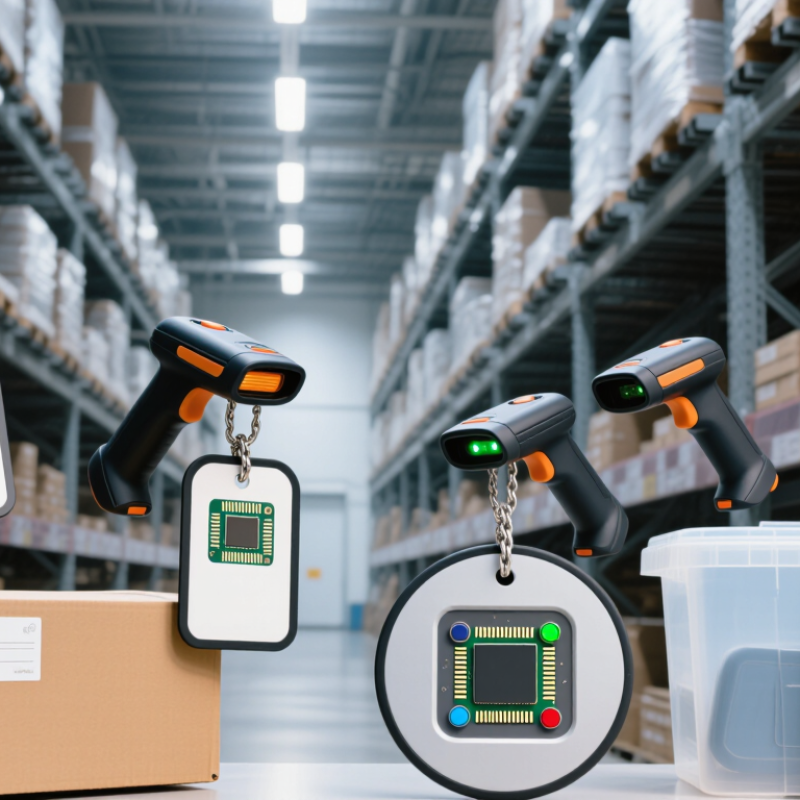
RFID tag selection starts with the asset, not the reader.
The top ten practical types serve different environments: passive UHF labels for cartons and files; on-metal tags for steel tools; rugged hard tags for returnable containers; embedded tags for pallets; tamper-evident tags for cabinets; cable tags for harnesses; laundry tags for uniforms; high-temperature ceramic tags for painted fixtures; active battery tags for moving equipment; and sensor tags for temperature-sensitive assets.
Passive UHF usually suits high-volume identification. It needs a clear reading path.
The 2024 RAIN RFID Industry Statistics report describes annual inlay shipments in the tens of billions, showing strong demand for scalable item tracking. A 2023 global warehousing study reported that 58% of respondents planned RFID deployment by 2028.
Those figures do not make every tag suitable. Metal detunes ordinary labels, liquids absorb energy, and dense bins create missed reads. On-metal designs use spacers or shielding. Sensor tags add evidence, but they also introduce batteries, calibration, and data-quality risks.
Field tests often expose overlooked problems. A laundry tag must survive heat, water, and repeated folding. A ceramic tag may tolerate harsh treatment but remain too large for a small tool.
I have seen teams choose the longest reading range, then struggle with unwanted reads nearby. That is an imperfect decision.
Test the tag on the real asset, at the real distance, with the real workflow. Record missed reads before purchasing thousands of units.



 Close
Close