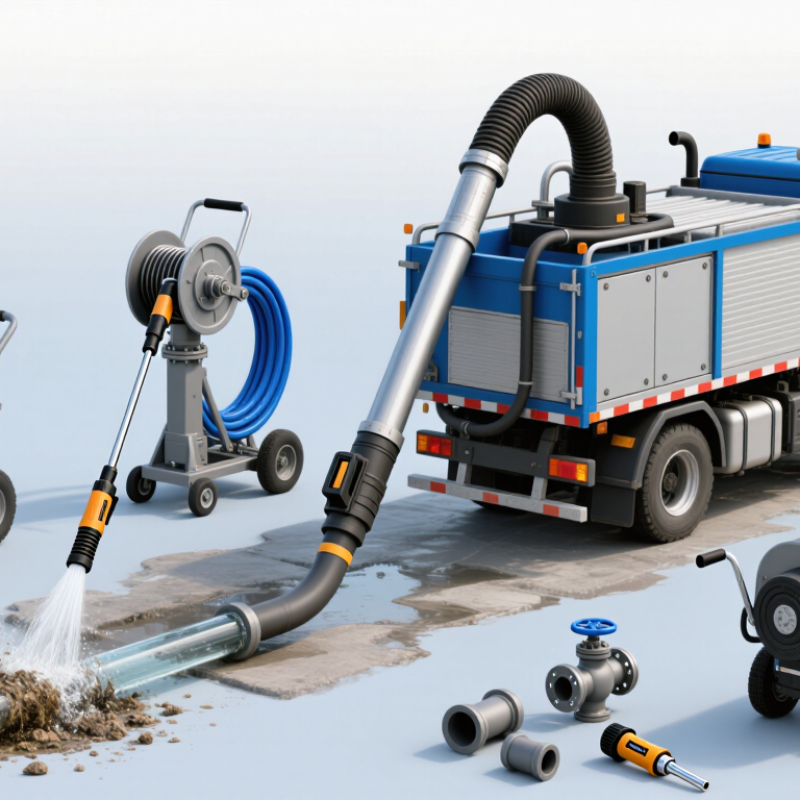
| Compact 1,000-gal Combination Unit | 1,000 gal
3,785 L | 8–10 yd³ | 60–80 gpm at 2,000–2,500 psi | 3,000–4,000 cfm; 18–24 inHg | 400–600 ft; 1 in. sewer hose | Short urban routes, catch basins, laterals, and light-to-medium blockage removal | Best for maneuverability and lower operating cost |
| Balanced 1,200-gal Combination Unit | 1,200 gal
4,542 L | 10–12 yd³ | 70–80 gpm at 2,000–2,500 psi | 3,500–4,500 cfm; 20–26 inHg | 500–700 ft; 1–1¼ in. sewer hose | Routine municipal cleaning, root control, storm drains, and mixed pipe diameters | Best all-round balance of capacity and productivity |
| High-Productivity 1,300-gal Combination Unit | 1,300 gal
4,921 L | 12–13 yd³ | 80–100 gpm at 2,000–2,500 psi | 4,000–5,000 cfm; 22–27 inHg | 600–800 ft; 1–1¼ in. sewer hose | High-frequency cleaning, silt removal, interceptor work, and larger municipal networks | Best for higher daily production |
| Heavy-Duty 1,500-gal Combination Unit | 1,500 gal
5,678 L | 12–15 yd³ | 80–100 gpm at 2,000–3,000 psi | 4,000–5,500 cfm; 24–28 inHg | 600–800 ft; 1–1¼ in. sewer hose | Long routes, deep wet wells, heavy grit, large-diameter mains, and fewer disposal stops | Best for maximum onboard capacity |
| Recycling-Enabled 1,200–1,500-gal Unit | 1,200–1,500 gal
4,542–5,678 L | 10–15 yd³ | 70–100 gpm at 2,000–2,500 psi | 3,500–5,000 cfm; 20–28 inHg | 500–800 ft; 1–1¼ in. sewer hose | Water-constrained areas, extended shifts, and operations seeking fewer freshwater refills | Best for water conservation and long-duration work |



 Close
Close