Our company only collects the necessary data and respects your privacy, in accordance with the General Law for the Protection of Personal Data 13.709/2018. By continuing, you confirm that you have read and accepted the Privacy Notice. Privacy Policy.

Medal Pt Br Medal Es

Medal Group

Top Skincare Set Box Suppliers for Global Buyers

Global skincare is becoming more competitive, personalized, and packaging-conscious. McKinsey & Company estimates that the beauty market could approach $590 billion by 2028. Skincare may remain its largest category, representing about 40% of total beauty sales.

Grand View Research also reports continued growth in the global skincare market through 2030. These figures create opportunities for reliable Skincare Set Box suppliers. They also raise difficult questions about material choices, minimum order quantities, and delivery consistency.

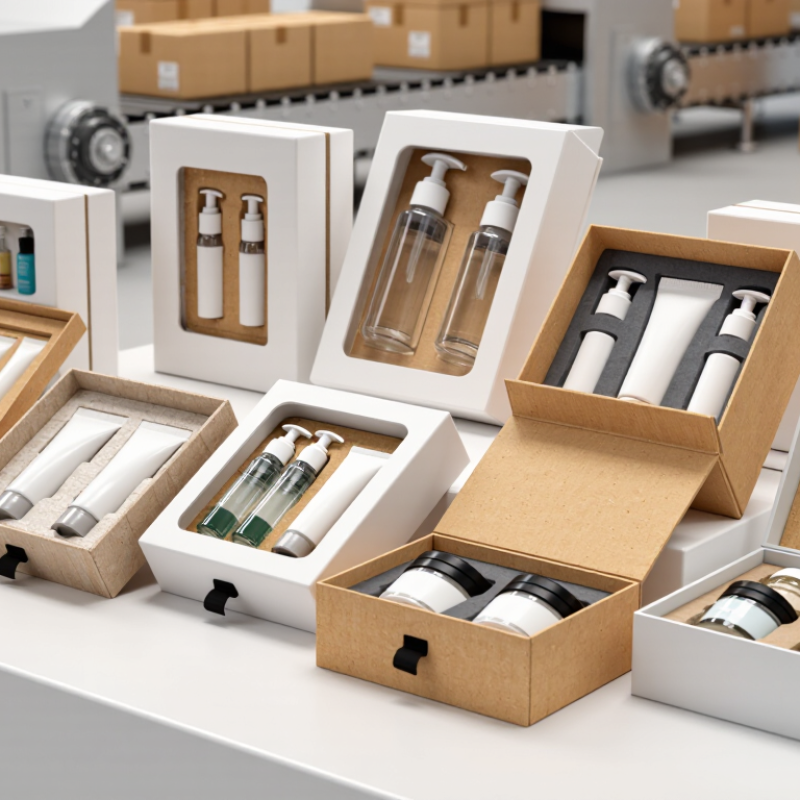
A suitable box must protect bottles, tubes, jars, and delicate pumps during long-distance shipping. It should also provide a clean unboxing experience. Buyers increasingly examine recycled content, print safety, product fit, and supplier traceability. Attractive packaging alone is not enough.

Packaging designer Raymond Loewy once said, “The most beautiful curve is a rising sales graph.” His observation remains useful for skincare brands. A well-designed Skincare Set Box can support shelf visibility, gifting appeal, and repeat purchases. Yet packaging does not automatically create value.

Some suppliers still overuse rigid boards, magnetic closures, and decorative inserts. These features may look premium but increase weight, cost, and waste. That is an uncomfortable point. More research is needed on how luxury presentation affects full lifecycle impact.

This guide examines leading Skincare Set Box suppliers for global buyers. It considers production experience, customization capacity, quality control, certifications, logistics, and communication. The strongest supplier is not always the cheapest. Nor is the most elegant box always the most practical.

Top Skincare Set Box Suppliers for Global Buyers

Global Skincare Set Market Scope: USD 155.7B Valuation in 2023 (GVR)

Top Skincare Set Box Suppliers for Global Buyers

Grand View Research values the global skincare products market at USD 155.7 billion in 2023. Its forecast also indicates continued growth through 2030. This scale creates strong demand for practical skincare set boxes, especially for travel, gifting, and trial routines. However, the figure covers skincare products broadly, not only boxed sets. That distinction matters. Buyers should avoid treating the entire valuation as direct set-box demand.

Reliable suppliers should provide stable packaging materials, clear ingredient documentation, and repeatable production quality. Check carton strength, insert accuracy, closure performance, and surface finishing before placing large orders. ISO 22716-based manufacturing controls can support better quality discussions with cosmetic producers. The Personal Care Products Council and international packaging reports also emphasize traceability, recyclability, and responsible material selection. Yet, sustainability claims can become vague. Ask for measurable evidence, not attractive wording.

Tips: Request samples from at least three suppliers. Test boxes under humidity, stacking, and transport conditions. Confirm minimum order quantities, lead times, print tolerances, and replacement policies. Review the full ingredient list and required market documents with qualified regulatory specialists. A low unit price may hide weak inserts or costly freight. That assumption can fail. Suppliers with responsive communication usually reduce avoidable delays, but communication alone cannot prove factory capability. Verification remains essential.

Supplier Categories: OEM, ODM, Private Label, and Contract Manufacturers

Top Skincare Set Box Suppliers for Global Buyers

Supplier Categories: OEM, ODM, Private Label, and Contract Manufacturers

Global buyers should separate supplier categories before requesting skincare set quotations. OEM manufacturers produce according to a buyer’s formula, packaging, and specifications. ODM suppliers offer tested formulas that can be adjusted for texture, fragrance, or active ingredients. Private label suppliers usually provide ready-made products with customized labels and boxes. Contract manufacturers may manage broader production services, including formulation, filling, assembly, and quality control. Terminology varies across regions. Confirm the scope in writing.

Market demand supports careful supplier screening. McKinsey’s State of Fashion: Beauty report projects the global beauty market could reach about $580 billion by 2027, with approximately 6% annual growth. Fortune Business Insights valued the global skincare products market at around $155.7 billion in 2022. These figures show opportunity, not guaranteed sales. Data needs context.

For OEM projects, buyers should inspect formula ownership, stability testing, batch records, and minimum order quantities. ODM is faster, but shared formulas may reduce differentiation. Private label can shorten launch timelines, although packaging choices may be limited. Contract manufacturing suits complex sets requiring coordinated bottles, creams, masks, and cartons. Ask for samples from the actual production line. Samples matter. Review viscosity, seal strength, carton compression, and ingredient documentation. Some suppliers present excellent samples but weaker pilot batches. That gap deserves direct questioning. (Sources: McKinsey & Company, State of Fashion: Beauty, 2023; Fortune Business Insights, Skincare Products Market Report.)

Top Skincare Set Box Suppliers for Global Buyers - Supplier Categories: OEM, ODM, Private Label, and Contract Manufacturers

Supplier Category Typical Buyer Profile Product Development Scope Formula Ownership Packaging and Set Box Options Typical Minimum Order Quantity Typical Development Timeline Quality and Compliance Support Best Use Case
OEM Manufacturer Importers, distributors, established retailers, and companies with defined product specifications Manufacturing based on buyer-provided formulas, packaging specifications, technical files, or approved samples Usually retained by the buyer or licensed according to the manufacturing agreement Custom cartons Sleeves Rigid boxes Insert trays Commonly 1,000–10,000 sets Approximately 8–16 weeks after formula and packaging approval Batch records, stability information, ingredient documentation, packaging specifications, and production quality controls Scaling a proven skincare set while maintaining an existing formula and brand specification
ODM Manufacturer New brands, retailers, e-commerce sellers, and buyers seeking faster product development Selection and adaptation of existing formulas, textures, fragrance profiles, active ingredients, and standard product concepts May be supplier-owned, jointly developed, or transferred under negotiated commercial terms Stock packaging Semi-custom cartons Custom labels Gift sets Commonly 500–5,000 sets Approximately 6–12 weeks after product selection and artwork approval Formula documentation, sample evaluation, basic regulatory support, artwork review, and quality inspection procedures Launching a coordinated cleanser, serum, moisturizer, or mask set with reduced development effort
Private Label Manufacturer Small and medium-sized brands, salons, spas, clinics, influencers, and online retailers Pre-developed products sold under the buyer’s name with limited or moderate customization Normally retained by the manufacturer unless a separate exclusivity or transfer agreement is signed Ready-made bottles Printed labels Folding cartons Starter boxes Commonly 100–1,000 sets Approximately 4–10 weeks after label and packaging approval Ingredient lists, product specifications, safety documents, labeling review, and manufacturing batch controls Testing market demand with low initial investment and a relatively short launch schedule
Contract Manufacturer Professional skincare companies, multinational buyers, medical-aesthetic businesses, and high-volume distributors End-to-end production based on detailed technical, quality, regulatory, and supply-chain requirements Typically defined by a formal manufacturing, technology, confidentiality, and quality agreement Multi-layer cartons Premium rigid boxes Tamper-evident packs Retail-ready cases Commonly 5,000–50,000+ sets Approximately 12–24 weeks, depending on validation and packaging complexity Formal quality systems, supplier qualification, process validation, stability studies, audits, traceability, and change-control procedures Long-term supply programs requiring consistent production, documented controls, and high-volume capacity
Specialized Natural and Organic Supplier Clean-beauty brands, organic retailers, wellness companies, and buyers targeting natural ingredient positioning Natural, botanical, mineral, vegan, or certified-organic formulation options, subject to ingredient and certification requirements Varies by formula source, certification arrangement, and development contract Recycled cartons FSC-certified paper options Glass containers Plastic-reduction formats Commonly 500–5,000 sets Approximately 8–18 weeks, especially when certification review is required Ingredient origin records, allergen information, natural or organic certification support, and packaging sustainability documentation Building skincare sets with transparent ingredient sourcing and sustainability-focused packaging
Premium and Clinical Skincare Supplier Dermatology-focused brands, aesthetic clinics, premium retailers, and buyers requiring advanced product positioning High-performance formulas featuring validated actives, specialized delivery systems, or treatment-oriented product combinations Defined through formula development agreements, confidentiality terms, and technical ownership clauses Airless packaging Glass jars Security seals Premium presentation boxes Commonly 1,000–10,000 sets Approximately 12–24 weeks, depending on testing and packaging validation Stability testing, compatibility testing, claims substantiation, microbiological controls, and technical documentation Launching treatment-oriented skincare collections where packaging protection and product consistency are critical
Travel and Hospitality Set Supplier Hotels, airlines, cruise operators, travel retailers, and corporate gift buyers Compact cleanser, moisturizer, shampoo, mask, or amenity combinations adapted for travel and guest use Usually based on standard formulas, with branding and packaging customized for the purchasing organization Travel cartons Pouches Miniature bottles Paperboard sleeves Commonly 5,000–50,000 sets Approximately 8–16 weeks after artwork and component approval Product safety documentation, packaging specifications, transport testing, batch traceability, and labeling support High-volume amenity programs requiring compact formats, efficient packing, and consistent replenishment
Indicative ranges are commonly used for international skincare-set sourcing. Actual minimum order quantities, lead times, testing requirements, packaging choices, and regulatory documentation vary by formula, destination market, product format, and supplier agreement.

Evaluating Suppliers by MOQ, GMP Compliance, and ISO 22716 Standards

Top Skincare Set Box Suppliers for Global Buyers

Global skincare demand is expanding, but supplier quality remains uneven. McKinsey’s 2023 beauty market report projected global beauty sales could reach about $580 billion by 2027. This growth increases pressure on buyers to verify production controls, not just packaging quality. A practical supplier review starts with MOQ. Low MOQs support market testing, but they may raise unit costs or limit formula customization. Ask for batch records, stability data, and a clear explanation of capacity.

GMP compliance should be evidenced through documented procedures, trained staff, sanitation logs, and traceable raw materials. ISO 22716:2007 provides widely used guidance for cosmetic GMP, covering production, quality control, storage, and shipment. It is guidance, not an automatic guarantee of product safety. Check whether the audit scope covers the actual facility and product category. Request recent audit findings, corrective actions, and renewal dates. Details matter.

Supplier comparison also needs commercial realism. A 2024 report from Grand View Research estimated continued expansion in the global skincare market, yet demand forecasts can still miss seasonal changes. Buyers should therefore compare MOQ tiers, lead times, sampling fees, and rework policies. Some suppliers present impressive certificates but offer weak batch traceability. That is a warning. I would also inspect one physical production line when possible. Documents can look complete. Operations may not.

Global Buyer Checklist: Claims, INCI Labels, and EU Regulation 1223/2009

Choosing skincare set box suppliers for global buyers requires more than comparing packaging and unit prices. Claims, INCI labels, and compliance documents must be checked together. Under EU Regulation 1223/2009, products need an EU-based Responsible Person, a Product Information File, a Cosmetic Product Safety Report, and CPNP notification before sale. Ask suppliers who controls each document.

Review every claim carefully. “Hydrates” may require suitable testing, while “reduces wrinkles” needs stronger evidence. Marketing language should match the formula, test results, and product category. INCI names must appear correctly, in descending order where required, with allergens disclosed when applicable. Check the label against the final formula, not an old sample. Small differences matter.

Tips: Request recent batch records, stability data, microbiological results, and GMP evidence. Confirm packaging compatibility, especially for pumps and jars. Ask for English labels and destination-market versions. Keep written approval records for artwork and claims. Do not rely on a supplier’s certificate alone; verify its scope, date, and issuing body. A polished box can still hide weak documentation. I have found that rushed approvals create costly relabeling later. Leave time for review, because regulations and product formulas can change.

Global Buyer Checklist: EU Cosmetic Label Requirements

The chart shows the core information categories that buyers should verify on cosmetic skincare set packaging before placing products on the EU market. A value of 1 indicates that the category is required under Article 19 of Regulation (EC) No 1223/2009, subject to applicable exceptions and presentation rules.

Source: Regulation (EC) No 1223/2009, Article 19. Ingredients should use the required common ingredient naming system, commonly presented through INCI names.

Sourcing Risks: Lead Times, Packaging Costs, and 30% E-Commerce Growth (Statista)

Global buyers are expanding skincare set purchases as online retail accelerates. Statista’s market outlook indicates approximately 30% e-commerce growth across its forecast period. This creates pressure on suppliers to deliver quickly, consistently, and at scale. However, popular gift seasons can extend production lead times by two to six weeks. A late carton can delay an entire product launch.

Packaging costs are another hidden risk. Rigid boxes, molded inserts, foil stamping, and custom sleeves increase minimum order quantities and freight weight. The Packaging Institute reports that packaging materials remain sensitive to energy, transport, and paper-market fluctuations. A lighter box may reduce shipping costs, but it can also weaken shelf protection. A spreadsheet can still lie. Buyers should request a complete landed-cost estimate before approving samples.

Tips: Ask for a written production schedule, packaging tolerance, and replacement policy. Compare at least three packaging structures using the same dimensions. Request carton compression results and a pre-shipment inspection. Keep a small buffer for customs and warehouse delays. Statista’s growth forecast is useful, but forecasts are not promises. Suppliers with clear communication and documented quality checks usually create fewer surprises.