2026 Best Types of Solar LED Flood Lights for Global Buyers
Choosing the best Solar Led Flood Lights in 2026 requires more than comparing brightness, price, and battery size. Global buyers must examine solar panel efficiency, lithium battery quality, ingress protection, operating temperature, beam control, and after-sales support. A light mounted above a dusty warehouse gate faces different demands from one installed beside a humid coastal walkway.
The International Energy Agency reported that global solar PV additions approached 400 gigawatts in 2023, confirming solar’s expanding role in modern energy systems. IRENA’s Renewable Capacity Statistics 2024 recorded 345.5 gigawatts of new solar capacity during the same year. These figures support stronger supply chains, but they do not guarantee dependable outdoor lighting. Product quality still varies widely. Sometimes, the cheapest unit becomes the most expensive choice after one rainy season.
Energy-access advocate Damilola Ogunbiyi has said, “Energy access is not a luxury; it is a basic human right.” Her point matters here. Efficient Solar Led Flood Lights can improve safety, visibility, and basic services where grid power remains unreliable. The World Bank and Lighting Global also emphasize quality assurance for off-grid solar products, including battery performance, durability, and truthful product information. This guide compares the leading types for global buyers, including all-in-one, split-type, motion-sensor, remote-controlled, and high-lumen commercial models. It considers real installation conditions, not only laboratory claims. Standards differ across markets, and buyer expectations can be imperfectly matched. Careful verification remains essential.
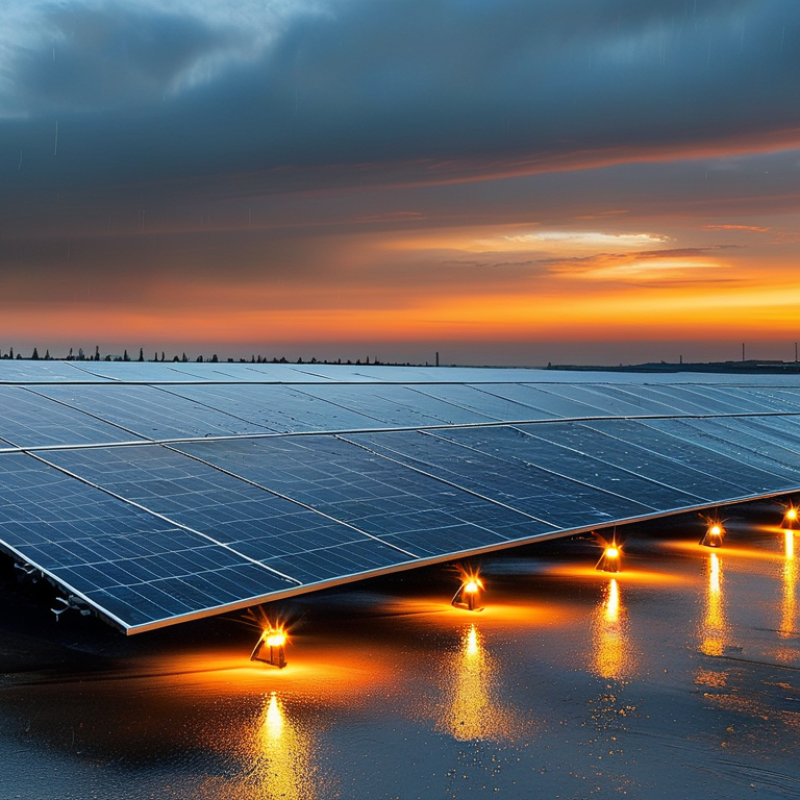
Solar LED Flood Lights: Definition, Structure, and Operating Principles
Solar LED flood lights combine a photovoltaic panel, rechargeable battery, LED array, controller, housing, and mounting bracket. The panel converts sunlight into electrical energy during daylight hours. The controller manages charging and protects the battery from excessive current. At night, a light sensor activates the LEDs automatically.
The battery usually stores energy in a lithium-based or other rechargeable cell. Its capacity affects runtime, especially during cloudy weather. The LED array produces focused, wide-angle illumination through lenses or reflectors. A sealed housing helps resist dust and rain, but sealing quality can decline after years outdoors. Check the stated IP rating and inspect cable joints before installation.
Tips: Place the panel away from tree shade and building shadows. Aim the light toward the working area, not directly into nearby windows. Match battery capacity with local sunlight conditions and required nighttime hours. In field use, rated brightness can look impressive, yet poor panel positioning may reduce actual performance. This is an easy detail to underestimate. Clean the panel regularly, because dust and bird residue can noticeably reduce charging efficiency. Also, review temperature limits before choosing a model for very hot or cold regions.
Key Performance Factors: Brightness, Battery, Panels, and Durability
For global buyers, brightness should be judged beyond headline lumens. A narrow beam can create a harsh white patch, while a wider beam improves coverage near gates, walls, and loading areas. Check candela, beam angle, mounting height, and motion settings. The U.S. Department of Energy notes that LED efficacy has improved greatly, but real performance still depends on optics and thermal management. A bright first-night test can mislead.
Battery capacity determines reliability after cloudy weather. Calculate usable energy with voltage multiplied by amp-hours, then allow for controller losses and cold temperatures. Two or three nights of autonomy is a practical target for many outdoor sites. NREL’s widely cited degradation review reports a median crystalline-silicon decline of about 0.5% annually. The IEA PVPS Trends 2024 report also recorded global solar capacity above 1.6 terawatts by the end of 2023, showing the technology’s expanding maturity, not guaranteed product quality. I still distrust any claim without test conditions.
Tips: Choose a panel with a clear charging angle and verify winter exposure. Prefer batteries with published cycle data and replaceable access. An IP65 enclosure resists dust and water jets, but it is not designed for immersion. Look for impact protection, sealed cable glands, corrosion-resistant hardware, and operating temperatures suited to your region. Then inspect the lamp after heavy rain, not only in a showroom.
2026 Best Types of Solar LED Flood Lights for Global Buyers
Key Performance Factors: Brightness, Battery, Panels, and Durability
This chart compares representative specifications for common non-branded solar LED flood-light configurations. Integrated all-in-one units are compact and easy to install, split-panel systems generally provide better panel positioning, compact motion-sensor lights prioritize low energy use, and high-output split systems are designed for larger outdoor areas. Actual performance depends on LED efficiency, sunlight conditions, battery chemistry, temperature, installation angle, and operating schedule.



 Close
Close