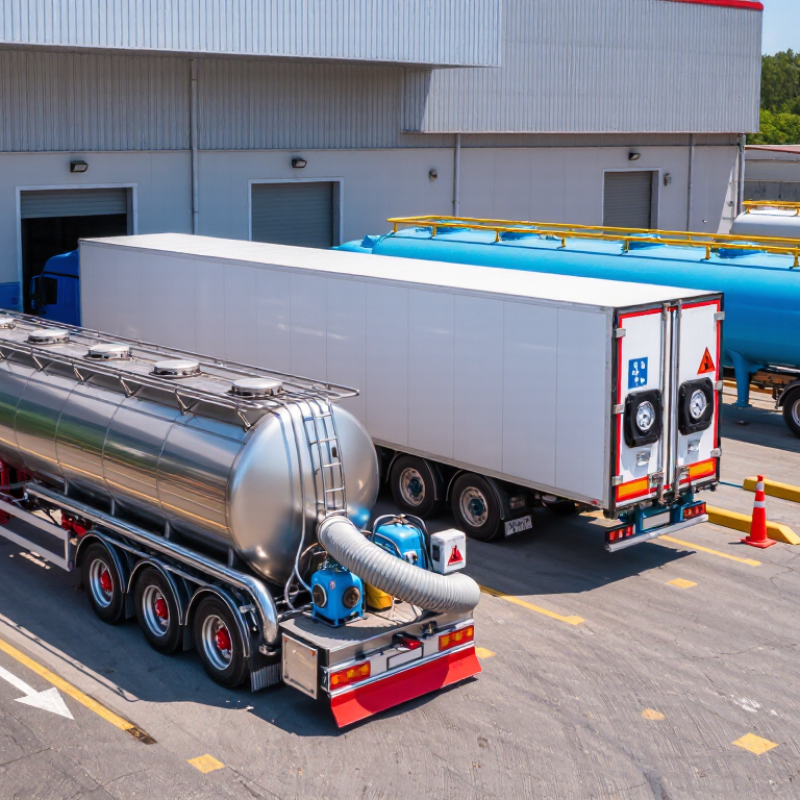
| Petroleum Tank Truck | Gasoline, diesel fuel, and other petroleum products | Atmospheric tank, often divided into separate compartments | Usually aluminum or steel construction; may include vapor-control equipment and compartment-specific outlets | Gravity unloading or pump-assisted transfer | Compartment layout helps deliver different products or quantities on one trip. Flammable-cargo rules and grounding procedures apply. |
| Chemical Tank Truck | Industrial chemicals, acids, alkalis, and solvents | Atmospheric or pressure-rated tank, selected for the cargo | Stainless steel or compatible lined materials; fittings, seals, and linings are chosen to resist the specific chemical | Pumping, gravity unloading, or pressure-assisted discharge where permitted | Cargo compatibility is essential. Tank material, lining, valves, and cleaning procedures must match the chemical’s properties. |
| Food-Grade Tank Truck | Milk, edible oils, syrups, and other liquid food products | Sanitary tank, commonly insulated; may have multiple compartments | Typically smooth-finished stainless steel with sanitary fittings and cleanable interior surfaces | Pump-assisted or gravity unloading | Hygienic design, documented cleaning, and separation from non-food cargo help protect product quality. |
| Potable Water Tank Truck | Drinking water and treated water | Atmospheric tank designed for hygienic water transport | Food-contact-compatible tank and fittings; protected fill openings and dedicated hoses are commonly used | Gravity discharge or pump-assisted delivery | Materials and handling practices should preserve water quality and prevent contamination during filling, transport, and delivery. |
| LPG Tank Truck | Liquefied petroleum gas, including propane and butane | Sealed, pressure-rated vessel for liquefied gas | Pressure vessel with valves and fittings designed for the gas service; safety devices are selected in accordance with applicable codes | Pressure transfer or pump-assisted transfer, depending on the system | Requires pressure-vessel inspection and gas-specific operating procedures. Design pressure and equipment depend on the cargo and jurisdiction. |
| LNG Tank Truck | Liquefied natural gas | Vacuum-insulated cryogenic tank | Double-wall construction with insulation to limit heat transfer; cryogenic-compatible valves and piping | Controlled transfer through cryogenic liquid connections | Designed to keep cargo at very low temperatures. Boil-off management and cryogenic safety are important operating considerations. |
| Bitumen / Asphalt Tank Truck | Hot bitumen and asphalt products | Insulated tank, often fitted with a heating system | Thermal insulation and heating equipment help maintain cargo temperature and flow characteristics | Usually pump-assisted; some systems use gravity discharge | Temperature control helps keep the cargo workable. Heating and handling procedures must suit the specific product. |
| Pneumatic Dry-Bulk Tank Truck | Cement, lime, flour, and other dry powders or granules | Sealed vessel with internal air lines or fluidizing equipment | Pressure-capable tank designed for dry bulk; configuration varies with product flow properties | Compressed-air or pneumatic discharge through a delivery hose | Although it carries dry cargo rather than liquid, it is commonly grouped with tank trucks because of its enclosed tank-shaped vessel. |
| Vacuum Tank Truck | Wastewater, sludge, and other liquid or semi-liquid waste | Sealed tank designed for vacuum loading; some models also support pressure-assisted unloading | Corrosion-resistant materials and service-specific fittings; construction depends on the waste being handled | Vacuum suction for loading; gravity or pressure-assisted discharge where suitable | Tank and hose materials should be compatible with the waste. Cleaning, disposal, and transport requirements vary by cargo and location. |



 Close