Top 10 Thermistor Chip Factories in China for Global Buyers?
In the competitive landscape of electronic components, thermistors play a crucial role in temperature sensing and control. China has emerged as a leader in thermistor chip manufacturing, providing global buyers with a diverse range of options. According to Dr. Wang Li, an expert in semiconductor technology, "The innovation in Thermistor Chip Factory China has transformed global supply chains." This highlights the significance of China's manufacturing capabilities.
The thermistor chip industry is growing rapidly, driven by advancements in technology and increasing demand. Many buyers seek reliable partners in China to secure quality components. However, the vast number of factories presents challenges in identifying the best suppliers. Not all manufacturers adhere to the same standards, which can lead to inconsistent product quality. It's essential for buyers to conduct thorough research before partnering with a factory.
In exploring the top thermistor chip factories in China, it is vital to consider various factors. These include manufacturing practices, quality assurance, and customer service. Finding a trustworthy Thermistor Chip Factory China requires diligence. Reflecting on these elements can help buyers make informed decisions that align with their operational needs.
Overview of Thermistor Technology and Its Applications
Thermistors are key components in temperature sensing and control applications. They are highly sensitive resistors that change resistance with temperature changes. This property makes them ideal for regulating heat in various devices. Common applications include HVAC systems, automotive temperature control, and consumer electronics.
Implementing thermistor technology can improve device efficiency. For instance, in HVAC systems, they help maintain consistent temperatures. This not only enhances comfort but also reduces energy costs. Be mindful, though. Selecting the wrong thermistor can lead to inaccurate readings.
Tips: When choosing thermistors, consider the application’s temperature range. Evaluate sensitivity and response time carefully. Validate the manufacturer’s reliability against industry standards.
Thermistors also have limitations. They can be affected by self-heating, which may skew readings. It's crucial to account for these factors in design. Calibration might be necessary for precision applications. Integrating thermistors requires a thoughtful approach to maximize benefits.
Criteria for Selecting Top Thermistor Chip Factories
When selecting thermistor chip factories in China, several criteria come into play. First, industry certification is crucial. Factories should have ISO and RoHS certifications, ensuring compliance with international standards. These certifications reflect a factory's commitment to quality and safety. According to a recent industry report, companies with valid certifications experience 30% fewer product defects.
Another important factor is production capacity. A factory must handle large volumes while maintaining quality. Many factories claim high output; however, reliability is key. A factory overlooked due to its size may produce superior quality products. The market indicates that mid-sized manufacturers often achieve better customization and responsiveness. Reports show that smaller firms can reduce lead times by up to 25% compared to larger counterparts.
Quality control processes must also be scrutinized. Factories that employ stringent testing procedures enhance product reliability. An effective Quality Management System (QMS) is essential. This system keeps track of production inconsistencies. However, not all manufacturers are transparent about their processes, leaving buyers uncertain. Transparency should be a non-negotiable requirement in any factory partnership.
List of Leading Thermistor Chip Manufacturers in China
China has become a key player in the global thermistor chip market. With numerous manufacturers, it can be overwhelming for buyers to navigate. Each factory has its strengths and expertise. Many companies focus on quality control, ensuring reliable products for various applications. They invest heavily in research and development, driving innovation.
However, not all manufacturers maintain the same standards. It's essential for buyers to assess the production processes. Reviews of past clients can provide insights into reliability and service. Factories often struggle with scalability and consistency. This can impact delivery timelines, an important factor in global supply chains.
A visit to these factories might illuminate their operations. Understanding their technology and workflow can be beneficial. Buyers must consider factors like production capacity and certifications. Even the best factories face challenges. Engaging directly can clarify capabilities and expectations, ensuring informed decisions. The evolving landscape of thermistor chips continues to demand attention from global buyers.
Top 10 Thermistor Chip Factories in China for Global Buyers
| Manufacturer Location | Annual Production Capacity | Technology Used | Major Applications | ISO Certification |
| Shenzhen | 500 million units | Thin-film Technology | Consumer Electronics | ISO 9001 |
| Suzhou | 300 million units | NTC Technology | Industrial Equipment | ISO 14001 |
| Hangzhou | 250 million units | PTC Technology | Automotive | ISO 9001, ISO 14001 |
| Xi'an | 400 million units | Metal Oxide | Medical Devices | ISO 13485 |
| Guangzhou | 350 million units | SMD Technology | Telecommunications | ISO 9001, TS 16949 |
| Nanjing | 600 million units | Wire-Wound | Aerospace | ISO 9001 |
| Wuhan | 200 million units | Thin-Film Technology | HVAC Systems | ISO 9001, OHSAS 18001 |
| Tianjin | 450 million units | Multilayer Design | Renewable Energy | ISO 14001 |
| Chengdu | 300 million units | Sensor Technology | Smart Home Devices | ISO 9001 |
| Beijing | 500 million units | Nano-coating | Data Centers | ISO 9001, ISO 27001 |
Key Features of Each Factory: Production Capacity and Specialization
China has become a significant hub for thermistor chip production. The country houses several factories specializing in thermistor technology. Each factory has unique features, focusing on specific markets and production capacities.
One renowned factory boasts an annual capacity of over 10 million units. It specializes in NTC thermistors, catering mainly to automotive applications. Another factory, with a focus on precision measurement, produces high-quality PTC thermistors. They can manufacture up to 8 million units per year. Such specialization enhances the competitiveness of these manufacturers in the global market.
In contrast, some factories struggle with efficiency. They may have lower production rates, impacting their ability to meet demand quickly. Observing these disparities offers insights into the overall landscape of thermistor production in China. Growth in this sector seems promising, yet reliance on a few key players raises concerns about stability. Manufacturers must address these challenges to sustain their positions as global leaders.
Top 10 Thermistor Chip Factories in China
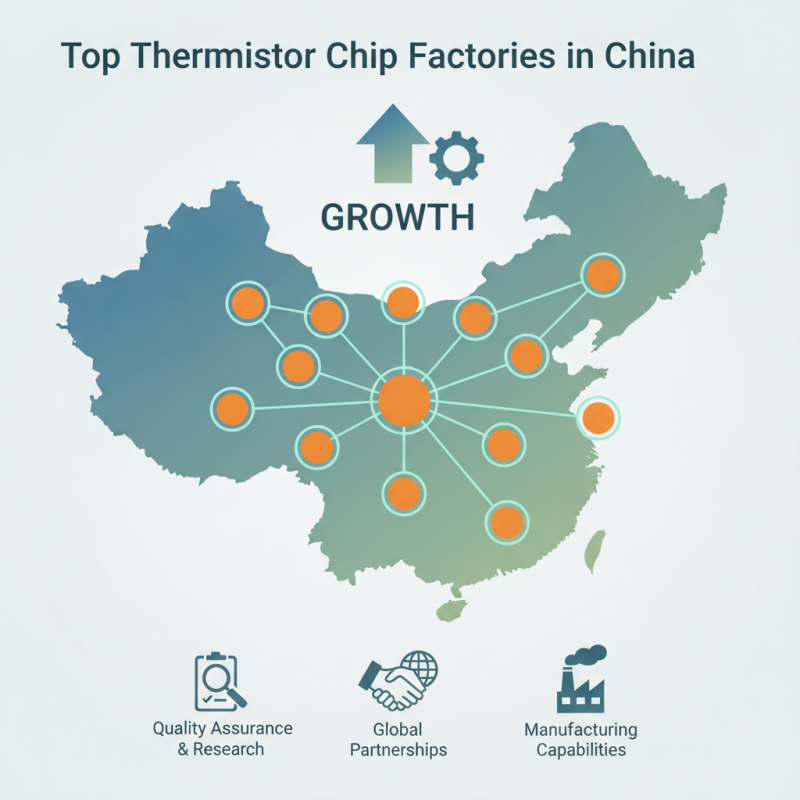
This chart illustrates the production capacity and specialization of various thermistor chip factories in China, providing global buyers with a comparative overview.
Market Trends and Future Outlook for Thermistor Chip Production in China
The thermistor chip market in China is experiencing significant growth. Recent data indicates that the global thermistor market is projected to reach $2.3 billion by 2025. Rapid advancements in electronics and automotive sectors drive this demand. China is a crucial player in this landscape, contributing a large percentage of the global production.
The increasing need for temperature sensors in various applications complicates the production landscape. While the market thrives, challenges remain. Many factories struggle with quality control and consistency. Inconsistent materials can lead to variable performance. Reports suggest that the average defect rate for thermistors in mid-sized factories can reach up to 5%. This raises concerns for buyers seeking reliability.
Future trends point toward smart technology integration in thermistors. The emergence of IoT devices will likely expand their usage. However, factories need to adopt stricter quality measures. Sustainability practices are becoming essential in production processes. Companies that fail to adapt may fall behind. Continuous innovation and strategic improvement are key to sustaining growth in this competitive environment.



 Close
Close