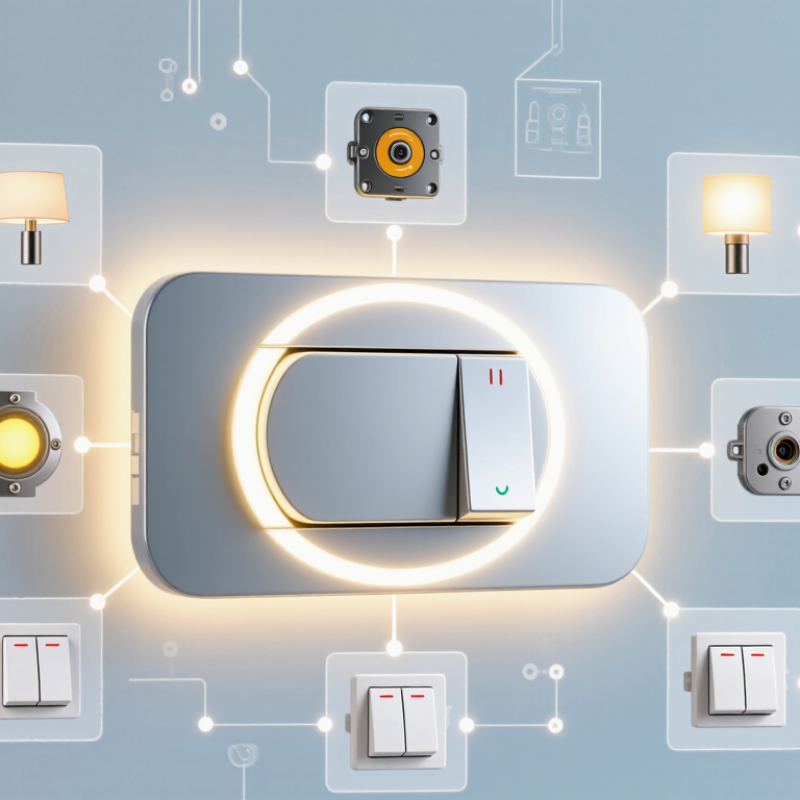
| Touch sensing | Many touch switches use capacitive sensing: a controller detects a change in capacitance when a finger approaches or touches the sensor area. | Ask about sensing distance, sensitivity adjustment, false-trigger resistance, and performance with the intended cover material and thickness. |
| Switching element | Depending on the circuit and load, a design may use a relay or a semiconductor switching device such as a triac or MOSFET. | Confirm compatibility with the load type, including LED drivers, motors, and other loads with inrush current; check rated voltage and current for the exact model. |
| Power supply and isolation | The control circuit may be powered by an isolated or non-isolated supply. The appropriate architecture depends on the product design and safety requirements. | Request the circuit’s safety design information, insulation ratings, and test documentation applicable to the intended market and installation. |
| PCB design | The printed circuit board combines the touch-sensing area, control electronics, power circuitry, and switching components. Layout choices affect sensing and electrical performance. | Check creepage and clearance, grounding, component quality, thermal design, and whether the production version has been tested in its final enclosure. |
| Cover and enclosure materials | Glass, plastic, and other insulating panels can be used as touch surfaces when the sensor is designed for the selected material and thickness. | Confirm material specifications, surface finish, panel thickness, cut-out dimensions, and sensor operation across production tolerances. |
| Firmware and user feedback | Controller settings can define touch thresholds, debounce behavior, and functions such as toggle or momentary operation. Indicators may use LEDs or other display elements. | Specify the desired operating logic, indicator behavior, startup state, and response to power interruption before approving a sample. |
| Electrical and EMC testing | Product verification can include functional, dielectric-strength, temperature-rise, and electromagnetic-compatibility tests, as applicable to the design and market. | Request test reports for the relevant model and configuration. A certificate or report should be checked against its scope, standard, and issuing body. |
| Assembly and inspection | Typical production steps include PCB assembly, enclosure assembly, programming where required, and functional inspection of finished units. | Ask how incoming components, solder joints, touch response, switching operation, and final appearance are inspected and recorded. |
| Customization and production readiness | Customization may involve the panel, dimensions, wiring, indicator layout, control logic, or packaging. Changes can require engineering review and additional validation. | Agree on drawings, bill of materials, sample approval, change control, minimum order quantity, lead time, and acceptance criteria before mass production. |



 Close