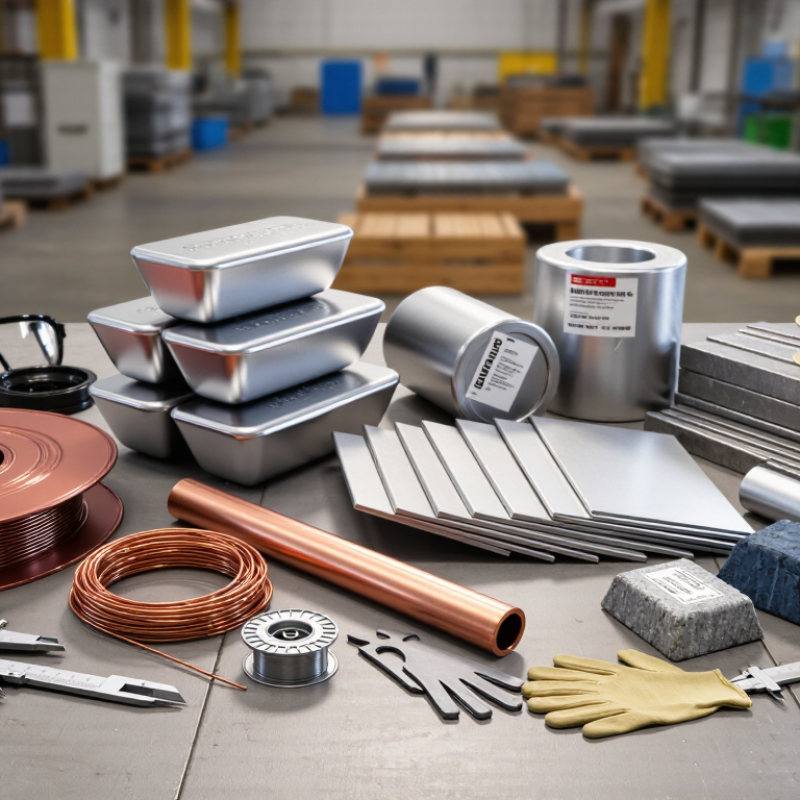
| Aluminum | Lightweight, corrosion-resistant, and readily formed; conducts heat and electricity. | Transportation, building products, packaging, electrical applications, and machinery. | Ingots, billets, slabs, sheets, plates, coils, and extrusions. | Specify alloy, temper, dimensions, surface finish, and applicable product standards. |
| Copper | Highly conductive, ductile, and resistant to corrosion in many environments. | Electrical wiring, power equipment, plumbing, heat exchangers, and electronics. | Cathodes, wire rod, bars, tubes, sheets, strips, and billets. | Confirm grade, conductivity requirements, dimensions, and whether material is refined or fabricated. |
| Zinc | Provides corrosion protection to steel and has a relatively low melting point. | Steel galvanizing, die casting, brass production, and zinc-based chemicals. | Ingots, slabs, die-casting alloys, and galvanizing-grade metal. | Check purity, alloy composition where applicable, surface condition, and packaging requirements. |
| Lead | Dense, soft, and corrosion-resistant; effective at absorbing radiation. | Lead-acid batteries, radiation shielding, cable sheathing, and selected chemical applications. | Refined ingots, alloys, sheets, and fabricated components. | Verify grade and impurity limits, and account for applicable hazardous-material handling and regulations. |
| Nickel | Resists corrosion and heat; forms useful alloys with iron and other metals. | Stainless steel, corrosion-resistant alloys, electroplating, and battery materials. | Class 1 nickel, briquettes, pellets, powder, ferronickel, and nickel-bearing intermediates. | Match product form and chemical composition to the intended process; battery and alloy feedstocks may have different specifications. |
| Tin | Soft, malleable, and resistant to corrosion; melts at a relatively low temperature. | Solder, tinplate for packaging, chemical compounds, and alloy production. | Refined ingots, bars, solder alloys, and tinplate. | Confirm tin content, alloy formulation, dimensions, and requirements for solder or food-contact applications. |
| Iron and steel | Iron is a key input to steelmaking; steel properties vary with composition and processing. | Construction, infrastructure, vehicles, machinery, tools, and industrial equipment. | Iron ore, pig iron, direct-reduced iron, billets, slabs, coils, plates, bars, and sections. | Specify whether the requirement is ore, ironmaking feed, or finished steel; define grade, dimensions, and mechanical properties. |
| Cobalt | Retains strength at high temperatures and is used in several specialized alloy and chemical applications. | Superalloys, hard metals, catalysts, and certain rechargeable-battery chemistries. | Metal cathodes, briquettes, powders, cobalt salts, and intermediate products. | Check chemical form, purity, particle size where relevant, traceability, and end-use requirements. |
| Manganese | Important alloying element that improves steel strength and other properties. | Steelmaking, specialty alloys, and manganese-based battery materials. | Manganese ore, ferromanganese, silicomanganese, and chemical compounds. | For metallurgical use, confirm manganese content, carbon level, particle size, and impurity limits. |
| Chromium | Improves corrosion resistance and hardness when alloyed with steel. | Stainless steel, alloy steels, metal finishing, and selected chemical applications. | Chromite ore, ferrochrome, charge chrome, and chromium chemicals. | Distinguish ore from ferroalloy products and specify chromium content, carbon level, and intended steelmaking use. |



 Close