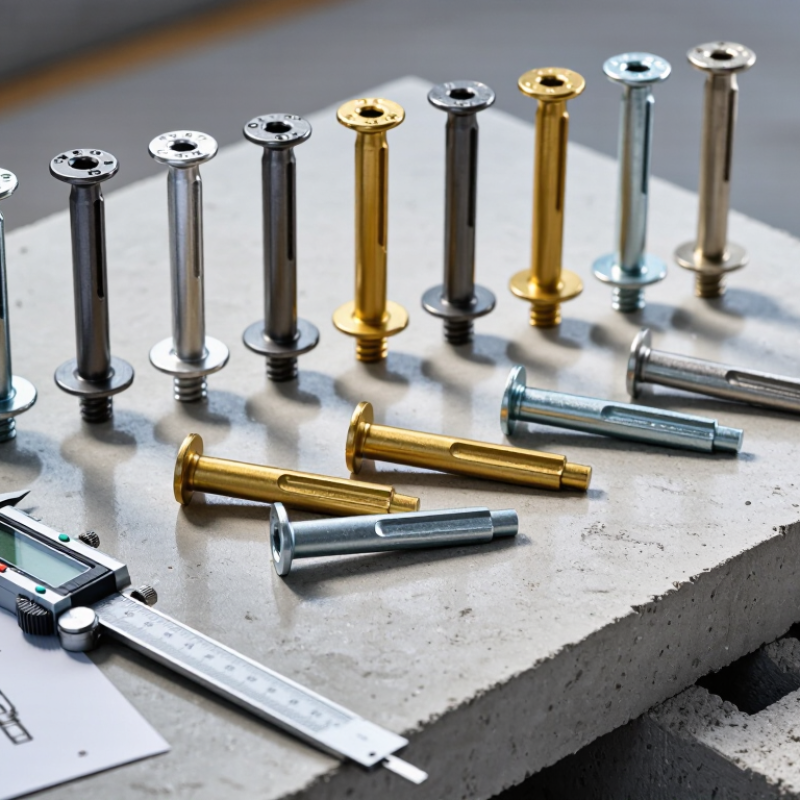
| 1 | Zinc-plated carbon-steel wedge anchor | Carbon steel with an electroplated zinc coating | Common choice for many interior applications where the exposure conditions are suitable for the specified coating. | Confirm diameter, length, fixture thickness, minimum embedment, hole diameter, and installation torque in the product documentation. No universal torque or embedment applies. | Check the evaluation report for the exact product, size, concrete condition, and permitted use; do not infer qualification from the finish. |
| 2 | Hot-dip galvanized carbon-steel wedge anchor | Carbon steel with a hot-dip galvanized coating | Consider where a thicker zinc coating is specified; suitability depends on the actual environment and the complete assembly. | Verify that the specified coating is available for the exact diameter and length. Follow the product-specific hole, embedment, and torque instructions. | Confirm that the report covers the coated version being purchased. A coating specification alone is not evidence of AC193 qualification. |
| 3 | Mechanically galvanized carbon-steel wedge anchor | Carbon steel with a mechanically applied zinc coating | A coated-steel option whose specified coating thickness and application should be checked against the project requirements. | Check the exact coating specification, diameter, length, effective embedment, and installation torque in the applicable product documentation. | Match the evaluation report to the exact anchor finish and size. Do not substitute a different galvanized finish without approval. |
| 4 | Type 304 stainless-steel wedge anchor | Austenitic stainless steel, commonly identified as Type 304 or an applicable equivalent grade | May be considered for corrosion-sensitive settings; actual resistance depends on exposure, crevices, contaminants, and the full fastener assembly. | Confirm the stated stainless grade, diameter, length, and product-specific installation values. Stainless versions may have different availability and capacities than carbon-steel versions. | Verify that the report lists the stainless-steel model and relevant size. Do not transfer carbon-steel design values to a stainless version. |
| 5 | Type 316 stainless-steel wedge anchor | Austenitic stainless steel, commonly identified as Type 316 or an applicable equivalent grade | Often considered for more demanding corrosion exposures than general-purpose stainless grades; project-specific corrosion assessment is still necessary. | Confirm grade certification, dimensions, minimum embedment, and required torque for the exact model. Do not treat “316” as a guarantee of suitability for every environment. | Check the applicable report for the 316 model and size, including any limits on concrete strength, edge distance, spacing, or use. |
| 6 | Cracked-concrete-qualified configuration | Material and finish depend on the evaluated product | For designs that require an anchor evaluated for use in cracked concrete. The design must also account for the applicable load and installation conditions. | Use the report’s listed diameter, effective embedment, concrete strength range, edge distances, spacing, and installation torque. | Confirm that cracked-concrete use is explicitly covered for the selected model and size; not every wedge anchor has this qualification. |
| 7 | Seismic-qualified configuration | Material and finish depend on the evaluated product | For applications where seismic design requirements apply; qualification and design parameters are specific to the product and stated conditions. | Verify the listed seismic use, anchor size, embedment, concrete condition, and installation torque. Confirm design assumptions with the project engineer. | Check the evaluation report for the applicable seismic qualification and its limitations. “Seismic” should not be assumed from anchor type alone. |
| 8 | Short or reduced-length wedge anchor | Material and finish depend on the product line | May suit a limited fixture or base-material thickness when the required design capacity and embedment can be met. | Compare total anchor length with fixture thickness and required embedment. A shorter anchor does not automatically qualify for shallow embedment. | Use only the minimum embedment and torque listed for that exact model and size in its evaluation report and installation instructions. |
| 9 | Long-thread or extended-thread configuration | Material and finish depend on the product line | Can provide more thread length for fixture thickness or adjustment, subject to the anchor’s evaluated installation limits. | Check usable thread, fixture thickness, washer and nut arrangement, minimum embedment, and required torque. Extra thread does not increase allowable capacity by itself. | Verify that the threaded configuration and size are covered by the report; use the report’s values rather than values from a similar-looking anchor. |
| 10 | Large-diameter or heavy-duty wedge anchor | Material and finish depend on the evaluated product | Consider for higher-demand applications only after structural design checks; capacity depends on anchor size, embedment, concrete, spacing, and edge conditions. | Confirm exact diameter and length, drill-bit size, minimum embedment, hole cleaning requirements, and installation torque. Larger size alone does not establish capacity. | Check the report’s listed size range and design limitations, including concrete strength, cracked-concrete status, spacing, and edge distance. |



 Close