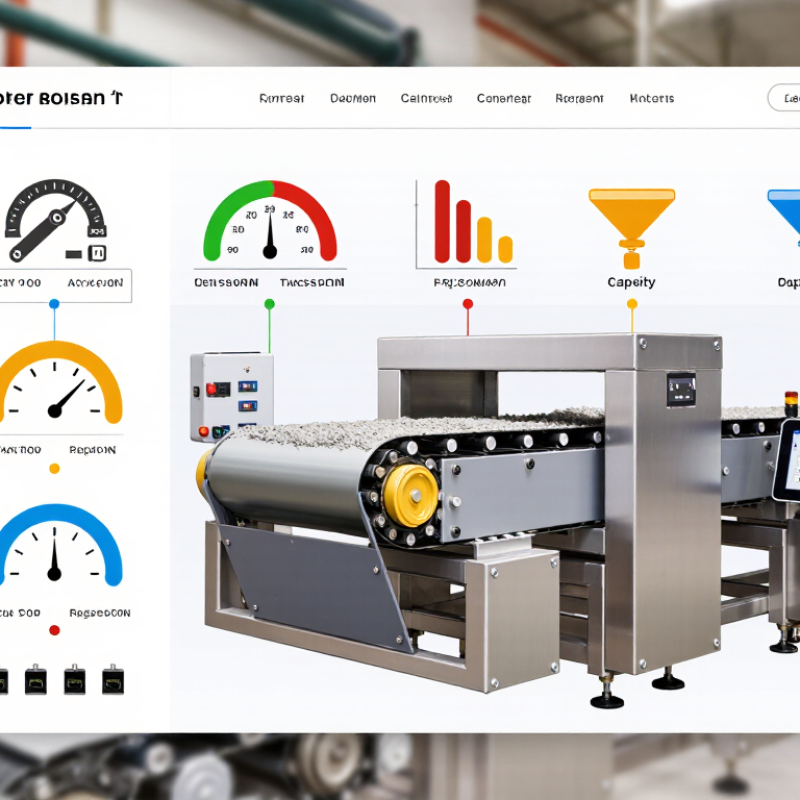
| Continuous belt weigh feeder | Load cells measure the material load on a section of belt, while a speed sensor measures belt velocity. Mass flow = belt load per unit length × belt speed. | Suitable for many free-flowing or moderately cohesive bulk solids, including aggregates, grains, and powders, when material can be conveyed on a belt. | Check belt loading, material distribution, dust containment, belt tracking, and whether the installation allows stable weighing. | Ask how the system is calibrated and zeroed, how belt speed is monitored, and how buildup or belt wear may affect measurement. |
| Loss-in-weight feeder | Load cells measure the weight of the feeder and its supply hopper over time. Mass flow = weight loss ÷ elapsed time. The controller adjusts the feeding device to maintain the set rate. | Commonly used for powders, pellets, granules, and ingredients requiring controlled dosing in continuous processes. | Consider refill frequency, hopper size, material flow behavior, vibration, and whether the process can accommodate brief refill cycles. | Confirm the stated operating range for the actual material, refill strategy, load-cell protection, and calibration procedure. |
| Weigh screw feeder | A screw moves material from a hopper; weighing components and drive data are used by the control system to regulate and monitor feed, depending on the design. | Often selected for powders and fine solids that need enclosed handling or controlled discharge from a hopper. | Review screw geometry, material flowability, risk of bridging or buildup, cleanability, and the suitability of the inlet arrangement. | Ask whether flow is measured gravimetrically or inferred from another signal, and request performance details for the specific material. |
| Weigh belt with integrated control | Combines belt weighing and speed measurement with a controller that adjusts belt speed to meet a target mass-flow rate. | Used where continuous conveying and controlled feeding are both required, such as batching, blending, and process feed systems. | Assess required turndown, response to changing material load, integration with upstream and downstream equipment, and access for maintenance. | Verify the control mode, signal interfaces, operating conditions, and acceptance-test method for the complete installed system. |
| Volumetric feeder (comparison) | Controls a volume per unit time using a device such as a screw or rotary mechanism. It does not directly measure mass flow unless combined with a weighing system. | May suit applications where bulk density is sufficiently consistent and mass-flow measurement is not required. | Bulk density, particle size, and material condition can change the relationship between volume and mass. | Confirm whether the process requires measured mass flow; do not treat a volumetric rate as a direct mass-flow reading. |



 Close