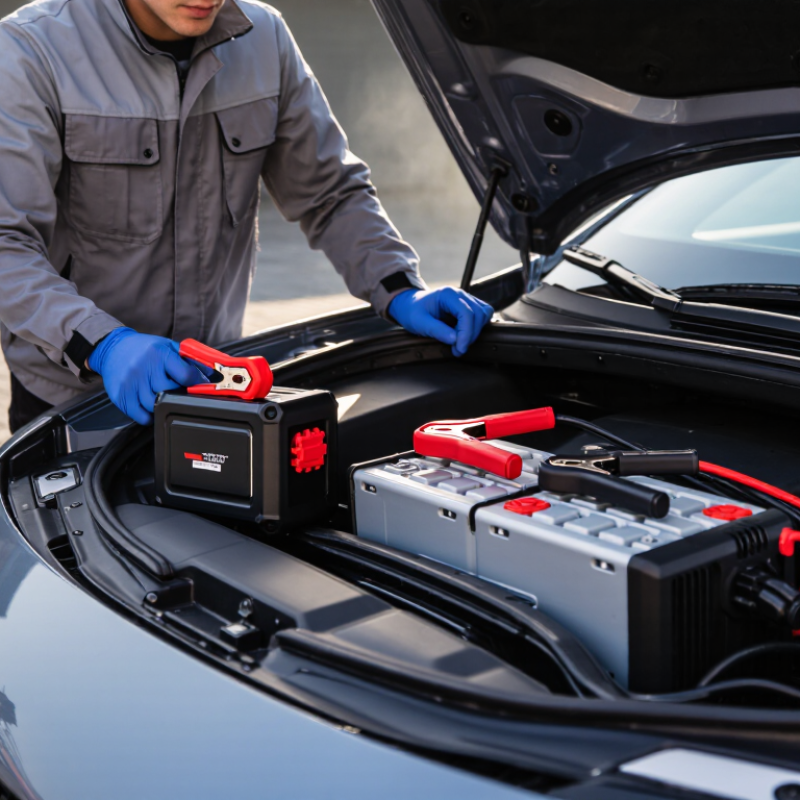
| Vehicle preparation | Park safely, switch off the ignition and electrical accessories, and engage the parking brake. | Before every jump-start attempt | Check the vehicle handbook first, especially for hybrid, electric, or vehicles with remote battery terminals. |
| Positive cable connection | Attach the red clamp to the positive (+) battery terminal. | First connection | Make sure the clamp has firm metal-to-metal contact and cannot slip off. |
| Negative cable connection | Attach the black clamp to the negative (−) terminal or an approved unpainted metal ground point. | Second connection | Keep clamps separated and away from moving parts, fuel lines, and hot engine components. |
| Waiting period before starting | Turn on the jump starter if required and allow the battery to receive a short boost. | Approximately 30–60 seconds | Follow the device instructions; some units activate automatically when a battery is detected. |
| Cranking time | Crank the engine in a short attempt, then release the key or stop pressing the start button. | About 3–5 seconds per attempt | Avoid repeated long cranking, which can overheat the starter motor and cables. |
| Time between attempts | Allow the jump starter and vehicle starter to rest before trying again. | At least 30 seconds | If the engine does not start after several attempts, stop and investigate the battery, fuel, ignition, or vehicle system. |
| Cable removal order | Remove the black clamp first, followed by the red clamp. | After the engine starts | Keep the clamps from touching each other or any metal surface while connected to the device. |
| Post-start engine operation | Allow the engine to run or drive normally so the vehicle charging system can replenish the battery. | At least 20–30 minutes | A drive is generally more effective than leaving the engine idling, but it may not fully recharge a deeply discharged battery. |
| Recharge method | Use the supplied charging cable and a compatible wall adapter or vehicle USB/power outlet. | Use only the specified input rating | Do not use damaged cables, incompatible adapters, or improvised power sources. |
| Typical recharge time | Recharge until the battery indicator shows full capacity. | Approximately 2–6 hours | Actual time depends on battery capacity, charger output, charging technology, and remaining charge. |
| Recharge after use | Recharge the device as soon as practical after jump-starting a vehicle. | Within 24 hours when possible | A full charge helps ensure sufficient output for the next emergency. |
| Charge level for storage | Store the unit with a high charge level rather than fully depleted. | Around 50–100%; follow the manual | Some lithium-ion devices recommend storage near 50% for long-term battery-life optimization; the manufacturer’s instructions take priority. |
| Storage temperature | Keep the jump starter in a dry, shaded, well-ventilated location. | Preferably 10–25°C (50–77°F) | Avoid direct sunlight, heaters, freezing conditions, and prolonged exposure to a hot vehicle interior. |
| Storage inspection | Check the charge indicator, case, cables, clamps, ports, and accessories. | Every 1–3 months | Recharge if the level has dropped below the recommended storage level or the device indicates low power. |
| Terminal and clamp cleaning | Wipe the clamps with a clean, dry cloth and remove dirt or corrosion before use. | Before use and whenever contaminated | Do not immerse the jump starter or spray liquid directly onto electrical connections. |
| Physical condition check | Inspect for swelling, cracks, leaking fluid, burnt odor, frayed cables, or damaged insulation. | Before every use | Do not use or charge a device with a swollen, cracked, leaking, or severely damaged battery. |
| USB and accessory use | Use built-in lights, USB ports, or air compressors only when necessary. | Minimize unnecessary drain | Recharge after extended accessory use, even if the jump-start function was not used. |
| Safety limits | Never reverse the polarity, short the clamps, or connect the unit to a damaged battery. | Always applicable | Stop immediately if the device becomes unusually hot, smells abnormal, sparks excessively, or displays a fault warning. |



 Close