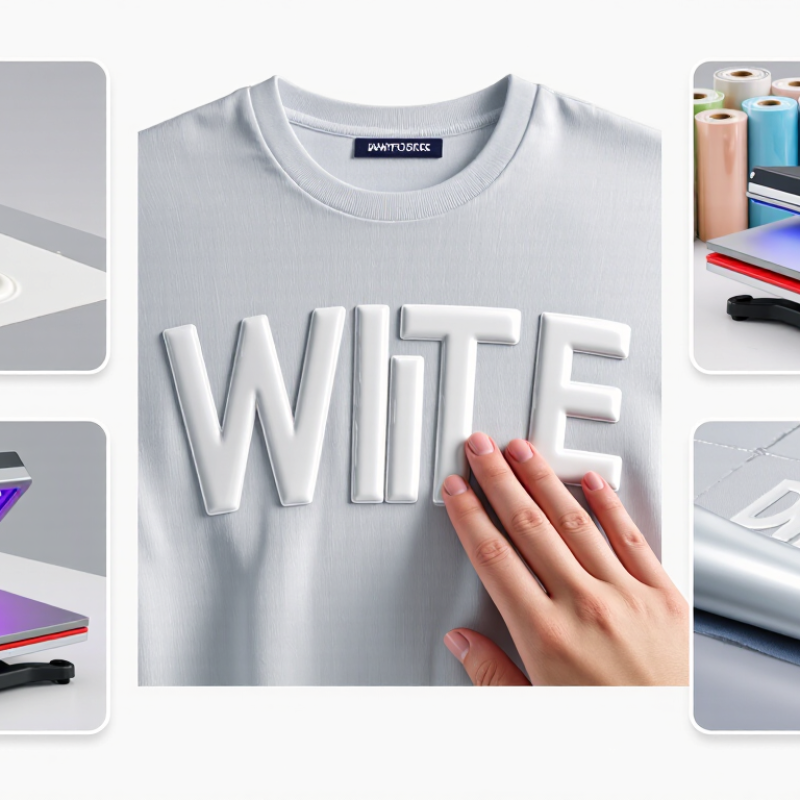
White 3D UV TPU DTF Film: Materials and Equipment Needed
A reliable setup starts with compatible white 3D UV TPU DTF film, UV-curable inks, and a clean printing surface. The film should match the printer’s feed system and curing requirements. Choose a white ink with stable opacity, because weak white layers can make colors look dull. You also need color ink and clear varnish for raised details.
Keep it clean.
The essential equipment includes a UV printer, RIP software, a curing unit, and a laminator or transfer press. A white ink circulation system helps reduce sediment during longer jobs. Use a printhead cleaning kit, lint-free wipes, nitrile gloves, and a dust-free worktable. Store the film flat, away from heat and moisture. Small particles can become visible under glossy varnish.
In practice, load the TPU film without forcing its edges. Print the white base, colored artwork, and raised varnish according to the selected layer order. Cure each layer carefully, but avoid excessive heat that may deform TPU. Test a small piece before production. I have found that a visually perfect sample can still fail during transfer.
Poor adhesion often comes from surface contamination or insufficient curing. That mistake matters.
Record the film batch, ink settings, curing speed, and transfer pressure for repeatable results. Use ventilation and follow the safety instructions for UV materials.



 Close