| Preventing Tool Damage | Workshop cabinets, tool chests, or enclosed storage units | Use padded compartments or fitted cases with one designated space for each tool | Drills, impact drivers, sanders, grinders, and compact saws | Reduces contact between tools, protects housings, and keeps switches and controls from being pressed accidentally | Remove loose debris before storage and avoid placing heavy tools on top of lighter equipment |
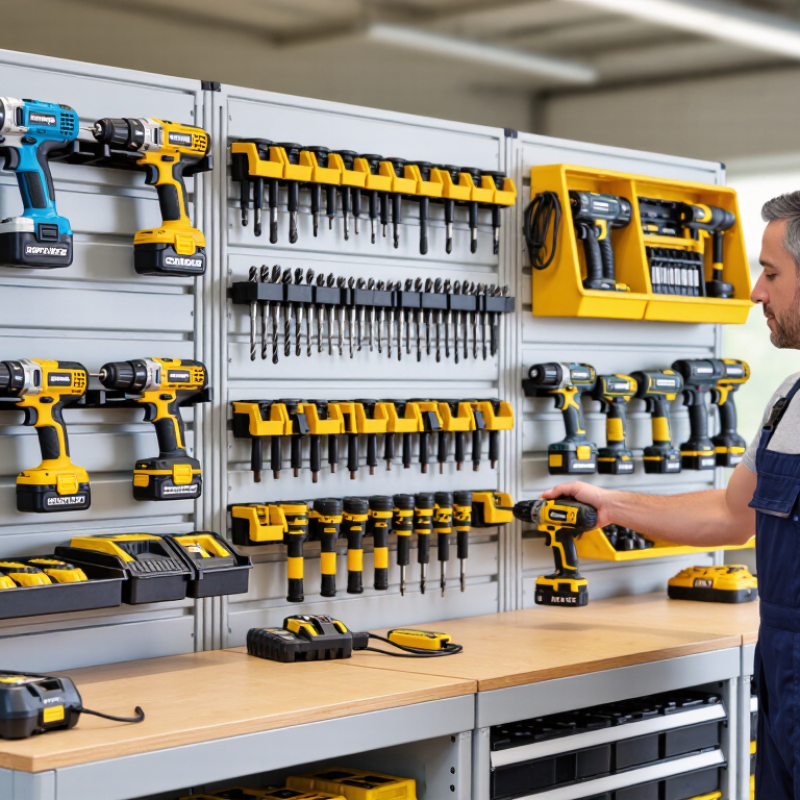
| Improving Accessibility | Garage walls, workshop pegboards, and open shelving | Arrange frequently used tools at eye or waist level and group them by task | Drivers, drills, fastening tools, measuring tools, and commonly used bits | Shortens search time and makes frequently used equipment easy to identify | Secure wall-mounted systems to structural supports and keep walkways clear |
| Saving Floor Space | Wall-mounted rails, vertical panels, and overhead storage areas | Store tools vertically with hooks, brackets, or dedicated holders | Circular saws, reciprocating saws, cordless tools, extension cords, and hoses | Uses vertical space efficiently and reduces clutter on benches and floors | Check the load rating of mounting hardware and keep overhead items lightweight enough to handle safely |
| Managing Batteries and Chargers | Dedicated charging shelves, ventilated cabinets, or workbench charging stations | Separate charged, partially charged, and unused batteries; route cables through clips | Rechargeable battery packs, chargers, adapters, and power-tool cables | Prevents cable tangles, makes battery status easier to monitor, and keeps chargers organized | Charge batteries in a dry, ventilated area away from heat, moisture, and flammable materials |
| Organizing Small Accessories | Drawer cabinets, parts bins, portable organizers, and labeled boxes | Sort accessories by type, size, or application and use removable labels | Drill bits, driver bits, sanding discs, blades, fasteners, and socket attachments | Prevents small parts from becoming mixed together and makes replacements easier to locate | Keep sharp accessories covered and store moisture-sensitive metal parts in a dry location |
| Supporting Job-Site Mobility | Rolling tool carts, portable cases, service vehicles, and job-site storage boxes | Use modular compartments with heavier tools at the bottom and frequently used items near the top | Portable drills, impact tools, hand tools, batteries, bits, and measuring equipment | Makes tools easier to transport while reducing shifting and impact during movement | Close latches before transport, distribute weight evenly, and protect batteries from extreme temperatures |
| Maintaining a Clean Workbench | Workbench drawers, under-bench cabinets, and side-mounted holders | Keep the work surface limited to current-project tools and return other items after use | Routers, jigsaws, angle grinders, clamps, and measuring tools | Creates more usable workspace and lowers the chance of tools being knocked onto the floor | Do not obstruct ventilation openings, and disconnect corded tools before putting them away |
| Controlling Inventory | Central workshop storage, labeled cabinets, or a tool-room shelving system | Use location labels, category zones, and a simple check-in/check-out list for shared tools | Duplicate tools, specialty tools, spare batteries, accessories, and seasonal equipment | Helps identify missing items, reduces unnecessary purchases, and improves accountability | Inspect tools periodically for damaged cords, worn accessories, loose guards, or other defects |



 Close