| Clear Tempered Glass | Transparent, bright, and visually open; allows nearly unrestricted light through the enclosure. | Low | Shows water spots, soap residue, and mineral deposits more easily. Regular squeegeeing and routine cleaning are recommended. | Small bathrooms, modern layouts, and spaces where visual openness is important. | Maximizes light, makes a bathroom appear larger, and works well with almost any tile design. | Provides very little visual privacy and can make deposits more noticeable. | ★★★★★ for brightness |
| Low-Iron Tempered Glass | Very clear glass with less green color than standard clear glass, especially at thicker edges. | Low | Maintenance is similar to clear glass because the smooth surface still displays water spots. | Bathrooms with white tile, pale stone, strong natural light, or designs where accurate colors matter. | Provides a clean, premium-looking appearance and preserves the true color of surrounding materials. | Usually costs more than standard clear glass and does not improve privacy. | ★★★★★ for color clarity |
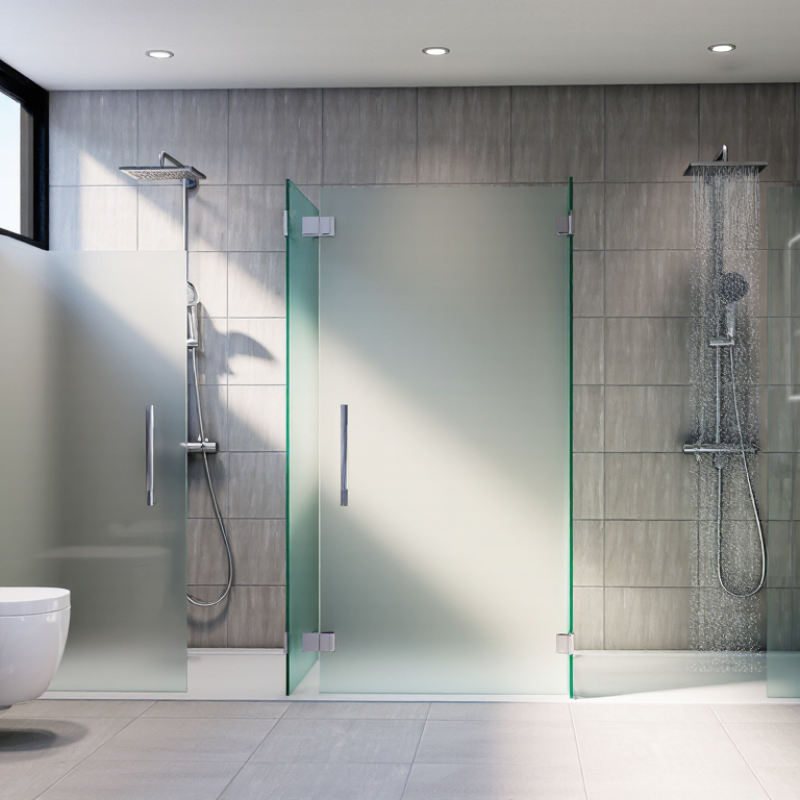
| Frosted Glass | Translucent surface that diffuses light while obscuring clear views. | High | Frosted surfaces can hold residue in their texture; gentle, non-abrasive cleaning is preferable. | Shared bathrooms, guest bathrooms, and shower areas where privacy is a priority. | Offers strong privacy while retaining useful daylight. | Reduces visual openness and may require more careful cleaning than smooth clear glass. | ★★★★★ for privacy |
| Rain or Patterned Glass | Features a raised or molded pattern that distorts outlines and creates a decorative visual effect. | Medium to high, depending on the pattern | Textured areas may collect mineral deposits and require careful wiping with a soft cloth. | Traditional, transitional, or decorative bathrooms that need added privacy. | Adds visual interest and hides direct views better than plain clear glass. | Patterns may make the enclosure look busier and can be more difficult to clean thoroughly. | ★★★★☆ for style |
| Obscure or Etched Glass | Uses a matte or decorative finish to soften reflections and conceal detailed views. | Medium to high | Care depends on the finish; abrasive products can damage or dull the treated surface. | Contemporary bathrooms requiring a balance between design and privacy. | Provides a distinctive appearance and reduces direct visibility. | Some finishes can show fingerprints, streaks, or uneven cleaning more readily. | ★★★★☆ for privacy and design |
| Tinted Glass | Colored glass, commonly in gray, bronze, or similar neutral tones, that filters some light. | Medium, depending on tint depth | Generally similar to clear glass, although streaks may be more visible against darker tones. | Bathrooms with coordinated dark fixtures, warm finishes, or a dramatic interior style. | Adds color and visual depth while providing more privacy than fully clear glass. | Can make a small or poorly lit bathroom appear darker and may affect the appearance of tile colors. | ★★★★☆ for visual impact |
| Textured Glass | Has a three-dimensional surface that scatters light and breaks up direct views. | Medium to high | Texture can make soap and mineral buildup harder to remove; regular rinsing is helpful. | Bathrooms needing decorative privacy and a less conventional enclosure design. | Combines light diffusion, privacy, and a strong decorative character. | Requires more attention during cleaning and may not suit minimalist interiors. | ★★★★☆ for privacy and texture |
| Laminated Safety Glass | Made from glass layers joined by an interlayer; available in clear, tinted, or decorative options. | Depends on the selected surface or interlayer | Clean the exposed surface according to the finish; avoid harsh tools that can scratch the glass. | Projects where additional post-breakage containment is specifically desired and permitted by local requirements. | The interlayer is designed to help hold broken pieces together after glass damage. | It is heavier and may require compatible hardware and professional design; local building requirements should be checked. | ★★★★☆ for containment |
| Standard Tempered Safety Glass | Available in clear, low-iron, frosted, tinted, and patterned finishes. | Depends on the selected finish | Use a non-abrasive cleaner and inspect edges and hardware periodically. | Most framed, semi-frameless, and frameless shower enclosures where safety glazing is required. | Heat-treated safety glass is stronger than ordinary annealed glass and is designed to break into smaller pieces if shattered. | It cannot be cut or drilled after tempering, so measurements and hardware locations must be confirmed before fabrication. | ★★★★★ for common use |



 Close
Close