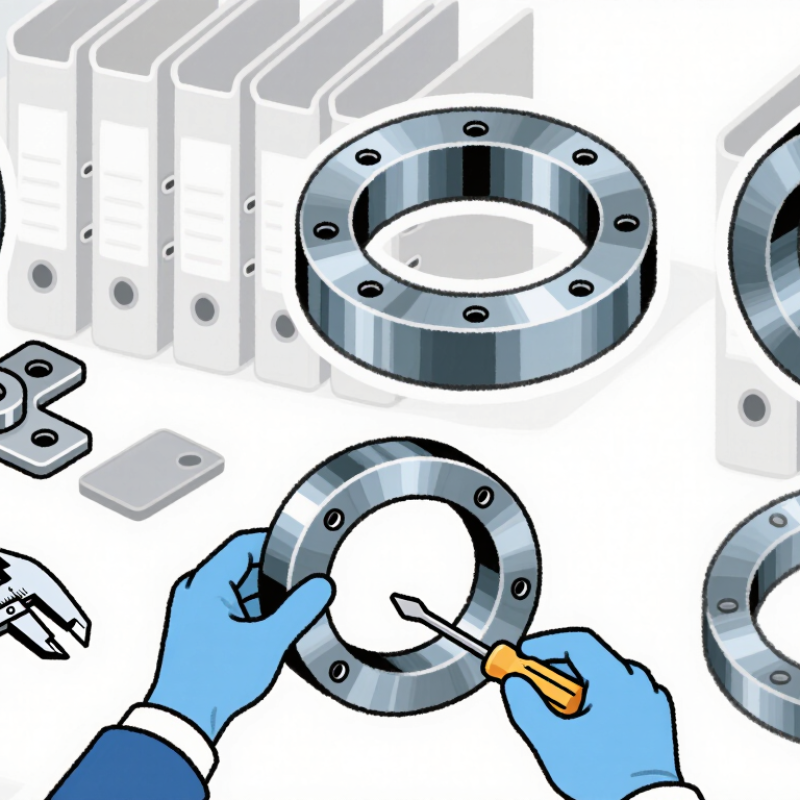
| Manufacturer’s role | Produces mechanical ring assemblies used to hold punched sheets in binders, folders, and presentation products. | Typical operations include forming metal components, assembling rings and levers, finishing surfaces, and inspecting finished mechanisms. | Product requirements are generally defined by the buyer’s drawings, purchase specification, and intended use. |
| Base plate and housing | Commonly formed from low-carbon steel sheet; thickness and grade depend on the mechanism design and required rigidity. | Check material certificates when specified, sheet thickness, stamping quality, hole position, burrs, and plate flatness against the approved drawing. | Material grades should be verified against the applicable material specification; dimensional limits are normally product-specific. |
| Rings and moving parts | Steel wire or formed steel strip is commonly used for rings, levers, and linkages. Plating or another finish may be selected for appearance and corrosion resistance. | Inspect ring alignment, symmetry, opening and closing action, joint condition, sharp edges, and consistency across the set. | Ring geometry and operating-force acceptance criteria should be stated in the product drawing or inspection plan. |
| Rivets and fasteners | Steel rivets or other mechanically secured fasteners are used to attach components; the selected material and finish depend on the assembly design. | Check for secure joints, excessive looseness, deformation, interference with moving parts, and visible damage after assembly. | Fastener dimensions and joint performance are typically controlled by the drawing and validated through assembly checks. |
| Surface finish and corrosion | Finishes may include nickel or zinc-based plating, paint, or other specified coatings. The appropriate finish depends on the use environment and appearance requirements. | Inspect coating coverage, adhesion where specified, discoloration, scratches, and corrosion-test results when required by the purchase specification. | ISO 9227 describes neutral salt-spray testing methods. The test duration and pass criteria must be agreed for the specific product; the standard does not set one universal acceptance limit. |
| Dimensional inspection | Key characteristics may include overall length, plate width, mounting-hole spacing, ring diameter, and ring spacing. | Use suitable calibrated measuring equipment and approved drawings; record inspection results according to the defined control plan. | Tolerances are product-specific. ISO 2859-1 provides attribute-sampling procedures when an agreed sampling plan is used. |
| Functional testing | The mechanism should open and close as designed and hold the intended punched sheets without unintended release during normal use. | Check smooth actuation, ring-end alignment, secure locking where applicable, and performance over a specified number of operating cycles if required. | Cycle counts, load conditions, and pass/fail limits should be set in the buyer’s test protocol; there is no single universal test limit for all ring mechanisms. |
| Quality management | Documented controls may cover incoming materials, production processes, nonconforming products, corrective actions, and traceability. | A quality audit can review inspection records, calibration status, process controls, change management, and corrective-action evidence. | ISO 9001 specifies requirements for a quality management system; certification is organizational and does not by itself certify an individual product. |
| Restricted substances | Metal finishes and component materials may be subject to market-specific chemical restrictions and documentation requirements. | Request supplier declarations or test evidence appropriate to the product, material, market, and applicable legal requirements. | EU RoHS Directive 2011/65/EU, as amended, applies to specified electrical and electronic equipment categories; applicability to a ring mechanism depends on the product and its intended market. |



 Close