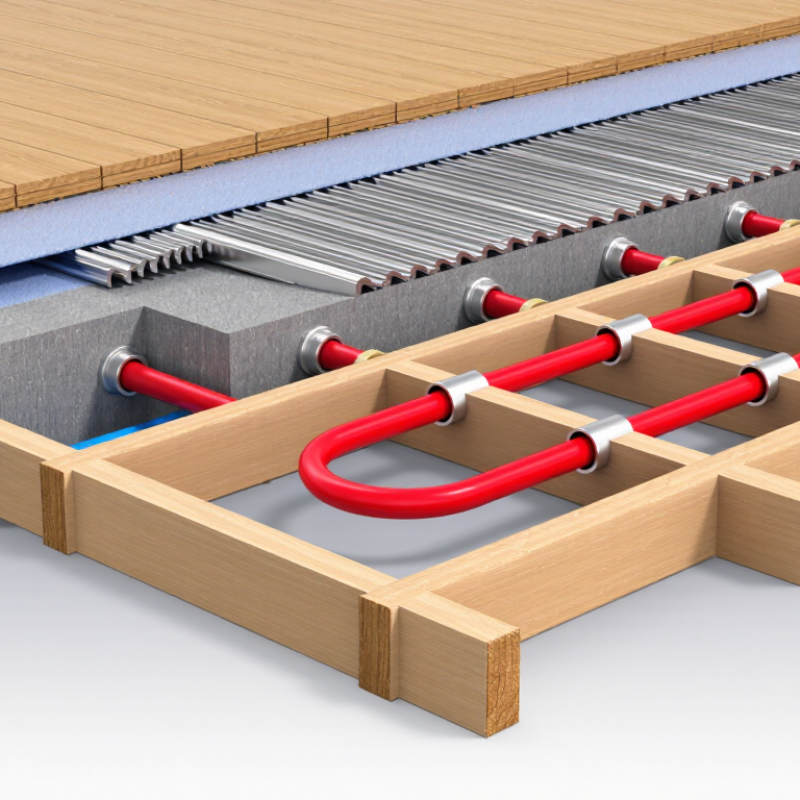
| Heat transfer plate | A conductive metal component installed between hydronic tubing and a building surface, commonly a subfloor or the underside of a floor panel. | It receives heat from the tubing and spreads it across a wider area of the floor assembly, improving contact and heat distribution. | Plate design, tubing fit, installation quality, and the floor assembly all affect performance. |
| Aluminum plate | A lightweight plate made from aluminum, often formed with a channel that holds the tubing. | Aluminum conducts heat well and distributes it laterally from the tubing into the surrounding floor material. | Used in many underfloor radiant-heating assemblies. The plate must fit the tubing and be installed in accordance with the system design. |
| Steel plate | A plate made from steel, available in different shapes and thicknesses. | It transfers heat from the tubing to the floor assembly through direct contact and conduction. | Material, thickness, corrosion protection, and contact with the tubing and floor should be considered for the intended installation. |
| Channel or “C” plate | A plate with a formed channel that partially surrounds the tubing. | The channel increases the area of contact between the plate and tubing, helping conduct heat into the plate. | Often fitted between floor joists or attached beneath a subfloor, depending on the system layout. |
| Flat plate | A generally flat metal strip or sheet used with tubing secured against it. | Heat moves from the tubing into the plate at their contact points, then spreads through the plate and into nearby building materials. | Performance depends on how securely the tubing contacts the plate and how the plate is connected to the floor assembly. |
| Tubing-to-plate contact | The physical fit between the hydronic tubing and the plate channel or surface. | Close contact supports conductive heat transfer. Gaps or a poor fit can increase thermal resistance at the interface. | Use plate profiles designed for the tubing’s outside diameter; follow installation instructions to avoid damaging tubing. |
| Plate-to-floor contact | The connection between the heat transfer plate and the subfloor or other floor component. | Heat spreads from the plate into the building surface by conduction, then moves through the floor layers toward the room. | Secure attachment and consistent contact help limit uneven heating. Floor coverings and underlayment also influence heat flow. |
| Radiant floor assembly | A complete heating assembly that may include tubing, plates, a subfloor, finish flooring, and insulation. | Warm water heats the tubing; the plates spread heat into the floor structure, which releases heat to the room mainly from the floor surface. | System output is determined by the complete design, including water temperature, tubing layout, floor construction, and heat loss. |
| Insulation below the heating plane | Insulating material installed beneath or around the heated floor assembly where appropriate. | It reduces unwanted heat flow toward unheated spaces, helping direct a greater share of heat toward the intended area. | Insulation requirements vary with the building assembly and applicable local codes and design guidance. |
| Thermal output | The heat delivered by the finished radiant-floor system, usually evaluated as part of the overall heating design. | Plates can improve heat distribution, but they do not establish a universal heat-output value on their own. | Output should be determined from the system design and operating conditions rather than plate material alone. |



 Close