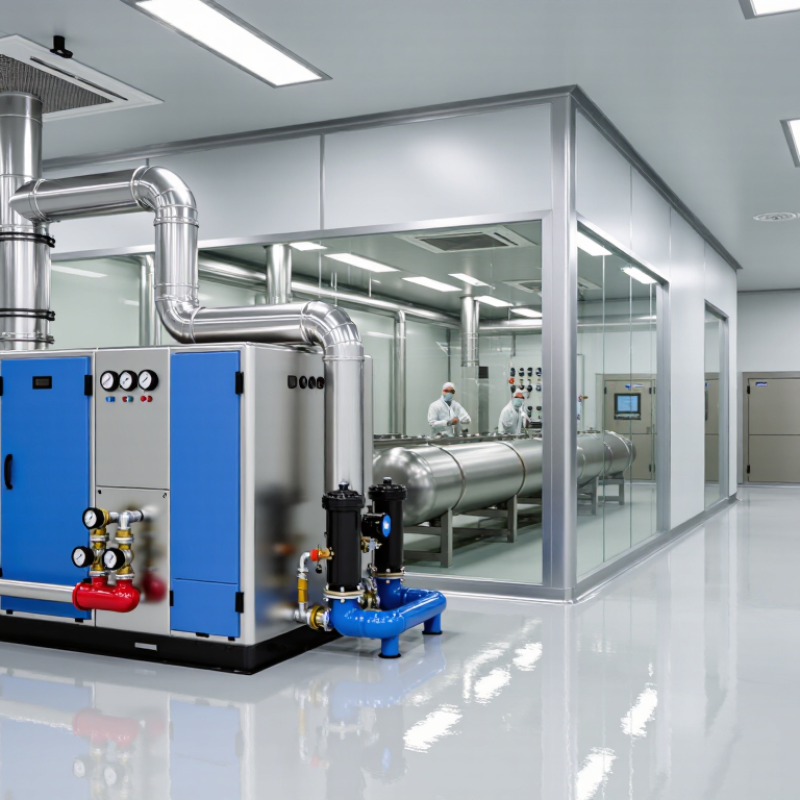
| System definition | A refrigeration system that cools circulating water or another heat-transfer fluid for use by HVAC coils or equipment. | Provides a controlled source of cooling for cleanroom environmental conditioning and, where required, process equipment. |
| Primary heat-transfer path | Chiller evaporator → chilled-water piping → cooling coil or process load → return piping → chiller. | Moves heat from the cleanroom or process to the chiller, where it is rejected outdoors or to a heat-recovery system. |
| Typical chilled-water temperatures | Approximately 6–7°C supply and 11–13°C return are common design examples. Some systems use different temperatures to suit their loads. | Supplies cooling to air-handling-unit coils; the final design temperature is determined by load, coil selection, and humidity-control requirements. |
| Cooling capacity | Project-specific, ranging from small capacities for localized loads to large capacities for multi-zone facilities. Capacity is selected through a cooling-load calculation. | Matches the combined cooling demand, including people, lighting, equipment, outdoor air, and process heat. |
| Typical system components | Chiller, pumps, piping, valves, strainers, expansion vessel, controls, and—depending on the design—a cooling tower or air-cooled heat-rejection section. | Circulates the cooling fluid, manages pressure and flow, removes heat, and supports safe, stable operation. |
| Cleanroom air-handling connection | Chilled water commonly serves cooling coils in air-handling units (AHUs). The AHU may also include fans, filters, and other air-treatment equipment. | Allows the HVAC system to cool and condition supply air before it enters the cleanroom. |
| Temperature control | Room and supply-air targets are set by the facility design and process needs; there is no single temperature suitable for every cleanroom. | Helps maintain conditions required for personnel comfort, product quality, equipment operation, and process stability. |
| Humidity control | Chilled-water cooling can support dehumidification when air is cooled below its dew point. Reheat or other controls may be needed to achieve the required supply conditions. | Supports humidity management, but humidity control is a function of the complete HVAC system—not the chiller alone. |
| Particle cleanliness | A chiller does not filter or sterilize cleanroom air. Particle control is provided by the cleanroom air-distribution design and filtration system. | Keeps the roles of cooling equipment and cleanroom filtration distinct while allowing both systems to work together. |
| Water-side design considerations | Designers account for required flow, pressure drop, water quality, corrosion protection, insulation, condensate management, and leak detection where appropriate. | Helps maintain reliable heat transfer and reduces risks such as leaks, corrosion, and unwanted condensation. |
| Reliability and redundancy | Critical facilities may use standby capacity, multiple pumps or chillers, backup power, alarms, and planned maintenance provisions. | Reduces the impact of equipment failure or maintenance on temperature-sensitive operations. |
| Monitoring and controls | Common monitored points include supply and return water temperatures, flow, pressure, operating status, alarms, and energy use. | Enables operators to verify performance, identify faults, and coordinate chiller operation with the building management system. |
| Energy efficiency | Efficiency depends on load, outdoor conditions, equipment selection, part-load performance, pumping, and heat-rejection design. | Appropriate sizing, sequencing, variable-speed control, and regular maintenance can help reduce energy consumption. |
| Design basis | Final requirements should be established through project-specific load calculations, cleanroom classification needs, process requirements, and applicable codes and standards. | Ensures the chiller system supports the facility’s actual environmental and operational requirements. |



 Close
Close