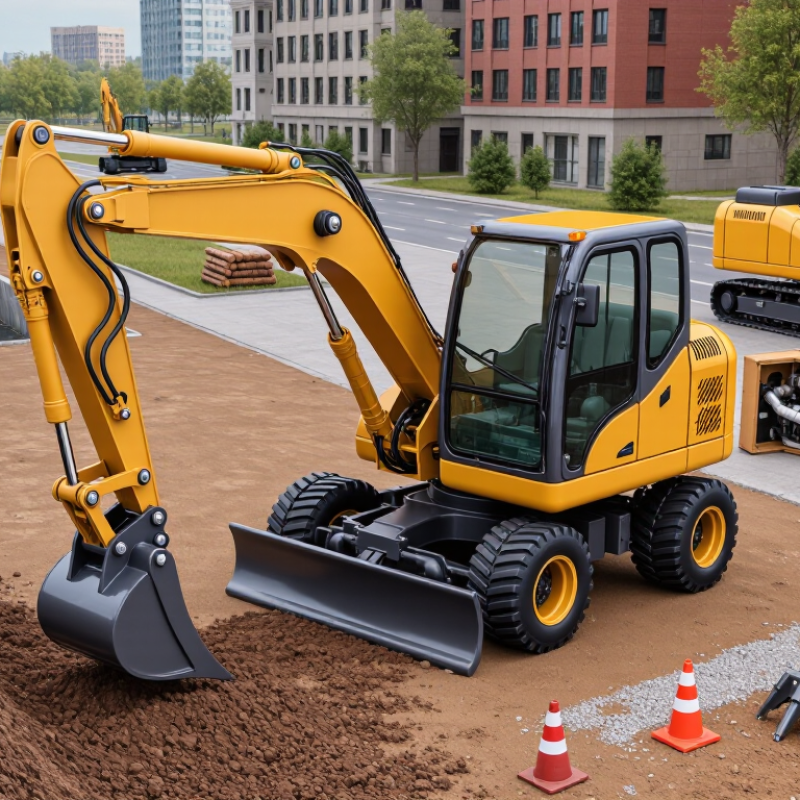
| Operating weight and size | Choose a class that matches the lift, digging, and access needs of the job. Wheeled excavators are available across a range of operating weights, commonly from under 10 tonnes to well over 15 tonnes. | A heavier machine can offer greater stability and capacity, but may be less suitable for restricted sites or road-weight limits. | Check operating weight with the intended boom, bucket, counterweight, and attachments fitted. Confirm transport and axle-load requirements. |
| Engine power and emissions compliance | Match engine output to the machine’s weight and hydraulic demands; verify the emissions certification required in the country where it will operate. | Adequate power supports digging and travel performance. Emissions rules and fuel requirements differ by market. | Request the engine data sheet, rated power and applicable emissions documentation for the exact configuration. |
| Travel speed and road suitability | Look for a road-travel speed appropriate to the route, along with suitable brakes, lights, tires, and required road equipment. | Wheeled excavators can move between nearby jobs without a low-bed transporter, where local rules and site conditions permit. | Compare maximum travel speed with legal limits, stopping performance, tire rating, and the machine’s road-homologation status. |
| Digging geometry | Compare maximum digging depth, reach, dump height, and bucket range with the tasks the machine will perform. | A machine that cannot reach the required depth or loading height may need repositioning or a different configuration. | Use the manufacturer’s working-range chart for the exact boom, arm, bucket, and tire setup—not just headline figures. |
| Hydraulic performance | Check pump flow, pressure, auxiliary circuits, and compatibility with planned tools such as breakers, grabs, or tiltrotators. | Attachments have specific hydraulic requirements. Mismatched flow or pressure can reduce performance or damage equipment. | Ask for the hydraulic specifications and confirm attachment requirements, return-line arrangements, and control options. |
| Stability and support equipment | Assess whether the machine needs outriggers, a dozer blade, or both for its intended lifting and digging work. | Proper support can improve stability while working, especially on uneven ground or when lifting loads. | Review the rated lift chart and operating instructions. Never rely on a general lifting capacity without checking working position and support setup. |
| Tires, axles, and steering | Select tires and drivetrain features for the expected mix of paved roads, compacted ground, and soft or uneven terrain. | Tire choice affects traction, ride, road wear, and ground pressure; steering and axle features affect maneuverability. | Check tire specifications, axle oscillation or locking features, steering modes, and the availability and cost of replacement tires. |
| Fuel use and operator comfort | Look for controllable work modes, clear visibility, ergonomic controls, suitable cab ventilation, and accessible service points. | Fuel consumption and operator fatigue affect total operating cost and productivity over time. | Request fuel-use information for comparable duty cycles and arrange a practical demonstration with the intended operator. |
| Parts, warranty, and service support | Confirm local access to trained technicians, routine maintenance parts, diagnostic support, and written warranty terms. | Downtime and parts delays can outweigh a lower purchase price, particularly for machines used intensively. | Verify local service coverage, parts lead times, warranty exclusions, and support arrangements before purchase. |



 Close