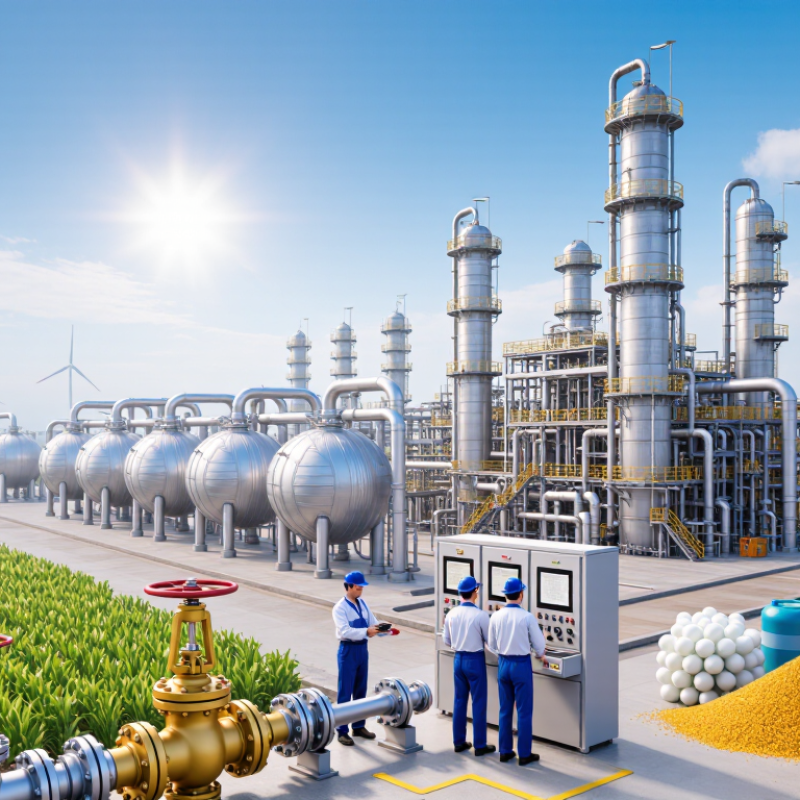
| Fertilizer production | Ammonia is a major source of nitrogen for fertilizers and is also used to manufacture other nitrogen-based products. | Releases can harm people and contribute nitrogen to ecosystems. Prevent leaks and manage fertilizer-related runoff to reduce water pollution and eutrophication. |
| Industrial refrigeration | Anhydrous ammonia (R-717) is used as a refrigerant, particularly in large industrial refrigeration systems. | A leak can create a toxic inhalation hazard. Systems require suitable materials, ventilation, leak detection, emergency procedures, and trained operators. |
| Chemical manufacturing | Ammonia is a feedstock for products including nitric acid and other nitrogen-containing chemicals. | Closed handling systems and process controls help limit worker exposure and accidental releases. |
| Boiling point | Approximately −33.3 °C at atmospheric pressure. | Liquefied ammonia can rapidly vaporize if released. Contact with escaping liquid can cause severe cold burns, in addition to chemical injury. |
| Water solubility | Ammonia is highly soluble in water. | It can dissolve in moisture on the eyes, skin, and respiratory tract and cause corrosive injury. Ammonia entering water can also be toxic to aquatic life. |
| Vapor behavior | Ammonia vapor is lighter than air under the same conditions, although a released plume’s movement also depends on temperature, moisture, and airflow. | Do not assume a release will simply rise or disperse safely. Site-specific ventilation, monitoring, and emergency planning are important. |
| Worker exposure limits (United States) | OSHA’s permissible exposure limit is 50 ppm as an 8-hour time-weighted average. NIOSH recommends 25 ppm as a time-weighted average and 35 ppm as a short-term exposure limit. | These are occupational reference limits, not guarantees that every person will be protected. Applicable requirements vary by jurisdiction; use monitoring and appropriate respiratory protection when required. |
| Immediately dangerous concentration | NIOSH lists 300 ppm as the immediately dangerous to life or health (IDLH) concentration. | IDLH conditions require specialized emergency procedures and appropriate supplied-air respiratory protection; unprotected entry is unsafe. |
| Flammability | Ammonia is flammable at relatively high concentrations in air; published flammable limits are approximately 15% to 28% by volume. | Although its flammability range is narrower than that of many common fuels, ignition and explosion hazards are possible under suitable conditions. Control ignition sources and follow process-safety requirements. |
| Aquatic effects | Ammonia is toxic to aquatic organisms. Its toxicity depends on factors including concentration, pH, temperature, and the proportion present as un-ionized ammonia. | Prevent discharges and promptly contain spills. Avoid treating a single concentration as a universal safe threshold for all waters or species. |
| Key risk controls | Common controls include closed transfer systems, compatible equipment, ventilation, gas detection, preventive maintenance, and worker training. | Facilities should maintain site-specific emergency plans, suitable protective equipment, and procedures for isolation, evacuation, and release response. |



 Close