| Control arm pivots | Control arms to the vehicle frame or subframe | Allows controlled suspension movement while limiting unwanted movement. | Helps keep wheel position and alignment stable as the suspension moves over bumps and during cornering. | Clunks over bumps, uneven tire wear, steering wander, or visibly cracked or separated rubber. | Check for splitting, excessive deformation, separation from the sleeve, and abnormal movement. Confirm any alignment concerns with a qualified inspection. |
| Stabilizer bar mounts and end links | The stabilizer bar to the chassis, or the bar to suspension links | Cushions contact and permits the bar and links to move as the suspension articulates. | Helps the stabilizer bar resist differences in left-to-right suspension movement and reduce body roll. | Rattling or knocking over uneven surfaces; a worn bushing may also look cracked, loose, or compressed. | Inspect the mount and link bushings for looseness, deterioration, or missing material. Noise alone does not confirm bushing failure. |
| Subframe mounts | The suspension or engine subframe to the vehicle body | Supports the subframe and helps isolate vibration and noise from the body. | Helps maintain the subframe’s position while reducing the transmission of some road and drivetrain vibration. | Excessive vibration, clunks, or visible deterioration; symptoms can also come from other mounts or suspension parts. | Look for torn or displaced material and signs of abnormal subframe movement. Diagnosis may require inspection under load. |
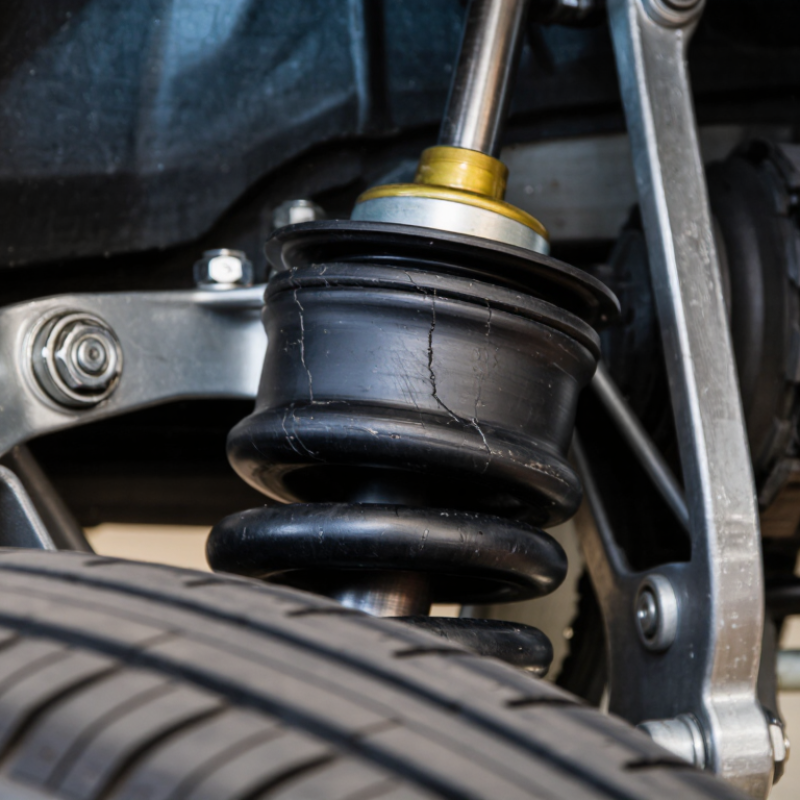
| Strut or shock absorber mounts | The top of a strut or shock assembly to the body or chassis | Provides a cushioned mounting point; some front strut mounts also incorporate a bearing for steering rotation. | Helps limit vibration transfer and allows the suspension assembly to move or rotate as designed. | Clunks, creaks, or knocking near a wheel; steering stiffness or noise may occur on some designs. | Inspect the mount and any integrated bearing according to the vehicle’s service procedure. The exact design varies by vehicle. |
| Leaf-spring eye or shackle mounts | The ends of a leaf spring to the frame or suspension shackle | Allows the spring to pivot as it flexes and the suspension travels. | Supports suspension movement while helping control spring position and noise. | Squeaks, clunks, visible cracking, or movement at the spring eye or shackle. | Check for deterioration, looseness, or metal-to-metal contact. Inspect related spring and fastener components as well. |
| General chassis and suspension joints | Selected suspension links or chassis-mounted components | Provides a flexible interface between connected parts and reduces direct metal contact. | Balances component movement, vibration isolation, and positional control; stiffness depends on the application. | Noise, vibration, handling changes, or uneven tire wear may occur, but these symptoms have many possible causes. | Use the vehicle manufacturer’s inspection and replacement procedures. Do not diagnose a bushing from one symptom alone. |



 Close